
Beautiful Plants For Your Interior
Beautiful Plants For Your Interior
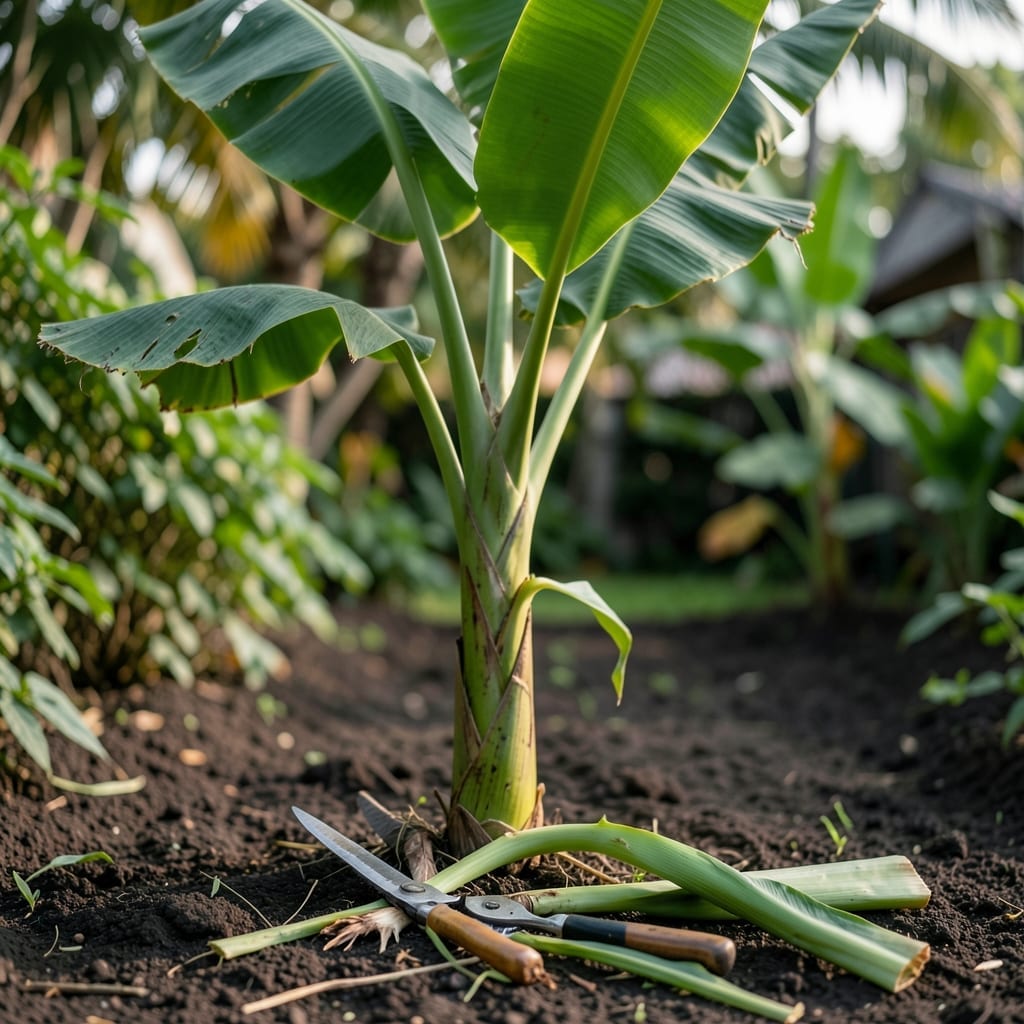
Cutting banana leaves transforms excess foliage into gardening gold. I harvested my first set last summer and couldn’t believe how much it improved my soil and protected tender plants.
Timing matters—wait until leaves yellow or show damage. You’ll get thick mulch, fast compost, or natural shade covers. The plants thank you with better growth next season.
📚 In This Guide
Here’s the method I use to harvest and store banana leaves without damaging the plant or losing quality.
Select a mature leaf that has fully unfurled and shows a deep green color without yellowing or tearing. I look for leaves that are at least 6-8 feet long—these are typically the oldest, outermost leaves on the plant, which are safe to remove without harming its growth.
Never take the central or youngest leaves, as these are critical for the plant’s photosynthesis and development. The leaf you choose should feel firm and slightly waxy to the touch, a sign it’s at peak condition for harvesting.
Use a sharp, clean knife or machete to make a single, smooth cut at the base of the leaf stem where it meets the pseudostem. I angle the blade slightly to allow water to run off, which helps prevent rot in the remaining plant tissue.
Apply firm, even pressure to sever the stem in one motion—sawing or tearing can fray the fibers and reduce the leaf’s usability. A clean cut also minimizes stress to the plant and reduces the risk of introducing disease through jagged wounds.
Lay the leaf flat and check both sides for pests, damage, or dirt. I gently wipe the surface with a damp cloth to remove any residue while being careful not to tear the delicate fibers. This step ensures the leaf is ready for storage or immediate use.
If the leaf has minor tears, I trim the damaged edges with clean scissors to prevent further splitting during handling. A well-maintained leaf at this stage will store better and last longer for culinary or decorative purposes.
Roll the leaf loosely and place it in a large, sealable plastic bag or wrap it in a damp towel. I store it in the refrigerator’s crisper drawer, where it stays fresh for up to 2 weeks. The damp towel method works well if you lack fridge space—just keep it in a cool, shaded area.
For longer-term storage, I freeze the leaves flat between sheets of parchment paper in a freezer bag. They’ll keep for 3-4 months this way, ready to thaw and use as needed. Avoid stacking too many leaves in one layer to prevent sticking and breakage.
These techniques will help you harvest and store banana leaves like a pro while keeping your plant healthy.
Leaf Selection: In Step 1, focus on the 6-8 foot mature leaves—they’re the only ones safe to remove without harming the plant. Confession: I once took a younger leaf thinking it would be more tender, and it stunted my plant’s growth for weeks. The waxy texture of mature leaves also makes them more durable for storage.
The Cutting Technique: For Step 2, that angled cut isn’t just for aesthetics—it prevents water from pooling at the stem base, which could rot the pseudostem. I learned this the hard way after losing a plant to stem rot from improper cutting. A single, smooth motion with a sharp blade is non-negotiable.
Storage Strategy: For Step 4, the key to that 2-week fridge life is the loose rolling. Tightly rolled leaves develop condensation inside that leads to premature spoilage. The parchment paper method for freezing works because it prevents the leaves from sticking together while allowing them to lay flat.
Inspection Importance: Step 3’s inspection isn’t just about cleanliness—pests or damage can spread to other stored leaves. I use a soft cloth because even gentle wiping with paper towels can create micro-tears in the delicate surface that compromise the leaf’s integrity during storage.
Use a sharp, clean knife or shears to cut leaves at the base, avoiding the main stem. This prevents injury to the plant and promotes healthy regrowth. Always sanitize tools to reduce disease risk.
Harvest mature, outer leaves in the morning when they’re fresh and hydrated. Avoid young inner leaves, as they’re vital for the plant’s growth. Ideal timing ensures durability for storage or use.
Yes! Store cleaned, dry leaves in a cool, shaded area or refrigerate them in a sealed bag for up to 2 weeks. For longer storage, freeze them for up to 3 months.
Alternatives like parchment paper, aluminum foil, or corn husks work for wrapping food. However, they lack the unique aroma and eco-friendliness of banana leaves.
Browning occurs due to oxidation or moisture loss. To slow this, store leaves in a damp cloth or airtight container and avoid direct sunlight.