
Beautiful Plants For Your Interior
Beautiful Plants For Your Interior
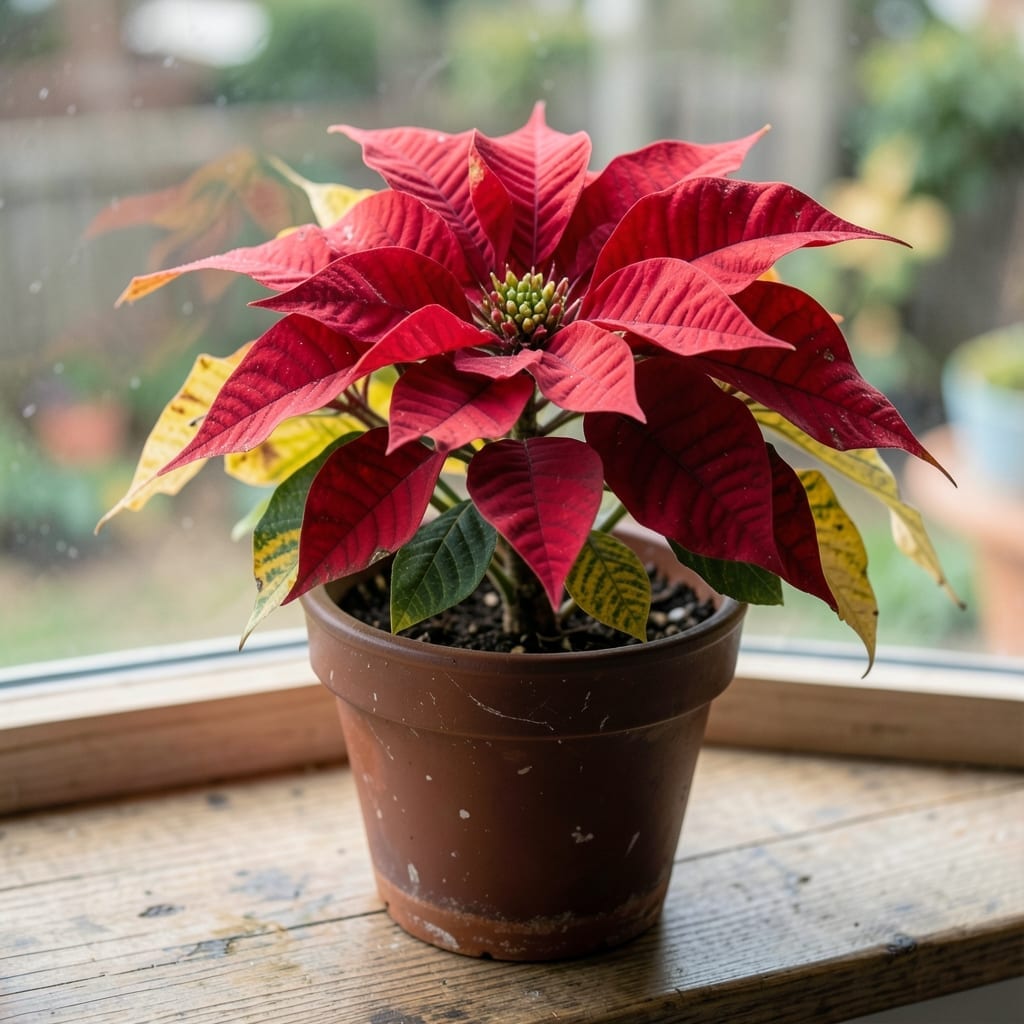
Your poinsettia’s leaves shouldn’t look like they’re trying to hug themselves. I’ve seen this happen when the air gets too dry or the roots stay soggy for too long.
Most times, it’s not pests or disease causing the curl—it’s your plant screaming for better conditions. A 60-70°F room with consistent moisture usually fixes it within days.
Start by checking the soil with your finger. If it’s bone dry or waterlogged, you’ve found your culprit. Adjust your care and watch those leaves unfurl.
The fix is simpler than you think. Move it away from drafts, give it indirect light, and keep the humidity steady. Your poinsettia will thank you.
Poinsettias are sensitive to their environment, and curled leaves often signal stress from specific, fixable conditions. Below are the primary causes, explained with actionable insights.
Poinsettias thrive in 65–75°F (18–24°C) during the day and a slightly cooler 60–65°F (15–18°C) at night. Exposure to drafts (e.g., near doors, windows, or vents) or temperatures below 50°F (10°C) triggers leaf curl as a defensive response. Similarly, heat stress from radiators or direct sunlight can scorch leaves, causing edges to crisp and curl inward.
Both overwatering and underwatering disrupt the plant’s cellular structure. Soggy soil suffocates roots, reducing their ability to absorb water and nutrients, while drought forces leaves to curl to conserve moisture. Aim for consistently moist (not soggy) soil, and ensure pots have drainage holes to prevent root rot.
Poinsettias are tropical natives and require 40–60% humidity. Dry indoor air—common in heated homes—causes leaves to lose moisture faster than they can replenish it, leading to curling. Grouping plants together or using a humidity tray can mitigate this.
Spider mites, aphids, and whiteflies suck sap from leaves, weakening the plant and causing distortion. Check the undersides of leaves for webbing (mites), sticky residue (aphids), or tiny white insects. Treat with neem oil or insecticidal soap at first signs.
A lack of magnesium or potassium can manifest as curled leaves with yellowing edges. Use a balanced, water-soluble fertilizer (e.g., 20-20-20) every 2–4 weeks during the growing season, but avoid over-fertilizing, which can also cause stress.
Poinsettias are sensitive plants, but with the right adjustments, you can restore their health and prevent future curling. Below are targeted solutions for the most common causes, paired with simple prevention tips.
Fix: Move your poinsettia to a stable environment between 65–75°F (18–24°C) during the day and no lower than 60°F (15°C) at night. Avoid placing it near drafty windows, heaters, or air conditioning vents. If the plant was exposed to cold, trim damaged leaves to redirect energy to healthy growth.
Prevention: Use a thermometer to monitor the room temperature, and keep poinsettias away from exterior doors or frequently opened windows.
Fix: Check the soil moisture by sticking your finger 1 inch deep. If it’s bone-dry, water thoroughly until it drains from the bottom. For soggy soil, stop watering immediately, remove the plant from its pot, and let the roots air-dry for a few hours before repotting in fresh, well-draining soil.
Prevention: Water only when the topsoil is dry to the touch, and always use pots with drainage holes. A moisture meter can help take the guesswork out of watering.
Fix: Inspect the undersides of leaves for spider mites, aphids, or whiteflies. Wipe leaves with a damp cloth or spray with insecticidal soap or neem oil, focusing on affected areas. Repeat every 3–5 days until pests are gone.
Prevention: Quarantine new plants for 1–2 weeks before introducing them to your poinsettia. Regularly mist leaves to deter spider mites, which thrive in dry conditions.
Fix: Increase humidity by placing a pebble tray with water beneath the pot or using a humidifier nearby. Grouping plants together can also create a microclimate with higher moisture levels.
Prevention: Aim for 40–60% humidity. Avoid placing poinsettias near fireplaces or space heaters, which dry out the air.
Fix: Move the plant to a spot with bright, indirect light for 6–8 hours daily. If leaves are curling from too much direct sun, filter the light with a sheer curtain. For leggy growth, rotate the pot weekly for even exposure.
Prevention: Avoid south-facing windows without shade, and supplement with grow lights in dimly lit rooms during winter.
Check the soil 1 inch deep with your finger. If it feels soggy or smells musty, you’re overwatering. Yellowing leaves often accompany this.
Yes, if you fix the underlying issue quickly. Leaves typically unfurl within 2-3 days once conditions improve. Severely damaged leaves may not recover fully.
Aim for 40-60% humidity. Use a pebble tray or humidifier if your home is dry, especially in winter. Keep plants away from heat sources.
Only trim leaves that are brown or crispy. If they’re still green, they may recover. Removing too many leaves can stress the plant further.