
Beautiful Plants For Your Interior
Beautiful Plants For Your Interior
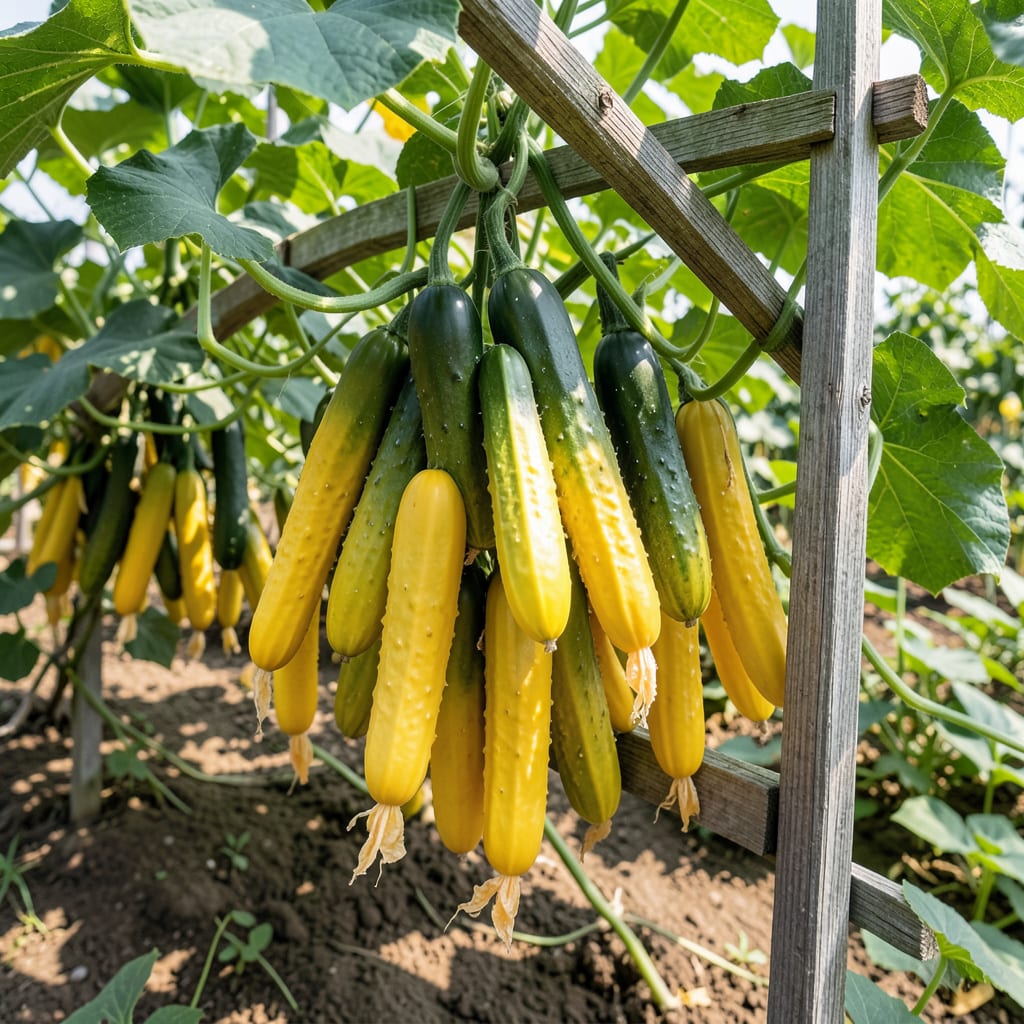
Yellow cucumbers on the vine always feel like a gut punch after weeks of care. I’ve lost entire harvests to this problem before learning the real causes—overwatering, nutrient gaps, or sneaky pests doing damage before you even notice.
Here’s the thing—most fixes are simpler than you’d expect. Adjust watering to 1-2 inches per week, check for spider mites under leaves, and test your soil for nitrogen or potassium shortages. Small tweaks often prevent the next batch from turning.
Left unchecked, yellowing spreads fast. But catch it early and your vines can bounce back within 7-10 days. The key is acting before the fruit softens or the plant stress becomes permanent.
Works for garden beds, containers, or trellises. Let’s save this season’s harvest before it’s too late.
Cucumbers turning yellow on the vine can be frustrating, but understanding the root causes helps you fix the issue and prevent future problems. Here are the most common reasons:
Yellowing cucumbers often signal a lack of essential nutrients. Nitrogen deficiency causes uniform yellowing of older leaves first, while magnesium or potassium deficiencies lead to yellow edges or spots. Test your soil and amend with compost or a balanced fertilizer (e.g., 10-10-10) to restore nutrient levels.
Too much water suffocates roots, reducing their ability to absorb nutrients. This stress triggers yellowing, especially in lower leaves. Ensure your soil is well-draining, and water only when the top inch of soil feels dry. Raised beds or containers can improve drainage for heavy clay soils.
Cucumbers thrive in 6–8 hours of sunlight daily. Insufficient light leads to weak growth and yellowing. Similarly, temperatures below 50°F (10°C) or above 90°F (32°C) can stress plants, causing discoloration. Use row covers for cold nights and shade cloth for extreme heat.
Spider mites, aphids, or cucumber beetles sap plant juices, leading to yellow spots or mottling. Diseases like powdery mildew or bacterial wilt also cause yellowing. Inspect leaves for pests or white fungal growth, and treat with neem oil or insecticidal soap. Remove infected plants to prevent spread.
Some cucumber varieties turn yellow when fully ripe. If the fruit is firm and the plant is otherwise healthy, it may simply be ready to harvest. Check your seed packet for variety-specific maturity signs.
Don’t worry—yellow cucumbers can often be saved or prevented with simple fixes. Below are targeted solutions for each common cause, along with tips to keep your crop thriving.
If bees are scarce, gently transfer pollen from male to female flowers using a small brush or cotton swab. Work in the early morning when flowers are open. Prevention tip: Plant pollinator-friendly flowers nearby to attract bees. 💡
Cucumbers need consistent moisture. Water deeply at the base (not leaves) 1–2 inches per week, more in heatwaves. Mulch with straw to retain moisture. Prevention tip: Use drip irrigation to avoid uneven watering. 🌡️
A balanced fertilizer (10-10-10) or compost can restore missing nutrients. For nitrogen deficiency, add blood meal; for potassium, try wood ash. Prevention tip: Test soil before planting and amend as needed. ✨
For pests like aphids, spray with neem oil or insecticidal soap. Remove diseased leaves immediately to stop spread. Prevention tip: Rotate crops yearly and space plants for airflow. 🎯
If leaves scorch, use shade cloth (30–50%) during peak afternoon sun. Prevention tip: Plant in a spot with dappled sunlight or near taller crops for natural shade. ⏰
Pro tip: Harvest cucumbers young—they’re more flavorful and less prone to yellowing! 🥒
Yes, if they’re firm and smell fresh. Yellowing from ripeness is normal for some varieties. Discard any that are soft, mushy, or have an off odor.
With proper care, new growth should appear green within 7-10 days. Existing yellow leaves won’t recover, but new ones will. Be patient and consistent.
Too much fertilizer can burn roots, leading to yellow leaves. Always follow package instructions and test soil before adding amendments.
Early morning or late evening, when pests are most active. Look under leaves and along stems for aphids, mites, or beetles. Treat immediately if found.
