
Beautiful Plants For Your Interior
Beautiful Plants For Your Interior
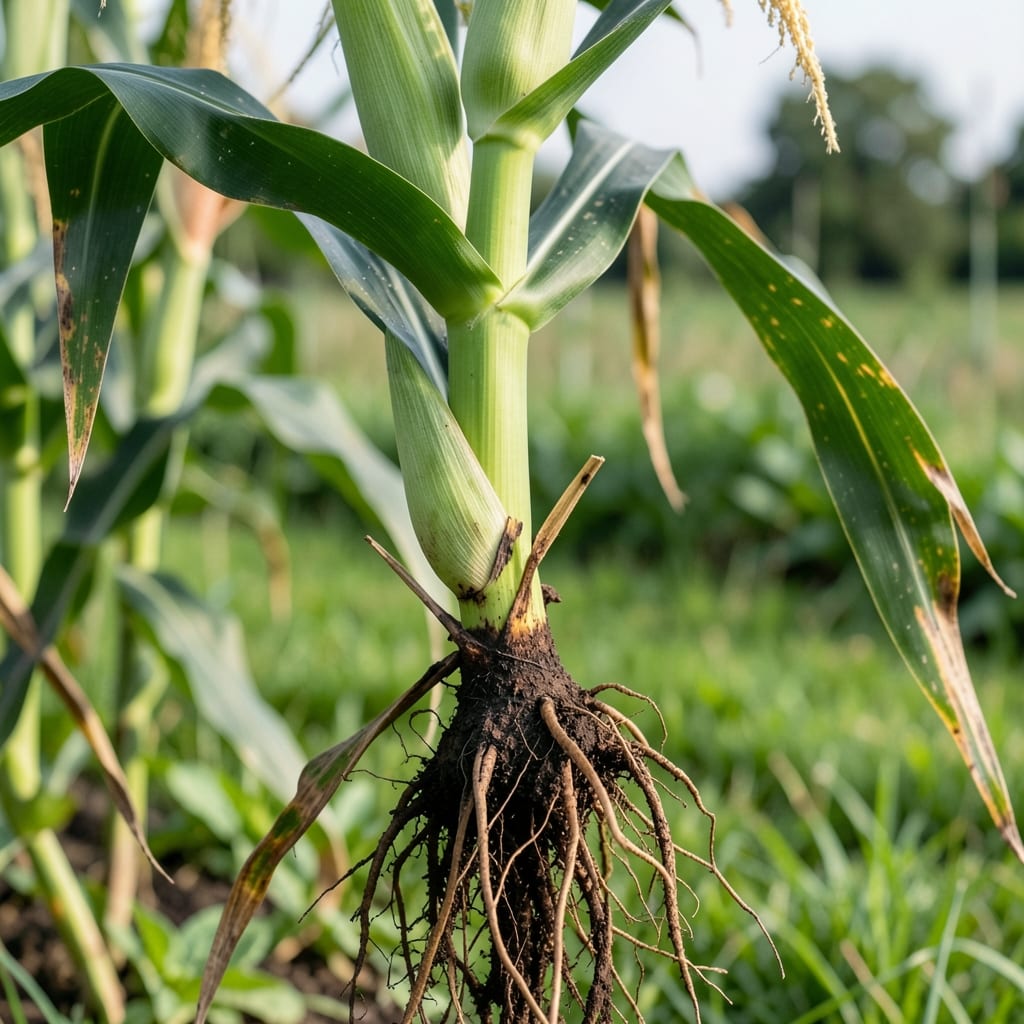
Corn root foot is a fungal disease causing brown, rotting roots and stunted plant growth. It thrives in wet, poorly drained soil and can significantly reduce yield if untreated.
I’ve seen this disease take hold when fields stay soggy after heavy rains, creating the perfect breeding ground for the fungus. Crop rotation and improved drainage are your best defenses, as they disrupt the pathogen’s life cycle. Early detection is crucial, so watch for wilting or yellowing leaves as the first warning signs. 🔥
💡 In This Article
The fungus Fusarium graminearum is the primary culprit behind this disease. It produces microscopic structures called chlamydospores that can survive in soil for years, waiting for the right conditions to activate. When soil stays saturated for 48+ hours, these spores germinate and attack corn roots through tiny wounds or natural openings.
Warm temperatures between 75-85°F combined with high humidity create an ideal environment. The pathogen spreads through contaminated soil particles, infected plant debris, or even farm equipment moving between fields. What starts as small brown lesions on roots can rapidly expand, cutting off the plant’s ability to absorb water and nutrients. 🔥
Poor soil drainage exacerbates the problem by keeping roots constantly submerged. This stress weakens the plant’s natural defenses, allowing the fungus to colonize more aggressively. Fields with clay-heavy soil or compacted layers are particularly vulnerable, as water pools rather than draining away.
Interestingly, the fungus produces toxins that further damage plant cells. These mycotoxins can remain in the soil even after the original plant matter decomposes, creating a persistent threat to subsequent crops. Testing soil samples can reveal spore counts as high as 10,000 per gram in severely affected areas.
What most growers don’t realize is that the disease often starts in the seedling stage. Young roots are especially susceptible, and early infections can stunt growth before any above-ground symptoms appear. This delayed visibility makes early detection challenging but not impossible with regular root inspections. ✨
The fungus Fusarium graminearum is the primary cause, thriving in wet, poorly drained soil. It attacks roots through microscopic wounds, creating brown lesions that expand rapidly. Warm temperatures between 75-85°F and high humidity accelerate its growth.
Implement a 3-4 year crop rotation with non-host plants like soybeans. Improve drainage by adding organic matter and creating channels between rows. This disrupts the fungus’s life cycle and reduces spore survival.
Yes! Apply neem oil or compost tea every 2 weeks during the growing season. Mix 2 tablespoons neem oil per gallon of water with a teaspoon of mild soap. These natural fungicides suppress fungal growth effectively.
Symptoms start in the seedling stage with root infections that stunt growth before above-ground signs appear. The delayed visibility makes early detection challenging, so regular root inspections are crucial for catching it early.