
Beautiful Plants For Your Interior
Beautiful Plants For Your Interior
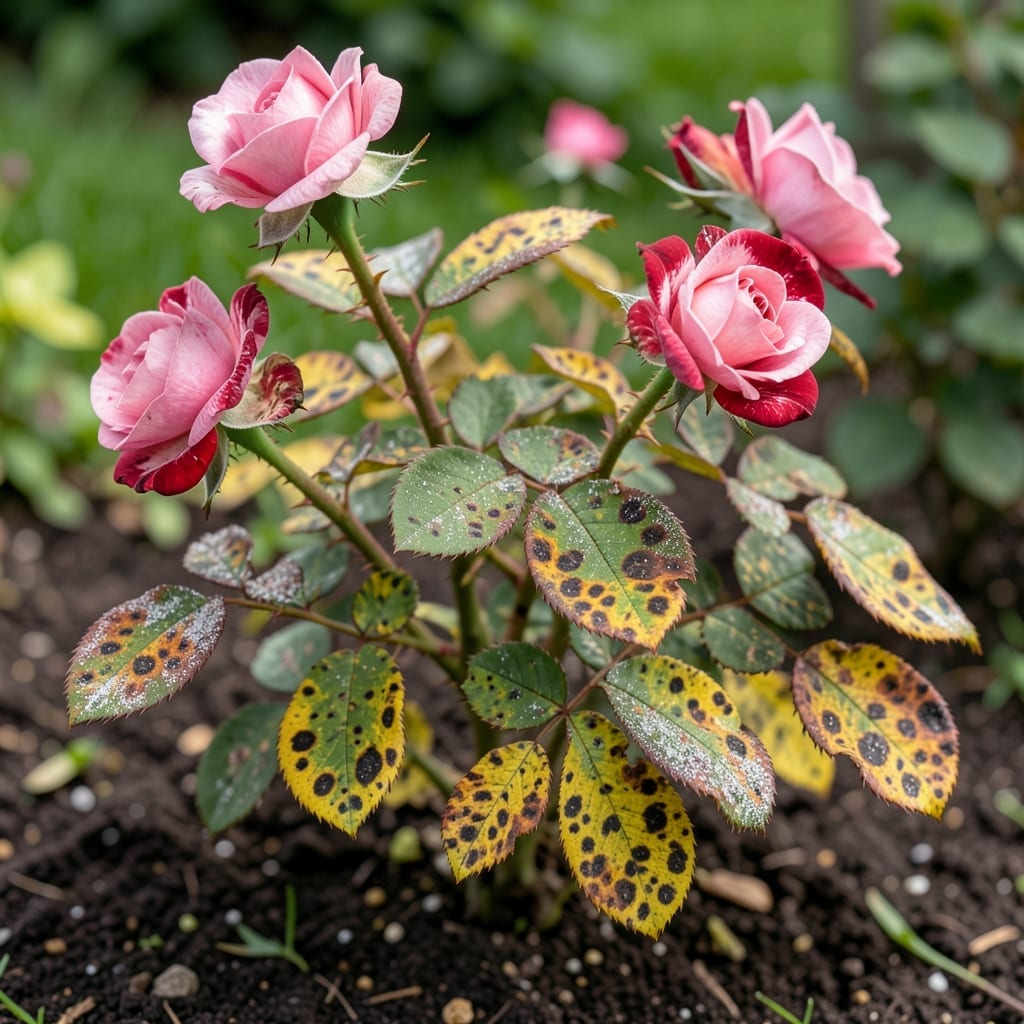
Spotted leaves or blackened stems on your roses aren’t just ugly—they’re warnings. I’ve learned that catching problems early means the difference between a quick fix and a dead plant.
Most rose diseases start with simple fixes: better air flow, less overhead watering, or removing infected leaves. The key is knowing what you’re looking at before it spreads to the whole bush.
With the right organic remedies, you can stop powdery mildew, black spot, and rust in their tracks. Your roses will reward you with stronger growth and more blooms next season.
This approach works for all rose types, from climbers to shrubs. Here’s how to spot and treat the most common issues.
Understanding the root causes of rose diseases helps you prevent them before they take hold. Here’s a breakdown of the most common triggers:
Fungal diseases like black spot and powdery mildew thrive in damp conditions. Overhead watering, poor drainage, or high humidity create the perfect breeding ground for spores. Roses need moisture, but too much—especially on leaves—invites trouble.
Crowded plantings or dense foliage restrict airflow, trapping moisture and encouraging fungal growth. Pruning for openness and spacing roses properly (at least 3–4 feet apart) reduces this risk significantly.
Weak or over-fertilized roses are more susceptible to disease. Nitrogen-heavy soils promote lush but soft growth, which pests and pathogens love. A balanced organic fertilizer (e.g., 5-10-5) strengthens cell walls, making roses more resistant.
Aphids, thrips, and beetles don’t just eat leaves—they create entry points for diseases like bacterial blight. Their feeding wounds allow pathogens to slip in. Regular inspections and neem oil sprays can keep pests (and their secondary problems) at bay.
Heatwaves, frost, or sudden temperature swings weaken roses, lowering their defenses. Heat stress can trigger rust, while cold snaps may lead to canker. Mulching and consistent watering help stabilize their environment.
Roses can fall victim to several diseases, but with the right approach, you can nurse them back to health. Here’s how to tackle each issue effectively, along with tips to keep your garden thriving.
Fix: Remove infected leaves immediately and dispose of them in the trash (not compost). Apply a baking soda spray (1 tbsp baking soda, 1 tsp dish soap, 1 gallon water) every 7–10 days. For severe cases, use neem oil or a copper fungicide.
Prevention:
Fix: Spray affected leaves with a milk-water mix (1 part milk to 9 parts water) or sulfur-based fungicide. Prune heavily infected stems to improve airflow.
Prevention:
Fix: Remove and destroy infected leaves and stems. Apply neem oil or a fungicide labeled for rust weekly until symptoms disappear.
Prevention:
Fix: Prune out cankered stems below the infected area (sterilize pruners with rubbing alcohol between cuts). Apply a copper fungicide to the wound.
Prevention:
Fix: Blast them off with a strong stream of water or apply insecticidal soap. Introduce natural predators like ladybugs or lacewings.
Prevention:
Look for white powdery coatings or black spots on leaves. Yellowing or brown edges often signal fungal issues. Check undersides of leaves too—rust appears as orange pustules there.
This fungal disease thrives in wet, humid conditions. Overhead watering or poor airflow are likely culprits. Try watering at the base and spacing plants 3-4 feet apart.
Yes! ‘Knock Out’, ‘Drift’, and ‘Earth-Kind’ roses are bred for disease resistance. They need less spraying and still bloom beautifully.
A baking soda spray (1 tbsp per gallon of water) works for mild cases. Neem oil is another organic option. Always test on a few leaves first.