
Beautiful Plants For Your Interior
Beautiful Plants For Your Interior
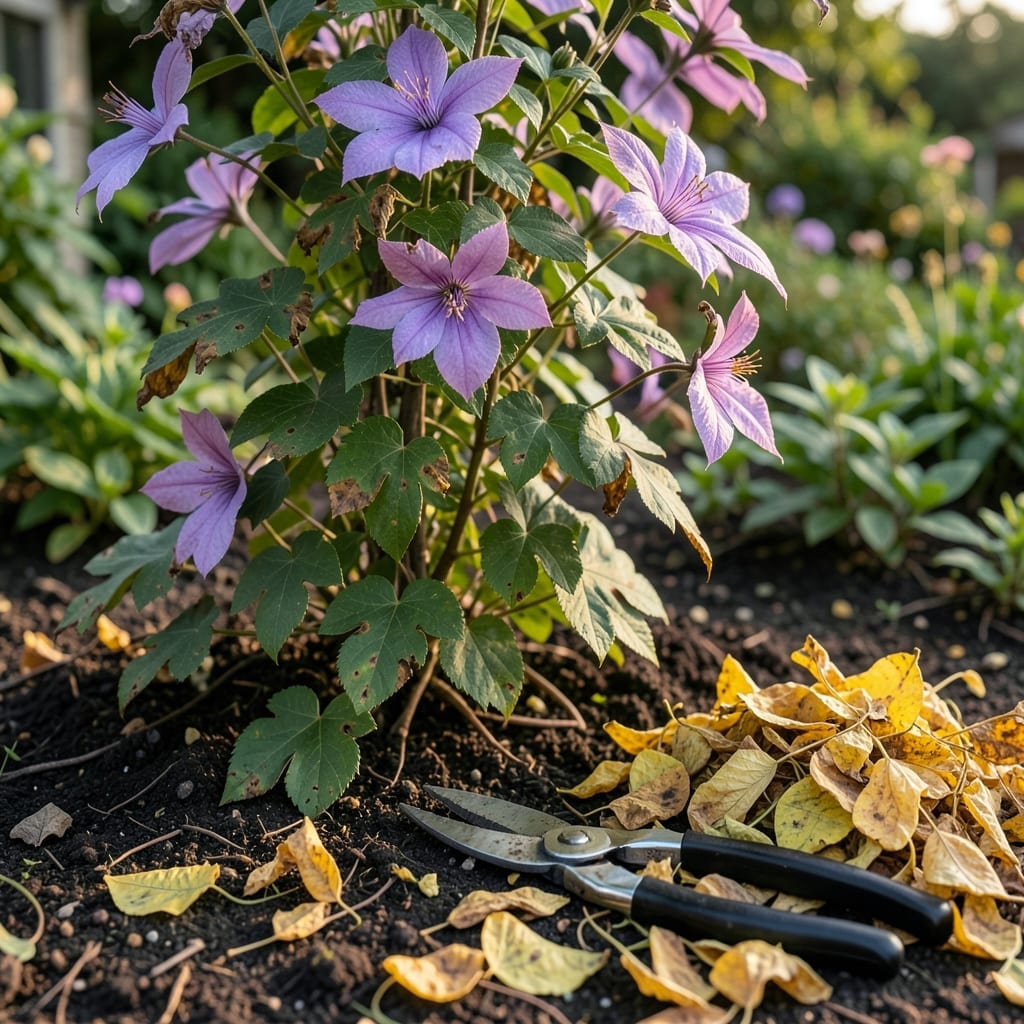
One morning last June, my clematis vines turned black overnight. 🌱 Clematis wilt hits fast, but quick action can save your plants and prevent future outbreaks.
I learned the hard way that this fungus thrives in wet conditions. The solution starts with removing affected stems immediately—below the damage—and disposing of them far from your garden.
Prevention is simpler than you think. Improve air circulation, avoid overhead watering, and mulch the base to keep spores from splashing up during rain.
With this approach, my clematis rebounded within weeks and has stayed healthy through two more seasons. Here’s how to protect yours.
Understanding the root causes of clematis wilt is the first step toward prevention and treatment. This frustrating fungal disease, primarily caused by Ascochyta clematidina or Phoma clematidina, can quickly devastate your vines. Here’s why it happens:
The most common culprit is airborne fungal spores that thrive in warm, wet conditions. These spores land on leaves or stems, germinate, and penetrate the plant tissue, especially through wounds or weak spots. Poor air circulation and overhead watering create the perfect breeding ground for these pathogens.
Stressed or weakened clematis plants are more susceptible to wilt. Factors like improper pruning, nutrient deficiencies, or root damage from poor soil conditions can lower the plant’s natural defenses. Over-fertilization, particularly with high-nitrogen formulas, can also promote soft, succulent growth that’s easier for fungi to infect.
Excessive moisture is a major trigger. Splashing water from rain or irrigation spreads fungal spores from the soil to the plant. High humidity levels, especially in densely planted areas, prevent leaves from drying quickly, giving fungi more time to take hold. Mulching too close to the base can also trap moisture against the stems.
Fungal spores can linger in garden soil or on pruning tools, infecting new plants or healthy parts of existing ones. Using unsterilized tools or replanting clematis in the same spot where infected plants once grew can reintroduce the disease. Always clean tools with a 10% bleach solution and rotate planting locations.
When clematis wilt strikes, act fast to save your plant. Below are targeted solutions for the most common causes, along with prevention tips to keep your vine thriving.
If wilt is caused by fungal pathogens like Phoma clematidina, prune affected stems immediately—cut 6–12 inches below the damaged area. Disinfect pruners with rubbing alcohol between cuts. Apply a copper-based fungicide to the remaining plant and surrounding soil. For prevention, improve airflow by spacing plants properly and watering at the base (not overhead).
Soggy roots suffocate clematis and invite wilt. If the soil is waterlogged, stop watering and let it dry out. Amend heavy clay soil with compost or sand to boost drainage. Use a moisture meter to guide watering—aim for consistently moist, not soggy conditions. Prevention tip: Plant clematis in raised beds or containers if drainage is an ongoing issue.
Wilting from heat or drought? Move potted clematis to shade during peak sunlight, or provide temporary shade cloth for in-ground plants. Water deeply at dawn to reduce evaporation and cool the roots. Mulch with bark or straw to retain moisture. 💡 Pro tip: A 2-inch layer of mulch also prevents soil splash, which can spread fungal spores.
Check stems and leaves for aphids, slugs, or earwigs—pests that weaken plants and make them susceptible to wilt. Remove pests by hand or use neem oil for a natural remedy. Encourage beneficial insects like ladybugs by planting companion flowers (e.g., marigolds). Prevention: Regularly inspect your clematis and keep the garden free of debris where pests hide.
With quick action and consistent care, your clematis can bounce back—and stay resilient against future wilt!
Remove affected stems immediately, cutting 6-12 inches below damage. Delaying even 24 hours lets the fungus spread further.
Yes, if the roots remain healthy. Cut back all affected growth, apply fungicide, and keep the soil moist but not soggy. New shoots often regrow within 2-3 weeks.
Improve airflow by spacing plants 3-4 feet apart. Water at the base, not overhead, and apply 2 inches of mulch to prevent soil splash.
Yes, copper-based fungicides are generally safe when used as directed. Apply in the morning to allow foliage to dry and avoid leaf burn.