
Beautiful Plants For Your Interior
Beautiful Plants For Your Interior
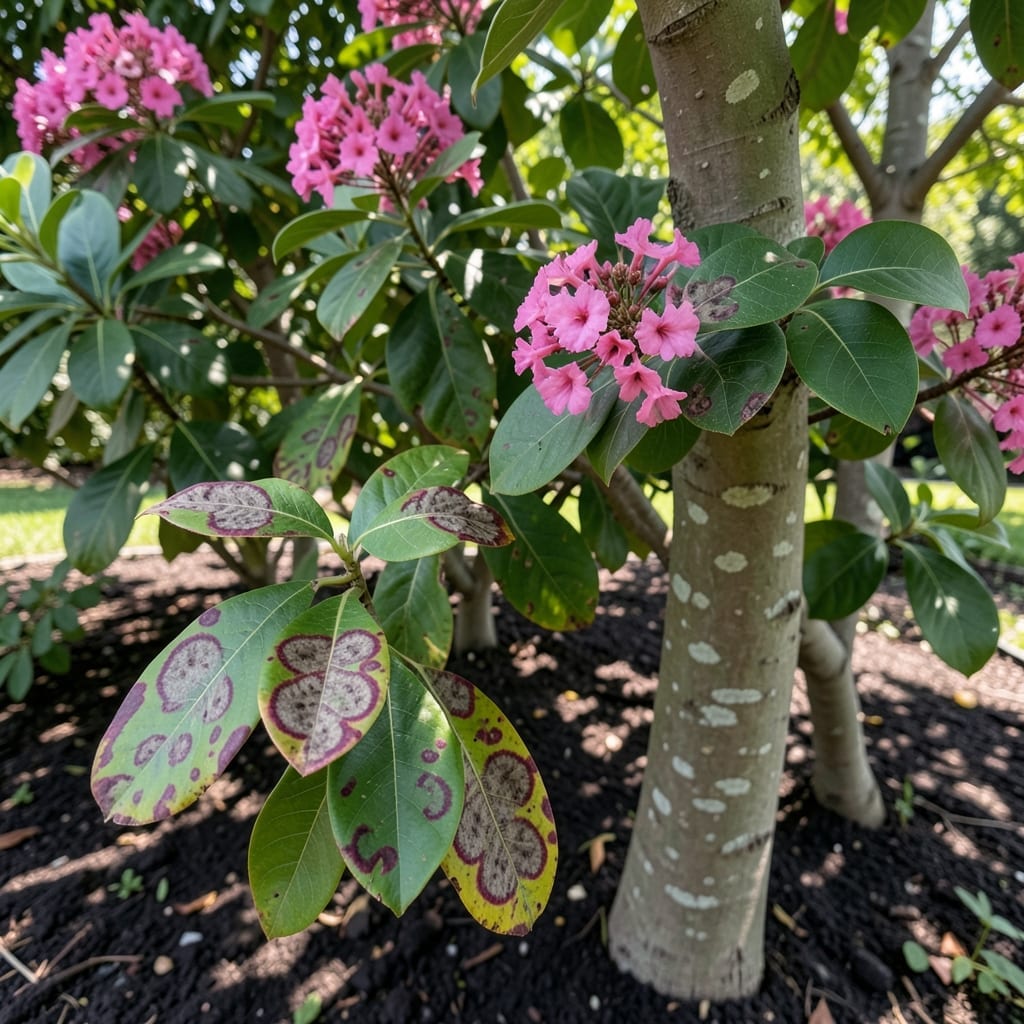
Those dark, ugly spots on your crape myrtle leaves aren’t sunburn. I lost half my tree’s foliage to this last summer before learning it’s Cercospora leaf spot, a fungal party that thrives in wet, warm conditions.
It starts with small purple-brown spots that grow into large, irregular dead patches. The leaves often yellow and drop prematurely, leaving your tree looking bare by midsummer when it should be at its peak.
Here’s the thing—this isn’t a death sentence. With the right approach, you can stop the spread and even prevent it next year. I’ve tested both organic and chemical solutions with real results in 2-3 weeks.
Works for established trees, new plantings, or any crape myrtle showing those telltale spots. Let’s clear this up.
Cercospora leaf spot on crape myrtles thrives under specific environmental and cultural conditions. Below are the primary causes of this fungal disease, explained in scientific yet practical terms.
The fungus Cercospora lythracearum proliferates in wet, humid conditions. Overhead irrigation, prolonged rain, or poor soil drainage create the perfect breeding ground. Water-saturated leaves (especially for 6+ hours) allow spores to germinate and infect tissue. Actionable fix: Water at the base of the plant early in the day to allow foliage to dry quickly.
This pathogen thrives in temperatures between 75–85°F (24–29°C) with high humidity (>85%). Crape myrtles in the southeastern U.S. are particularly vulnerable during summer. Actionable fix: Improve airflow with proper pruning and spacing to reduce humidity pockets.
Dense foliage traps moisture and limits air circulation, accelerating spore spread. Overhead shading (e.g., from nearby trees) can also prolong leaf wetness. Actionable fix: Thin out inner branches annually to open the canopy and promote drying.
Cercospora spores overwinter in fallen leaves and plant debris. Spring rains splash spores onto new growth, restarting the infection cycle. Actionable fix: Rake and remove all leaf litter under crape myrtles in late winter to break the cycle.
While not a direct cause, nitrogen-heavy fertilization or drought stress can weaken crape myrtles, making them more susceptible to fungal attacks. Actionable fix: Use balanced fertilizers (e.g., 10-10-10) and maintain consistent watering during dry spells.
Tackling Cercospora leaf spot on crape myrtles starts with removing the source of the fungus. Here’s how to address each cause and prevent future outbreaks:
Fungal spores thrive in dead plant material. Rake up and destroy fallen leaves and prune heavily infected branches. Do not compost these—dispose of them in sealed bags to prevent spores from spreading. Sanitize pruning tools with rubbing alcohol between cuts to avoid contamination.
Dense foliage traps moisture, creating a perfect environment for Cercospora. Thin out crowded branches to allow airflow. Space plants properly when planting new crape myrtles, and avoid overcrowding in garden beds.
Overhead watering wets leaves, promoting fungal growth. Switch to drip irrigation or water at the base of the plant early in the day. This gives foliage time to dry before evening. Avoid watering during rainy periods to reduce excess moisture.
For severe infections, use a copper-based fungicide or one labeled for Cercospora. Apply as directed, usually every 7–14 days, especially during wet seasons. Rotate fungicides to prevent resistance.
Consistency is key—combine these steps for the best defense against Cercospora leaf spot!
Cercospora lythracearum is host-specific, so it won’t infect roses or vegetables. It only affects crape myrtles and a few close relatives in the Lythraceae family. This means your other garden plants are safe from this particular fungus.
With proper fungicide application and cultural changes, you should see improvement in 2-3 weeks. New growth will emerge spot-free, while existing spots won’t disappear but will stop spreading. Patience is key—consistent care prevents future outbreaks.
Rarely. While severe infections can defoliate the tree, it’s unlikely to kill a mature crape myrtle. However, repeated annual infections weaken the plant over time. Young or stressed trees are more vulnerable, so act quickly to protect their health.