
Beautiful Plants For Your Interior
Beautiful Plants For Your Interior
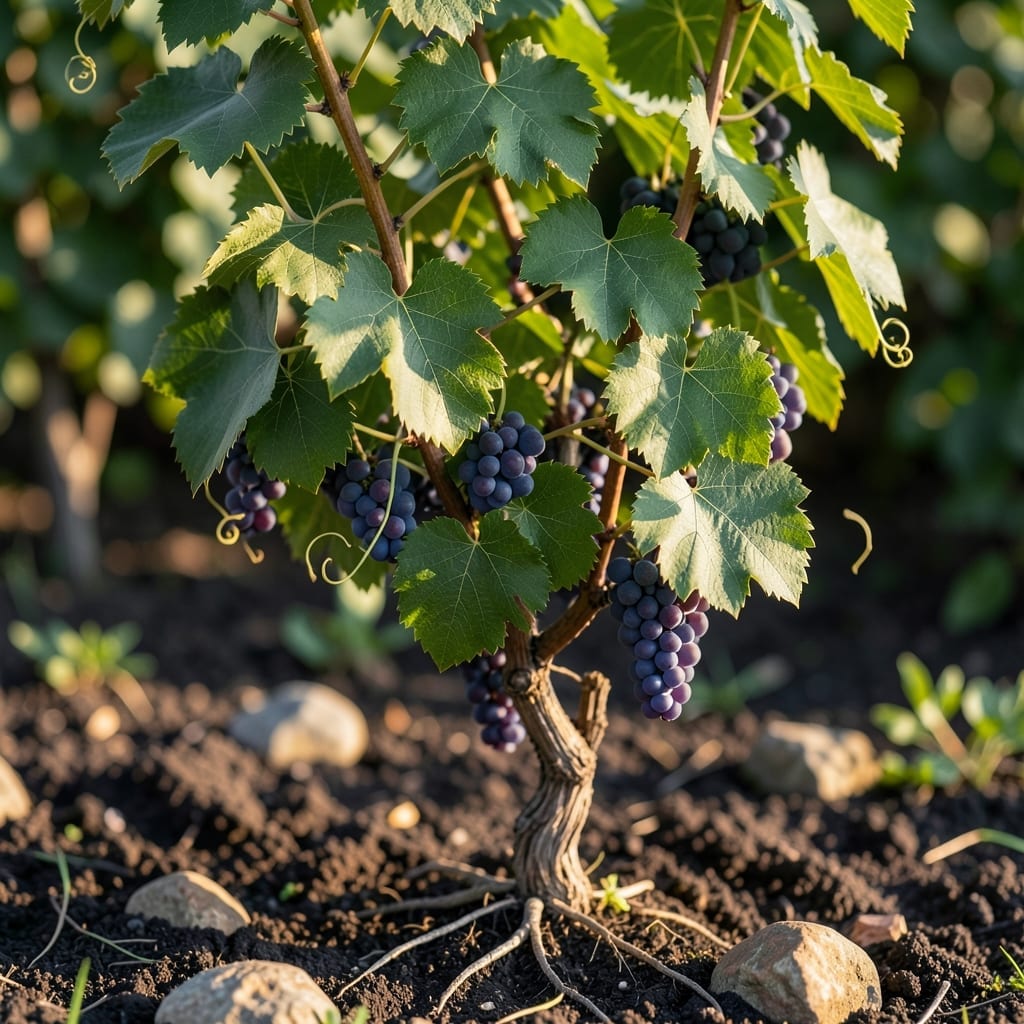
I’ve grown Catawba grapes for years, and the leaves are just as valuable as the fruit. Their bold, heart-shaped foliage creates stunning summer shade while producing clusters of sweet grapes.
These vines thrive with well-draining soil, consistent watering, and annual pruning. You’ll get lush green growth that resists common diseases when given the right care.
📚 In This Guide
Here’s the method I’ve refined over years of growing vigorous, productive grape vines.
Choose a site with full sun exposure—at least 6-8 hours of direct sunlight daily is non-negotiable for healthy Catawba vines. The soil should be well-draining with a pH between 5.5 and 6.5. I always perform a soil test first because grape vines are particularly sensitive to pH imbalance.
Avoid low-lying areas where cold air settles, as this increases frost risk. South or southwest-facing slopes work best, providing both warmth and air circulation. You’ll know you’ve found the right spot when the soil feels loose and crumbly in your hands, not compacted or waterlogged.
Dig a hole that’s 2 feet wide and 2 feet deep—large enough to accommodate the root system comfortably. Remove any rocks, weeds, or debris that might impede root growth. I mix the native soil with aged compost to improve fertility and drainage without over-fertilizing.
Create a small mound in the center of the hole to support the vine’s roots at the proper depth. The bud union (if present) should sit 2-3 inches above the soil line after planting. This prevents suffocation and encourages strong initial growth.
Place the bare-root vine in the hole, spreading roots outward over the mound. Backfill with the soil-compost mixture, firming gently as you go to eliminate air pockets. Water thoroughly with 2-3 gallons of water to settle the soil around the roots. I’ve found that this initial deep watering prevents transplant shock better than light, frequent watering.
Install a sturdy trellis or support system immediately—Catawba vines grow aggressively and need structure from day one. Train the main cane to grow upward along the support, securing it loosely with soft ties. You’ll see new growth emerging within 2-3 weeks if conditions are right.
First season, focus on watering deeply once weekly unless rainfall provides at least 1 inch. The soil should feel moist 6 inches down but never waterlogged. Mulch with 2-3 inches of organic material to retain moisture and suppress weeds, keeping it 6 inches away from the trunk to prevent rot.
Prune aggressively the first winter to establish the vine’s structure. Remove all but 2-3 strong canes, cutting back to 2-3 buds each. This seems drastic, but it’s the secret to creating a vine that produces quality leaves rather than excessive, weak growth.
Small details in planting and care make all the difference for thriving vines.
Sunlight Priority: That 6-8 hours of daily sun isn’t just a suggestion—it’s critical for photosynthesis in Catawba vines. I’ve seen vines struggle with only 5 hours, producing weak growth and poor leaf quality. Use a sun calculator app to track light patterns across your yard before committing to a spot.
Soil Preparation Insight: The 2 feet wide and 2 feet deep hole size in Step 2 gives roots room to establish without restriction. Don’t cut corners here; compacted soil around the edges will stunt growth. I learned this after my first vine barely grew—turns out the roots hit a clay layer just below the surface.
Watering Wisdom: That initial 2-3 gallons of water in Step 3 is non-negotiable for preventing air pockets around the roots. After planting, check the soil 6 inches down weekly—if it’s dry at that depth, it’s time to water deeply, not just at the surface.
Pruning Perspective: The aggressive first-winter pruning in Step 4 feels counterintuitive, but it’s the foundation for strong growth. Those 2-3 strong canes with 2-3 buds each will produce far better quality leaves than letting the vine grow wild.
Harvest Catawba grape leaves in late spring to early summer when they’re young, tender, and bright green. Avoid older leaves, as they can be tough and bitter.
Fresh leaves can be used, but blanching (dipping in boiling water for 2-3 minutes) softens them and removes bitterness, making them perfect for dolmas or wraps.
Other grape varieties like Concord or Thompson Seedless work well. For a different twist, try cabbage or Swiss chard leaves, though the flavor will differ.
Yellowing leaves often signal nutrient deficiencies (like nitrogen or magnesium), overwatering, or pests. Check soil conditions and adjust care as needed.
Blanch leaves, then freeze them in airtight bags for up to 6 months. Alternatively, preserve them in brine (saltwater) in the fridge for short-term use.