
Beautiful Plants For Your Interior
Beautiful Plants For Your Interior
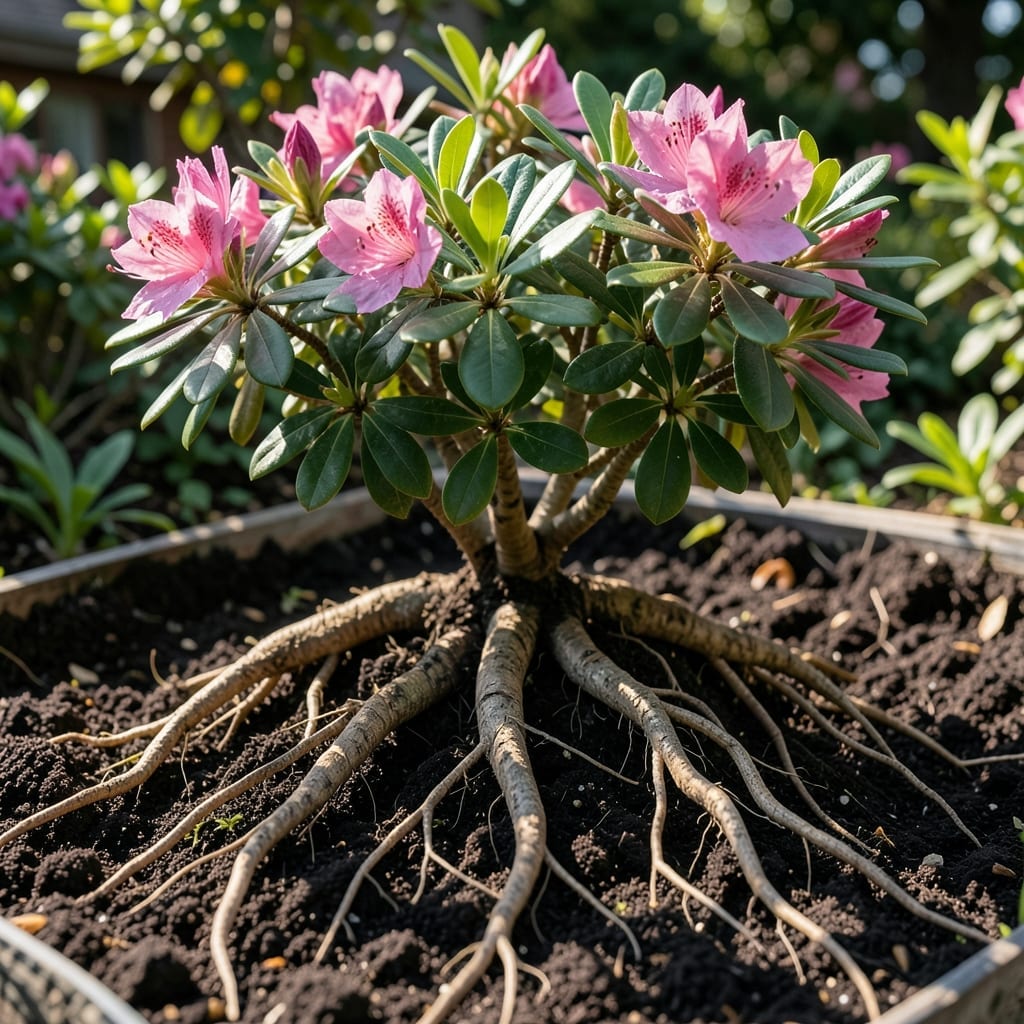
I used to struggle with wilting azaleas until I studied their shallow, fibrous roots. These delicate feeders need consistent moisture but hate soggy soil.
Plant them high with organic matter, water deeply twice weekly, and mulch to protect those surface roots. Healthy growth starts underground with the right foundation.
📚 In This Guide
Here’s how to recognize and work with the unique growth patterns that keep your plants thriving.
Azalea roots spread horizontally just beneath the soil surface, forming a dense, fibrous mat. I always check the top 2-3 inches of soil—that’s where most of the action happens. This shallow system means they’re highly sensitive to moisture fluctuations and soil compaction.
You’ll notice the roots are fine and hair-like rather than thick and woody. This design allows for maximum water and nutrient absorption, but it also makes them vulnerable to drying out. The fibrous network typically extends 1.5 to 2 times the width of the plant’s canopy.
These plants demand well-draining, acidic soil with a pH between 4.5 and 6.0. I test my soil regularly because the wrong pH locks out essential nutrients. The shallow roots can’t penetrate deep, compacted layers, so loose, organic-rich soil is non-negotiable.
Watch for signs of stress: yellowing leaves often indicate improper soil conditions. Azaleas also prefer partial shade, especially in hotter climates, to protect their sensitive root system from temperature extremes. Direct afternoon sun can scorch both leaves and roots.
Because the roots are so close to the surface, consistent moisture is critical. I water deeply but infrequently—about 1-1.5 inches per week, split into two sessions. The goal is to keep the top 4-6 inches of soil evenly moist but never soggy.
Drip irrigation or a soaker hose works best to deliver water directly to the root zone without wetting the foliage. Overhead watering can lead to fungal issues and doesn’t reach the shallow roots effectively. Mulching with 2-3 inches of organic material helps retain moisture and moderate soil temperature.
When planting or transplanting, handle the root ball with extreme care. I always dig a hole twice as wide as the root ball but no deeper. This gives the shallow roots room to spread without being buried too deep, which can suffocate them.
Avoid heavy foot traffic around the base of the plant—compaction crushes those delicate surface roots. If you need to work near the plant, use a board to distribute your weight. Also, never cultivate the soil too deeply around azaleas; a gentle surface scratch is all that’s needed for weeding.
In fall, azaleas begin preparing for dormancy by slowing root growth. I reduce watering frequency but maintain consistent moisture until the first hard frost. The roots remain active longer than the foliage, so don’t assume the plant is completely dormant.
Spring is when the root system becomes most active. This is the ideal time to fertilize with an acid-forming product, but only after you see new growth emerging. Never fertilize during drought or extreme heat, as this can burn the shallow roots. A light application every 4-6 weeks during the growing season keeps them healthy.
Here’s what I’ve learned from years of working with these beautiful but finicky plants.
The Depth Factor: Since azalea roots stay in the top 2-3 inches of soil, never dig or cultivate deeper than this. I learned the hard way that even light tilling can damage the fibrous network and set back growth for months. A gentle surface scratch is all you need for weeding.
Soil pH Precision: The 4.5 to 6.0 pH range isn’t just a suggestion—it’s critical. I test my soil every spring and adjust with sulfur if needed. Yellowing leaves are often the first sign that your pH is off, and by then, the shallow roots are already struggling to absorb nutrients.
Watering Wisdom: Those 1-1.5 inches per week should be split into two deep waterings, not daily light sprinkles. The top 4-6 inches must stay consistently moist, but soggy soil is just as dangerous as dry soil for these surface-dwelling roots. Drip irrigation is my go-to for precision.
Seasonal Timing: That 4-6 week fertilizing schedule in spring is non-negotiable for healthy growth. But here’s the catch—I never fertilize until I see new growth emerging, and I always stop before extreme heat hits. The roots are active longer than you think, but they’re also more vulnerable to burn.
Azalea roots typically grow shallow, spreading 6–12 inches deep but extending widely (2–3 feet outward). This makes them sensitive to soil compaction and drought, so mulching helps retain moisture and protect their delicate system.
No, azalea roots are non-invasive and unlikely to damage structures. Their shallow, fibrous network focuses on absorbing surface nutrients, posing minimal risk to foundations, sidewalks, or underground pipes.
Fertilize in early spring (after blooming) or fall, using an acid-based formula (pH 4.5–6.0). Avoid late-summer feeding, which can promote tender growth vulnerable to winter damage.
Exposed roots often result from soil erosion or poor planting depth. Gently cover them with 2–3 inches of mulch or organic soil to protect them, but avoid piling it against the stem to prevent rot.
Most azaleas have shallow roots, but some native species (like Rhododendron canescens) develop slightly deeper systems. For drought-prone areas, choose these hardier varieties or improve soil drainage.