
Beautiful Plants For Your Interior
Beautiful Plants For Your Interior
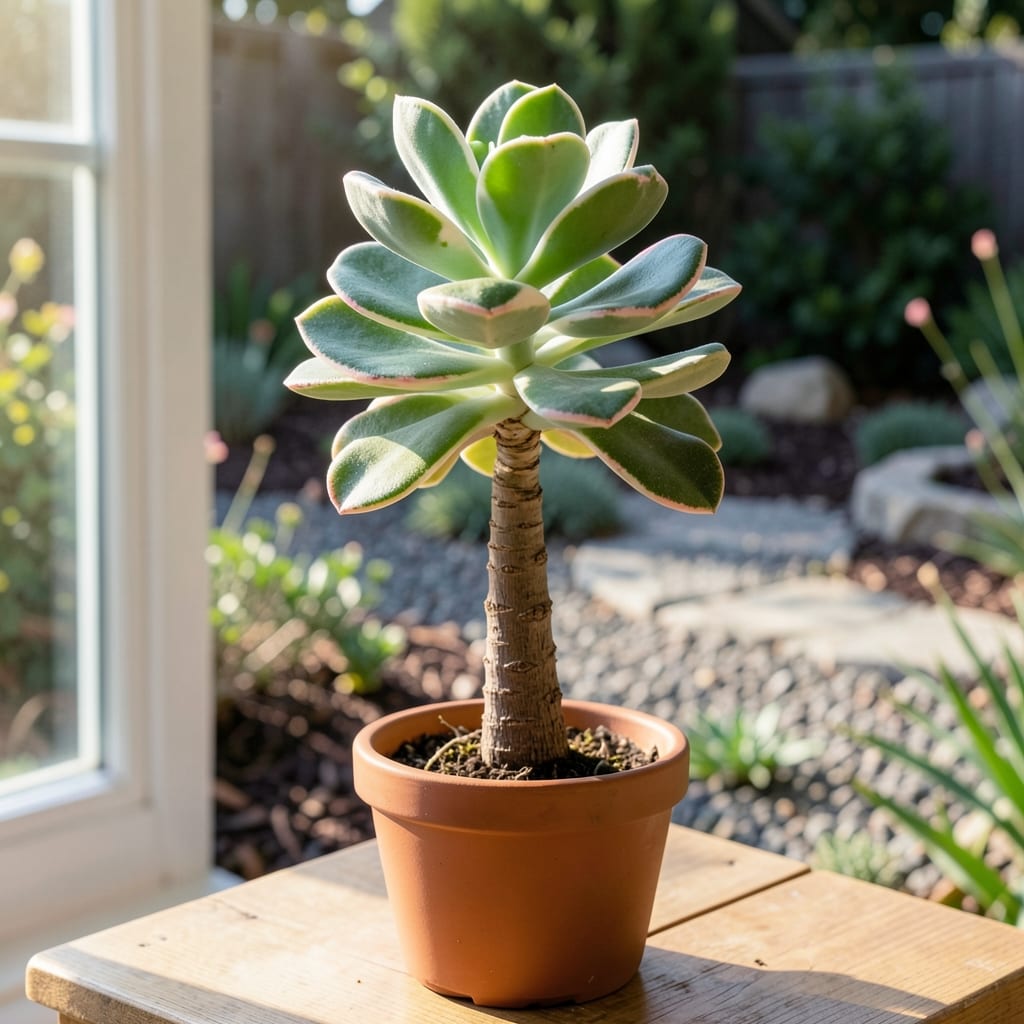
This striped succulent stole my heart with its vibrant red-and-green leaves. Candy cane crassula thrives with minimal effort, making it perfect for forgetful plant parents.
Give it bright light, sparse water, and well-draining soil, and it’ll reward you with steady growth and striking colors. The best part? It handles neglect better than most houseplants.
📚 In This Guide
This method ensures vibrant colors and compact growth for your succulent collection.
Place your Candy Cane Crassula where it receives 6-8 hours of bright, indirect light daily. A south or west-facing window works best, though an east exposure can suffice if intense. Watch for deep red margins on the leaves—that’s your confirmation the light levels are perfect.
If the plant stretches with elongated stems and pale leaves, it’s not getting enough light. Move it closer to the window or supplement with a full-spectrum grow light for 12-14 hours daily to restore compact growth. Rotate the pot a quarter turn weekly to ensure even development.
Water only when the soil is completely dry to the touch—this usually means every 2-3 weeks in typical indoor conditions. Stick your finger 1-2 inches into the soil; if it feels dry at that depth, it’s time to water. Use the soak-and-dry method: saturate the soil until water runs from the drainage holes, then let it dry out fully.
Overwatering is the fastest way to kill this plant. Yellowing leaves or mushy stems signal excess moisture. If this happens, stop watering immediately and move the plant to a brighter, airier spot to help the soil dry faster. Always use a container with drainage holes to prevent root rot.
Plant your Candy Cane Crassula in a cactus or succulent-specific potting mix to ensure proper drainage. If you’re using a standard potting mix, amend it with 50% perlite or coarse sand to improve aeration. The soil should dry quickly after watering—if it stays damp for more than a day, it’s not the right mix.
Choose a shallow container with drainage holes, as the roots of this succulent are not deep. Terra cotta pots are ideal because they wick away excess moisture through their porous walls. Repot every 2-3 years or when the plant outgrows its container, refreshing the soil to prevent compaction.
Keep your plant in temperatures between 65-75°F during the growing season. It can tolerate temperatures down to 40°F but should be brought indoors if frost is expected. Avoid placing it near drafty windows or heating vents, as sudden temperature swings can stress the plant.
Candy Cane Crassula thrives in low humidity, making it perfect for typical indoor environments. If your home is particularly humid, ensure good air circulation around the plant to prevent fungal issues. A small fan set to low can help, but avoid direct airflow on the plant.
Prune leggy stems in early spring to encourage a bushier shape. Use clean, sharp scissors to snip just above a leaf node. The cuttings can be propagated by letting them callus for 1-2 days, then placing them on top of dry soil. Mist lightly every 3-4 days until roots form in 3-4 weeks.
This plant responds well to light pruning, which also provides more cuttings to expand your collection. If flowering occurs, the small white blooms appear in late winter or early spring—deadhead them if you want to redirect energy toward foliage growth.
Between us, I learned these the hard way after nearly killing my first one.
Light Exposure: That 6-8 hours of bright, indirect light daily in Step 1 isn’t just a suggestion—it’s critical for maintaining those vibrant red margins. If your plant starts stretching with pale leaves, move it closer to the window immediately. The deep red edges are your confirmation you’ve nailed it.
Watering Discipline: The soak-and-dry method in Step 2 works only if you’re patient. Stick your finger those 1-2 inches into the soil and wait until it’s completely dry. I killed my first Crassula by watering every week instead of every 2-3 weeks—trust the process.
Soil Selection: Don’t cheap out on soil for Step 3. Standard potting mix retains too much moisture. Either use cactus-specific soil or amend regular mix with 50% perlite or coarse sand. Terra cotta pots are worth the investment—they’ll save your plant from root rot.
Temperature Control: Keep it in that 65-75°F range during growing season. If temperatures drop toward 40°F, bring it indoors. Sudden temperature swings from drafts or vents stress the plant more than you’d think.
Water every 2-3 weeks, allowing the soil to dry completely between waterings. Overwatering can cause root rot, so err on the side of underwatering for this drought-tolerant succulent.
Yellow leaves often indicate overwatering or poor drainage. Check the soil moisture and ensure your pot has drainage holes. Adjust watering habits and trim any affected leaves to promote new growth.
Yes! It thrives indoors with bright, indirect light. Place it near a south- or west-facing window. If natural light is limited, consider using a grow light to keep it healthy and vibrant.
If you love the look but want variety, try Jade Plant (Crassula ovata), String of Pearls (Senecio rowleyanus), or Zebra Plant (Haworthia attenuata). These succulents offer similar care needs and visual appeal.
Leggy growth usually means insufficient light. Move your plant to a sunnier spot and prune the stretched stems to encourage compact growth. Propagate the cuttings to grow new plants!