
Beautiful Plants For Your Interior
Beautiful Plants For Your Interior
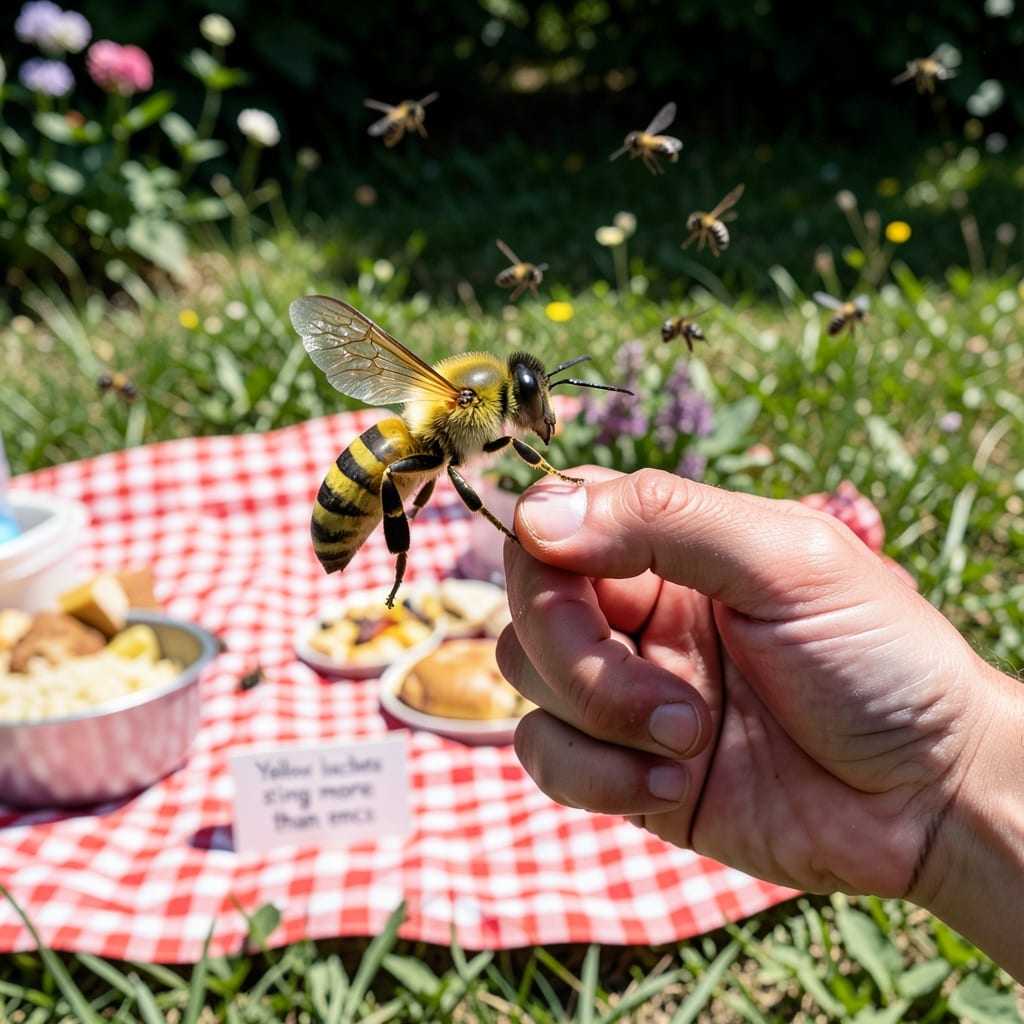
Yellow jackets possess a unique stinger design that sets them apart from honeybees. Their stingers are smooth and lack the microscopic barbs that cause honeybee stingers to lodge in skin. This anatomical difference allows yellow jackets to withdraw their stingers effortlessly after each attack, leaving them fully functional for repeated use. 🔥
The venom delivery system works like a hypodermic needle. Each sting injects about 0.1-0.2 mg of venom containing acetylcholine, which triggers immediate pain. Since the stinger doesn’t detach, the insect can continue pumping venom through the same channel multiple times, with each sting delivering a fresh dose. ✨
This capability serves a crucial evolutionary purpose. Unlike honeybees that die after stinging, yellow jackets are social predators that need to defend their colonies repeatedly. Their ability to sting multiple times makes them far more effective at deterring threats to their nests, which can house up to 5,000 workers at peak population. ⚡
Comparatively, a honeybee’s barbed stinger acts like a fishing hook – once embedded, it tears away from the bee’s body along with part of its digestive tract, killing the insect. Yellow jackets evolved without this limitation, giving them a significant survival advantage as both hunters and defenders. 💫
In laboratory tests, individual yellow jackets have been observed stinging targets up to 20-30 times in rapid succession when threatened. This demonstrates how their smooth stinger design enables sustained defensive behavior that’s impossible for honeybees. 🌟
Yellow jackets have smooth stingers without barbs, unlike honeybees. This allows them to pull out and sting repeatedly. Honeybee stingers get lodged in skin, killing the bee after one use.
In lab conditions, they’ve been observed stinging 20-30 times in rapid succession. In nature, they can sting multiple times when defending their nest. Each sting delivers fresh venom.
Their smooth stinger design prevents it from tearing away. This evolutionary advantage lets them defend colonies effectively. Bees die because their barbed stingers rip out internal organs.
Disturbing their nest or swatting at them releases alarm pheromones. This signals others to attack, often resulting in multiple stings. Always move away calmly if you encounter them.