
Beautiful Plants For Your Interior
Beautiful Plants For Your Interior
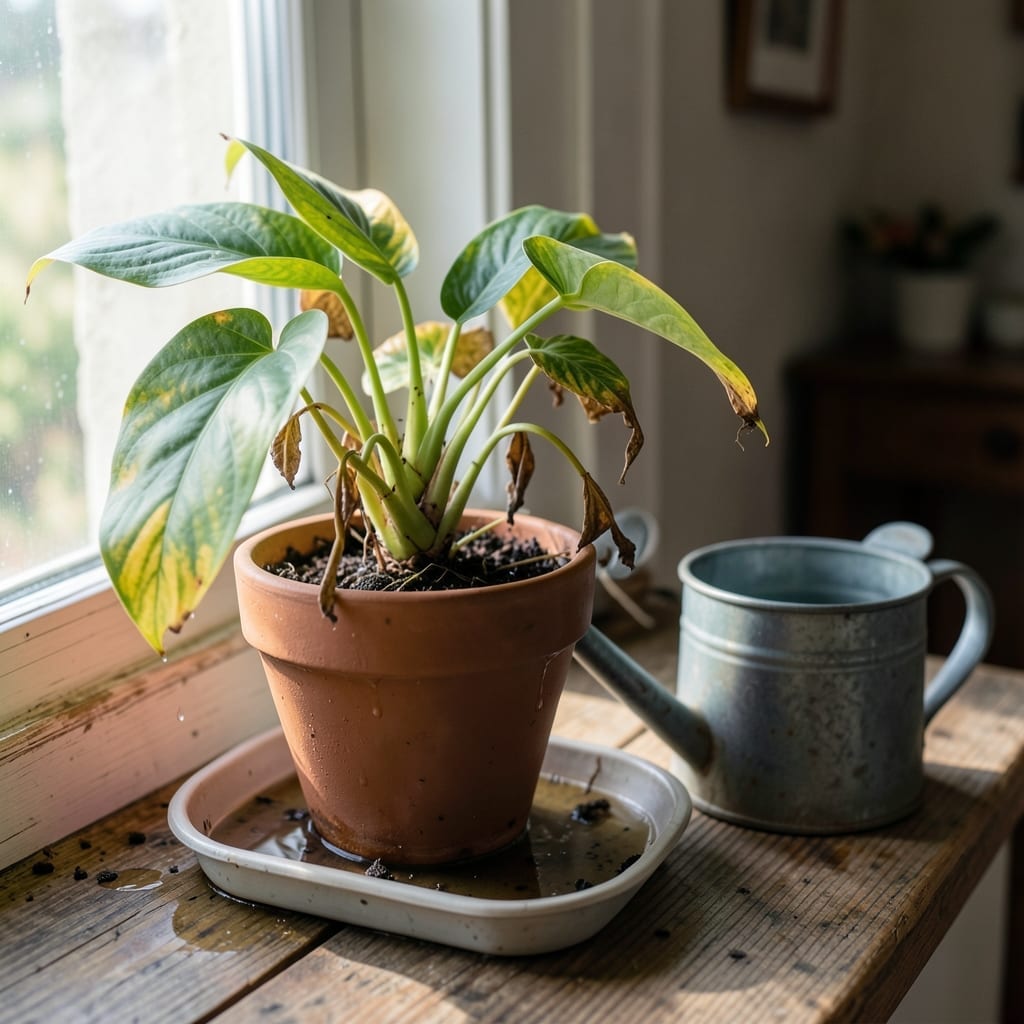
I’ve lost count of how many plants I’ve drowned with kindness. Overwatering is the silent killer—roots suffocate, leaves yellow, and stems turn mushy before you realize what’s happening.
Here’s the thing—some can bounce back on their own if the damage isn’t severe. Healthy roots and a dry-out period often do the trick, but it’s a race against rot.
You’ll know recovery’s possible when new growth appears and soil stays dry for a few days. But if the stem is soft or black, it’s usually too late.
Prevention is simpler than cure: check soil moisture before watering, use pots with drainage, and let the top inch dry out. No guesswork, just better habits.
Overwatering disrupts the delicate balance between roots, soil, and oxygen. Here’s why it happens:
When pots lack drainage holes or soil compacts too tightly, excess water can’t escape. This suffocates roots by displacing air pockets, leading to root rot. Clay or dense soils worsen the issue, trapping moisture like a sponge.
Many plant owners water on a fixed schedule rather than checking soil moisture. Frequent watering—especially in cool or humid conditions—prevents roots from drying out, creating a waterlogged environment where anaerobic bacteria thrive.
Oversized containers hold more soil, which retains excess moisture longer. Smaller pots dry out faster, but large ones can drown roots if watered too often. Always match pot size to the plant’s root system.
Plants in dim areas use less water because photosynthesis slows. If watering isn’t adjusted, the soil stays soggy, increasing the risk of fungal diseases like Phytophthora.
Understanding these causes helps prevent overwatering and gives plants a fighting chance to recover.
Overwatered plants can bounce back with the right care. Here’s how to address the most common issues caused by excessive watering and prevent future mishaps.
If your plant’s roots are mushy, brown, or smelly, root rot has set in. Stop watering immediately and remove the plant from its pot. Trim away affected roots with clean scissors, then repot in fresh, well-draining soil. Choose a pot with drainage holes to avoid a repeat.
Prevention tip: 💡 Always check soil moisture before watering—stick your finger an inch into the soil. If it’s damp, wait.
Yellow leaves often signal waterlogged soil. Move your plant to a spot with better airflow and ensure the pot has drainage. If the soil is compacted, gently loosen it with a fork to help it dry out faster. Avoid fertilizing until the plant recovers—too much can stress it further.
Prevention tip: 🌡️ Use a moisture meter or the “lift test” (a light pot usually means dry soil) to gauge watering needs.
Overwatering can cause edema, where cells burst from excess pressure, leading to blisters or lesions. Reduce watering and improve humidity control by grouping plants together or using a pebble tray. Affected leaves won’t heal, but new growth will be healthy if conditions improve.
Prevention tip: ✨ Water in the morning so plants have time to absorb moisture before cooler evenings.
These pests thrive in damp soil. Let the top inch of soil dry completely between waterings. For severe infestations, use yellow sticky traps or a hydrogen peroxide soil drench (1 part 3% peroxide to 4 parts water) to kill larvae.
Prevention tip: 🎯 Bottom-watering (placing the pot in a tray of water) lets roots absorb only what they need.
Mild cases may bounce back in 1-2 weeks with dry soil and good airflow. Severe root rot needs 3-4 weeks or longer after repotting. Patience is key—don’t water until soil is dry 1-2 inches down.
Look for new green growth or firm stems. Yellow leaves won’t turn green again, but fresh ones will emerge if conditions improve. Check roots weekly for healthy white tips.
If the stem is soft and black, it’s often too late. For partially affected plants, trim rotten sections and propagate healthy cuttings in water. Always use sterile tools to prevent spreading disease.
Never fertilize stressed plants. Wait until you see new growth, then use a half-strength solution. Overfeeding can burn damaged roots and worsen recovery.