
Beautiful Plants For Your Interior
Beautiful Plants For Your Interior
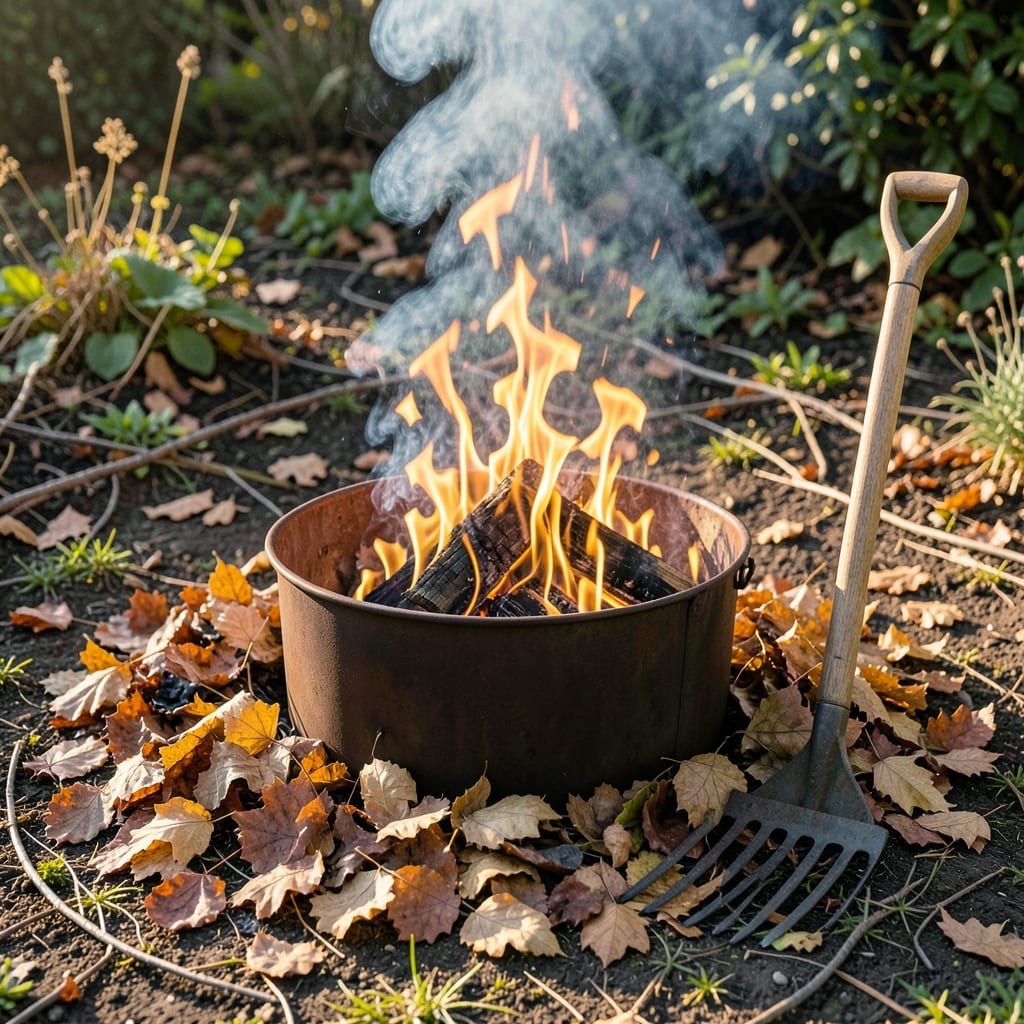
Burning leaves is an example of a combustion reaction, a type of exothermic chemical process that produces heat, light, and new substances like ash and carbon dioxide.
I find it fascinating how this process requires three key elements: fuel (the leaves), oxygen from the air, and heat to start the chain reaction. 🔥 The visible flames and warmth you feel are direct results of energy release, while the ash left behind represents the non-combustible minerals from the original plant material.
What many don’t realize is that this same principle powers everything from campfires to car engines. ✨
💡 In This Article
At its core, this process is a rapid chemical reaction between carbon-based material (the leaves) and oxygen. The dry leaves contain cellulose and lignin, which break down under heat into volatile gases that ignite when exposed to 300-500°F temperatures.
This ignition point is lower than wood’s 572°F because leaves have higher surface area relative to mass. 🔥
The visible flame you see is actually superheated gas undergoing oxidation. As the gases burn, they release energy in the form of heat (1,200-1,800°F in the flame) and light. The orange and yellow colors come from excited soot particles, while blue flames indicate complete combustion with optimal oxygen. ✨
What’s left behind tells a story too. The white ash represents mineral content like calcium and potassium that couldn’t burn. A well-burned pile might leave 1-5% of the original mass as ash, while smoldering leaves can produce up to 20% due to incomplete combustion.
The carbon dioxide and water vapor released are the same byproducts as burning any wood.
The reaction sustains itself through a feedback loop. Heat from the flames dries more leaves and releases additional gases, maintaining the reaction until the fuel or oxygen runs out. This self-sustaining nature is why a small spark can turn a leaf pile into a roaring fire in minutes. ⚡
Interesting variation: Green leaves burn differently because their higher moisture content (up to 80% water) requires more energy to evaporate before combustion can begin. That’s why they often just smolder rather than producing a clean, hot flame like dry leaves do. 💫
It’s a combustion reaction, an exothermic process releasing heat and light. The leaves act as fuel, reacting with oxygen to produce energy, ash, and gases like carbon dioxide.
Flames appear when superheated gases ignite. The colors come from excited soot particles, with blue indicating complete combustion and orange/yellow signaling incomplete burning.
Dry leaves have less moisture, so they ignite at 300-500°F. Green leaves contain up to 80% water, requiring more heat to evaporate before combustion can begin.
Yes, it releases pollutants like particulate matter and carbon monoxide. These can trigger respiratory issues, especially for sensitive groups, and contribute to air quality problems.