
Beautiful Plants For Your Interior
Beautiful Plants For Your Interior
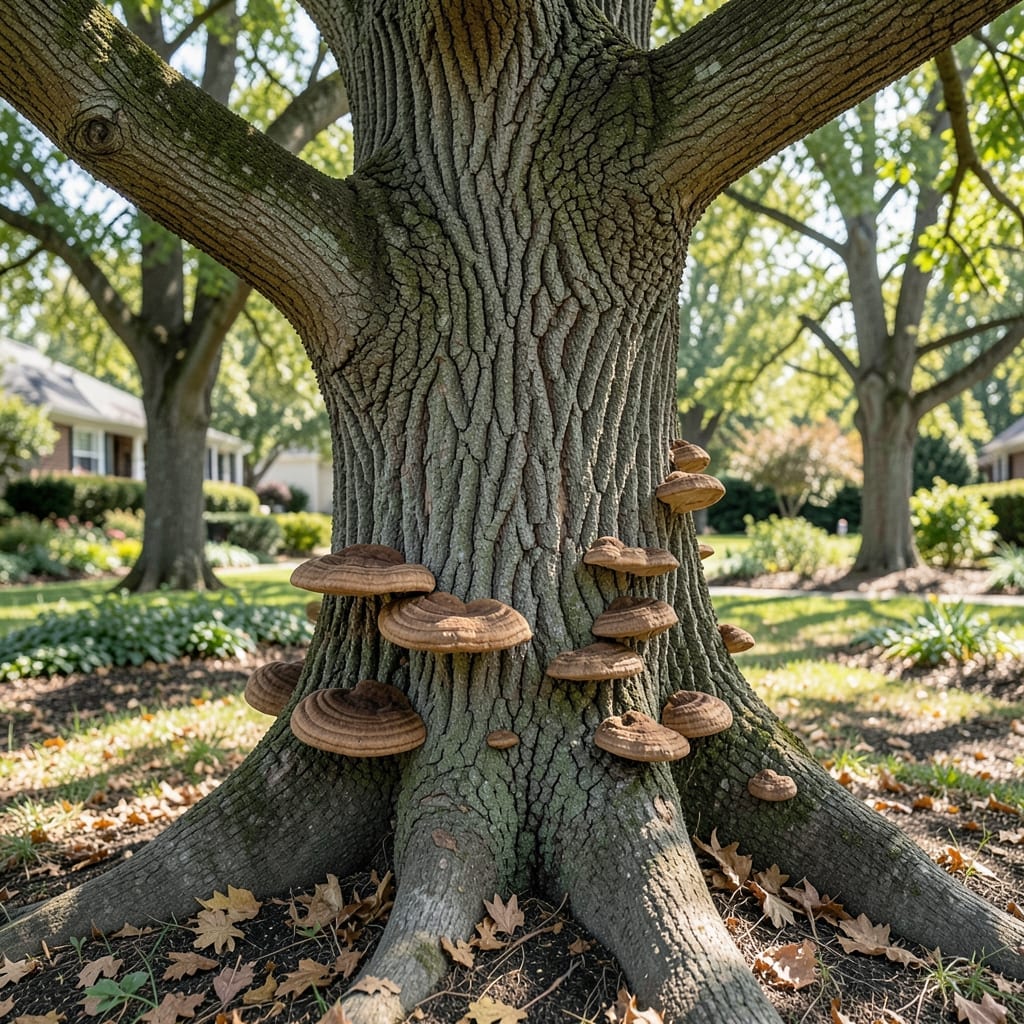
Brown fungi on trees are typically wood-decaying species like bracket or shelf fungi. They break down dead wood but can signal internal rot if appearing on living trees.
I’ve noticed these organisms often thrive on weakened or dying trees, where they play a crucial ecological role in nutrient cycling. Bracket fungi, for example, can grow in overlapping shelves, while others appear as crust-like formations. Their presence on healthy trees may indicate stress from drought, injury, or poor soil conditions. 🌟
💡 In This Article
Brown fungi on trees often belong to the Basidiomycota division, with bracket fungi like Ganoderma or Fomes being the most visible. These species produce shelf-like structures called conks that emerge from tree trunks, often with a tough, corky texture. Their brown hues range from light tan to deep umber, depending on age and moisture levels.
You can spot them by their semicircular shapes, which form in overlapping layers. Ganoderma typically has a shiny, lacquered surface, while Fomes appears more matte and zoned with concentric rings. These fungi often target hardwoods like oak, maple, or birch, though some species prefer conifers. Their growth patterns reveal much about the tree’s internal health.
🌟
Another common type is Phellinus, which forms thick, hoof-shaped conks that cling tightly to the bark. These fungi often indicate advanced decay, as they feed on the tree’s heartwood. Unlike bracket fungi, Phellinus lacks a distinct stem and grows directly from the trunk, sometimes reaching up to 12 inches in diameter.
For accurate identification, examine the underside of the conk. Many brown fungi have tiny pores instead of gills, which release spores into the air. The pore surface can be white, brown, or even black, and its color often changes as the fungus matures.
This detail helps distinguish between species like Trametes (white pores) and Daedalea (maze-like pores).
Remember, these fungi thrive in moist, shaded environments where air circulation is poor. Their presence on living trees often signals underlying stress, such as root damage or drought. Observing their location—whether at the base, mid-trunk, or branches—can also hint at the extent of internal decay. ✨
Yes, brown fungi often indicate internal decay. While they primarily decompose dead wood, their presence on living trees suggests stress or disease that could weaken the tree over time.
Improve air circulation by pruning nearby branches and keep the tree healthy with proper watering. Remove any infected wood completely and sterilize your tools after use.
Most brown tree fungi are not toxic to touch, but it’s best to wear gloves when handling them. Some people may experience skin irritation, and you don’t want to spread spores to other trees.
Remove fungi during dry weather when spores are less likely to spread. Early spring or late fall works well. Avoid wet conditions which can help spores disperse.