
Beautiful Plants For Your Interior
Beautiful Plants For Your Interior
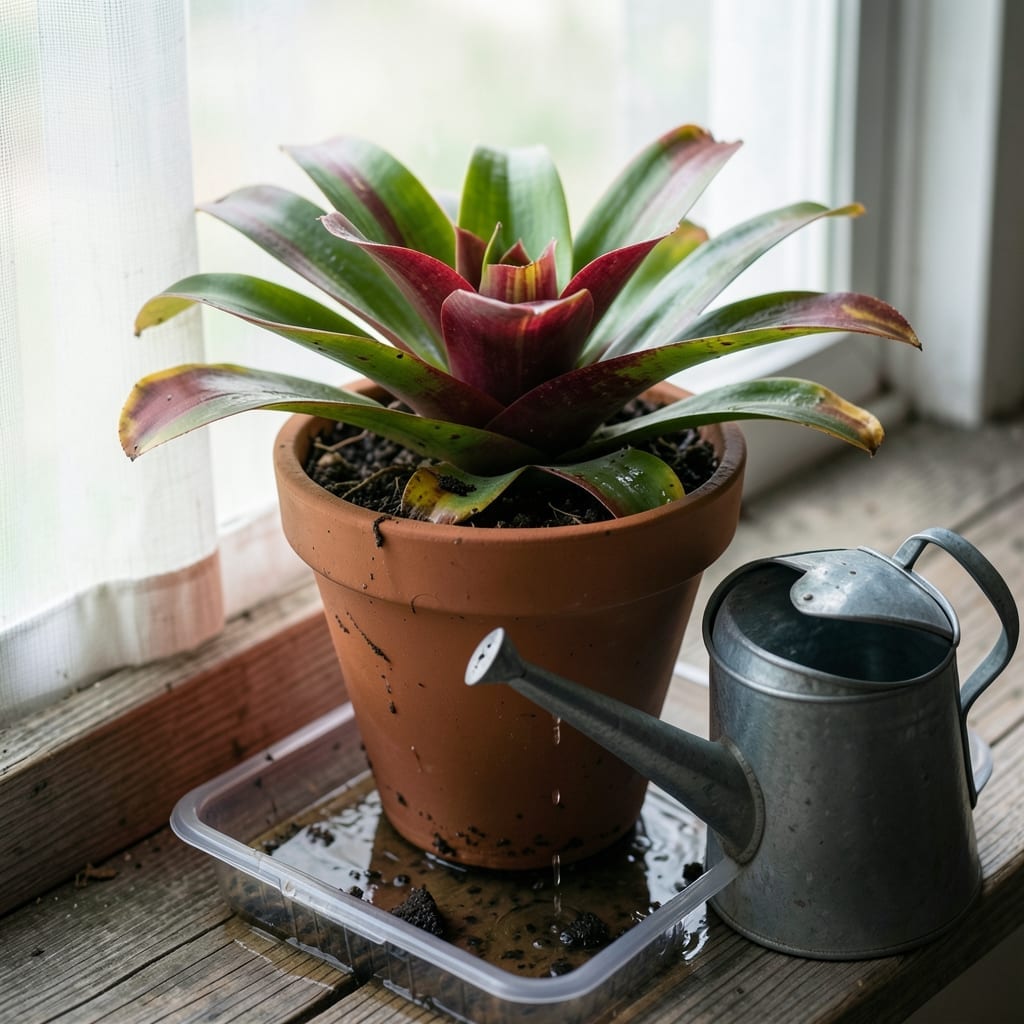
My heart sank when I saw the yellowing leaves and mushy base. Overwatering bromeliads is a silent killer that sneaks up fast, turning a thriving plant into a soggy mess overnight.
Here’s the thing—these tropical beauties store water in their central cup, not their roots. Most people drown them by mistaking that natural reservoir for a sign they need more water. The roots rot while the plant slowly suffocates.
Recovery is possible if you act quickly. You’ll need to remove the plant from its pot, trim the blackened roots, and let it dry out completely. Within 2-3 weeks, new growth should appear if the core is still healthy.
Prevention is simpler than you think. Water the cup once every 2 weeks and ignore the soil completely. That’s the secret these plants have been trying to tell us all along.
Overwatering bromeliads often stems from misunderstanding their natural habitat and water needs. These tropical plants thrive in environments where moisture is balanced with airflow, making them highly susceptible to issues when conditions deviate from this norm. Below are the primary causes of bromeliad overwatering, explained with scientific precision.
Bromeliads are epiphytic or terrestrial plants adapted to absorb water through their leaves and central “tank” (the rosette). Unlike traditional soil-rooted plants, they do not require constant moisture. Watering too frequently—especially in cool or humid conditions—prevents the roots from drying out, leading to oxygen deprivation and root asphyxiation. The roots then rot as anaerobic bacteria and fungi proliferate.
Potting bromeliads in containers without drainage holes or using dense, water-retentive soils (e.g., garden soil or peat-heavy mixes) traps excess water. Bromeliads need a fast-draining medium, such as a mix of orchid bark, perlite, and coconut coir, to mimic their native growing conditions on tree branches or rocky outcrops. Without proper drainage, water pools at the base, saturating the roots and accelerating rot.
The bromeliad’s central tank (or “urn”) is designed to hold water, but it must be flushed and refreshed regularly to prevent stagnation. Overfilling the tank—or failing to empty it in cooler months—creates a breeding ground for Pythium and Phytophthora pathogens. These waterborne fungi attack the plant’s base, causing soft, blackened tissue and systemic decline.
Low light, high humidity, and cool temperatures slow a bromeliad’s metabolism, reducing its ability to process water. In such conditions, even moderate watering can overwhelm the plant. Ideal bromeliad care includes bright, indirect light and temperatures between 60–80°F (15–27°C) to maintain healthy transpiration rates. Ignoring these factors increases the risk of overwatering, even if the watering schedule seems “normal.”
When your bromeliad is overwatered, quick action can save it. Below are targeted fixes for common issues, along with prevention tips to keep your plant thriving.
Fix: Stop watering immediately and move the plant to a bright, indirect light spot to help it dry out. Trim any mushy, discolored leaves with sterilized scissors to prevent rot from spreading. Allow the soil to dry completely before watering again—stick your finger an inch into the mix to check.
Prevention: Water only when the top 1-2 inches of soil feel dry. Use a well-draining potting mix (e.g., orchid or bromeliad mix) and ensure the pot has drainage holes. 💡 Pro tip: Mist the leaves lightly instead of watering the soil to mimic natural humidity without sogginess.
Fix: Remove the bromeliad from its pot and gently rinse the roots under lukewarm water. Trim away any black, slimy roots with clean shears. Repot in fresh, fast-draining soil and a sanitized pot. Avoid watering for 7–10 days to let the roots recover.
Prevention: Choose a pot with drainage holes and place a layer of pebbles or charcoal at the bottom to improve airflow. ✨ Pro tip: Elevate the pot on a saucer with pebbles to prevent waterlogging.
Fix: If the soil is soggy, tilt the pot sideways to let excess water drain out. Place the plant in a warm, breezy area to speed up drying. For severe cases, repot into dry soil immediately.
Prevention: Use a moisture meter to monitor soil dampness. Water in small amounts and only when needed. 🌡️ Pro tip: Terracotta pots dry out faster than plastic, making them a great choice for overzealous waterers.
With these steps, your bromeliad can bounce back—just be patient and adjust your care routine!
Water the central cup once every 2 weeks and ignore the soil. Empty and refresh the cup monthly to prevent stagnation.
Yellowing leaves, a mushy base, or blackened roots are red flags. The plant may also wilt despite wet soil.
Yes, if caught early. Remove the plant, trim rotten roots, and repot in fresh, dry mix. Avoid watering for 7-10 days.
Use a fast-draining mix like orchid bark, perlite, and coconut coir. Always choose pots with drainage holes.