
Beautiful Plants For Your Interior
Beautiful Plants For Your Interior
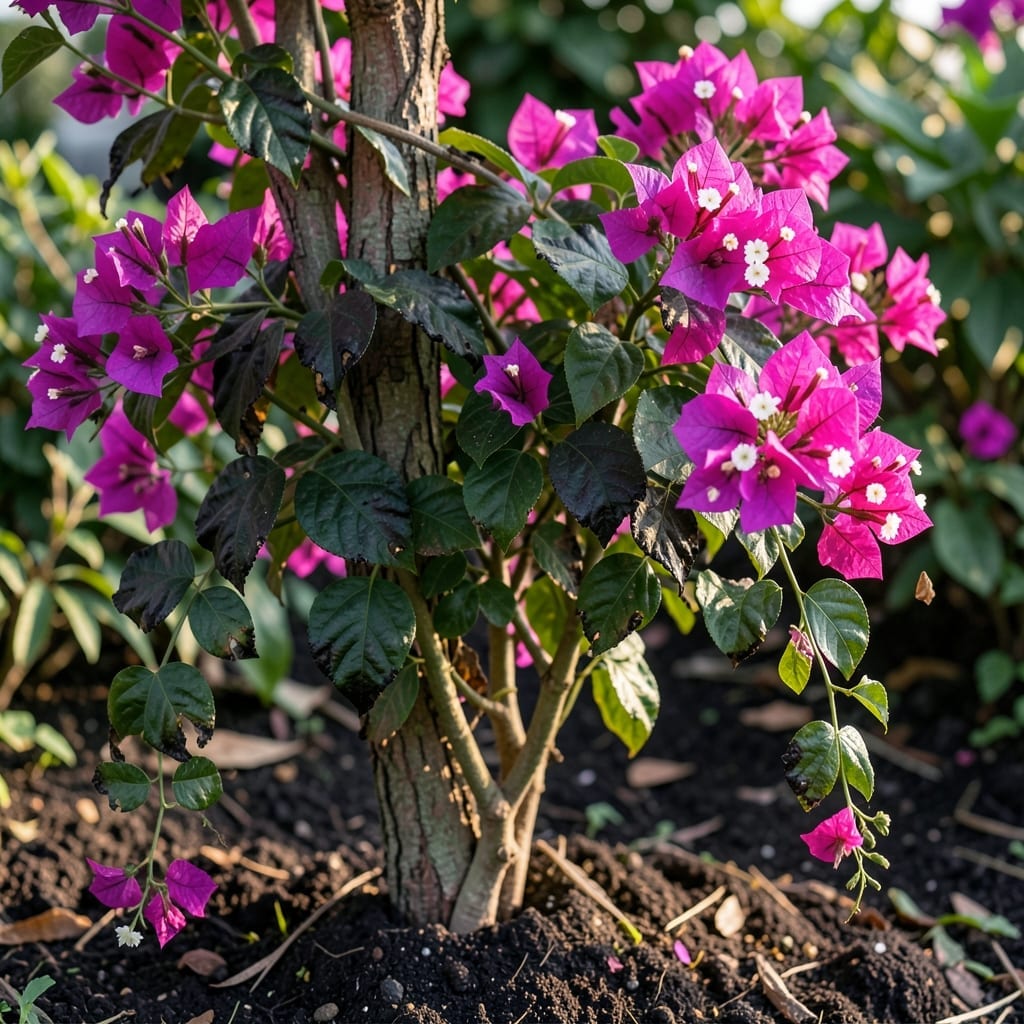
Black leaves on bougainvillea hit different. I’ve seen this exact issue turn a thriving plant into a sad, crispy mess overnight. The good news? It’s fixable.
Most times, it’s overwatering or a sneaky fungal infection. Other culprits include nutrient deficiencies or too much shade. Once you spot the blackening, act fast—these plants don’t recover well from prolonged stress.
With the right tweaks to watering, sunlight, and soil, you’ll see new growth in 2-3 weeks. The blooms come back even brighter when the plant’s happy again.
Simple fixes, big payoff. No chemicals needed.
Blackened leaves on your bougainvillea are a sign of stress, often tied to environmental or cultural issues. Below are the most common causes, explained with actionable insights.
Bougainvilleas hate soggy roots. Overwatering or compacted, poorly draining soil suffocates the roots, cutting off oxygen. This leads to root rot, where fungal pathogens (like Phytophthora or Pythium) thrive in waterlogged conditions. As roots die, they can’t deliver nutrients, causing leaves to blacken—often starting at the edges or tips. Check soil moisture 2 inches down; if it’s damp, hold off on watering.
Frost or sudden cold snaps (below 30°F/-1°C) damage bougainvillea cells, leading to necrotic (black) tissue. Similarly, intense heatwaves paired with low humidity can scorch leaves, especially if the plant is water-stressed. Blackening from cold typically appears as soft, mushy patches, while heat stress causes crisp, dry edges.
Pathogens like Alternaria or Xanthomonas create dark, spreading lesions. These start as small brown spots that expand into blackened areas, often with yellow halos. High humidity, overhead watering, or crowded foliage accelerates infection. Prune affected leaves immediately and avoid wetting foliage to curb spread.
Excess nitrogen promotes lush foliage at the expense of blooms—and can cause tip burn, where leaf margins blacken. Conversely, a phosphorus or potassium deficiency weakens the plant, making it susceptible to secondary infections that manifest as blackening. Test soil pH (ideal: 5.5–6.5); extreme alkalinity locks out key nutrients.
Addressing black leaves on your bougainvillea starts with identifying the root cause. Here’s how to tackle each issue effectively:
Fix: Let the soil dry out completely between waterings. If the plant is in a pot, ensure it has drainage holes. For garden plants, amend heavy soil with compost or sand to improve drainage.
Prevention tip: 💡 Water only when the top 1-2 inches of soil are dry, and use a well-draining potting mix.
Fix: Remove affected leaves and treat the plant with a copper-based fungicide or neem oil spray. Prune to improve airflow, as crowded foliage encourages disease.
Prevention tip: ✨ Avoid overhead watering and keep the area around the plant clean to reduce fungal spores.
Fix: Move potted bougainvilleas indoors or to a sheltered area during cold snaps. For in-ground plants, cover them with frost cloth or mulch heavily around the base.
Prevention tip: 🎯 Plant bougainvilleas in a sunny, warm spot and bring them inside before temperatures drop below 40°F (4°C).
Fix: Apply a balanced fertilizer (e.g., 10-10-10) or one high in phosphorus to promote blooming. Yellowing leaves with black spots may indicate magnesium deficiency—use Epsom salt (1 tablespoon per gallon of water) as a foliar spray.
Prevention tip: 🌱 Fertilize lightly every 4-6 weeks during the growing season, but avoid over-fertilizing.
Fix: Inspect the plant for pests like aphids or scale. Spray with insecticidal soap or neem oil, focusing on the undersides of leaves. Severe cases may require systemic insecticides.
Prevention tip: 🔍 Regularly check for pests and encourage beneficial insects like ladybugs to keep populations in check.
Water deeply every 2-3 weeks, letting soil dry completely between sessions. Overwatering causes root rot, leading to black leaves. Always check 1-2 inches down for dryness first.
Yes, frost or sudden cold below 30°F/-1°C damages cells, creating black, mushy patches. Move potted plants indoors or cover in-ground ones with frost cloth.
Use well-draining mix with compost or sand to avoid waterlogging. Heavy, compacted soil suffocates roots. Ideal pH is 5.5–6.5.
Remove affected leaves immediately to stop fungal/bacterial spread. Prune crowded areas to improve airflow and reduce humidity around foliage.