
Beautiful Plants For Your Interior
Beautiful Plants For Your Interior
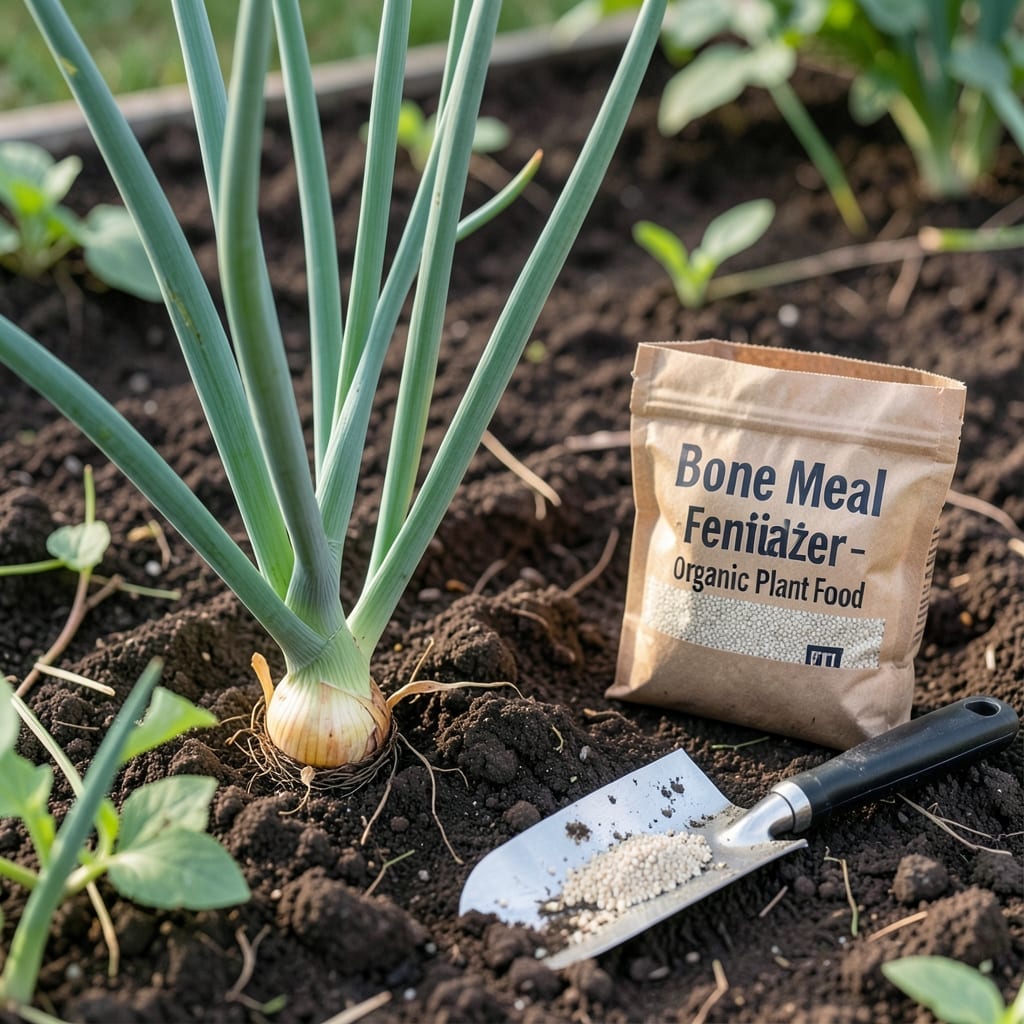
Bone meal provides onions with essential phosphorus for strong root development, improving bulb formation and overall growth. It’s a slow-release organic fertilizer ideal for phosphorus-deficient soils.
I use this amendment in my garden because onions are heavy phosphorus feeders, especially during early growth stages. The slow-release nature means it won’t overwhelm plants, and I’ve noticed significantly larger, firmer bulbs when applied at planting time. Just remember to work it 4-6 inches into the soil for best nutrient uptake. ⚡
💡 In This Article
Phosphorus is the engine behind root and bulb development in onions. Bone meal delivers this nutrient in a form that breaks down gradually through microbial activity, typically releasing 3-4% phosphorus over 2-4 months.
This steady supply matches onions’ growth cycle perfectly, as they need consistent phosphorus during the first 6-8 weeks to establish strong root systems. 🔥
Onion bulbs form from modified leaf bases that swell underground. Phosphorus fuels the energy transfer (ATP production) needed for this cellular expansion. Without adequate levels, bulbs remain small and loose, while optimal phosphorus creates dense, uniform layers. Studies show onions receiving bone meal can increase bulb diameter by 20-30% compared to untreated soil.
The calcium in bone meal also plays a crucial role. It helps prevent disorders like tip burn while strengthening cell walls. This dual nutrient approach explains why bone meal outperforms synthetic phosphorus fertilizers for onions, which often lack secondary nutrients.
The organic matter in bone meal additionally improves soil structure, enhancing water retention and root penetration. ✨
Soil pH affects bone meal’s effectiveness. In acidic conditions (pH 6.0-6.5), phosphorus becomes less available. Testing your soil before application is wise. For maximum benefit, incorporate bone meal at planting time when soil temperatures reach 50-55°F, as this triggers the microbial activity needed to begin the decomposition process.
What many gardeners overlook is bone meal’s role in disease resistance. Strong phosphorus-fed roots produce more defensive compounds, making onions less susceptible to fungal infections. The slow release also prevents the growth surges that can stress plants, leading to more consistent, healthier development throughout the season. 💫
Use 1-2 tablespoons per plant or 3-5 lbs per 100 sq ft for beds. This slow-release fertilizer only needs one application at planting for the entire season.
Apply 2-3 weeks before planting or at planting time. Work it into the top 4-6 inches of soil. Avoid frozen or waterlogged conditions.
Yes! Blend with compost or aged manure before incorporating into soil. This improves nutrient distribution and prevents clumping.
Bone meal works best in soil with pH 6.0-6.5. In acidic conditions, phosphorus becomes less available to plants.