
Beautiful Plants For Your Interior
Beautiful Plants For Your Interior
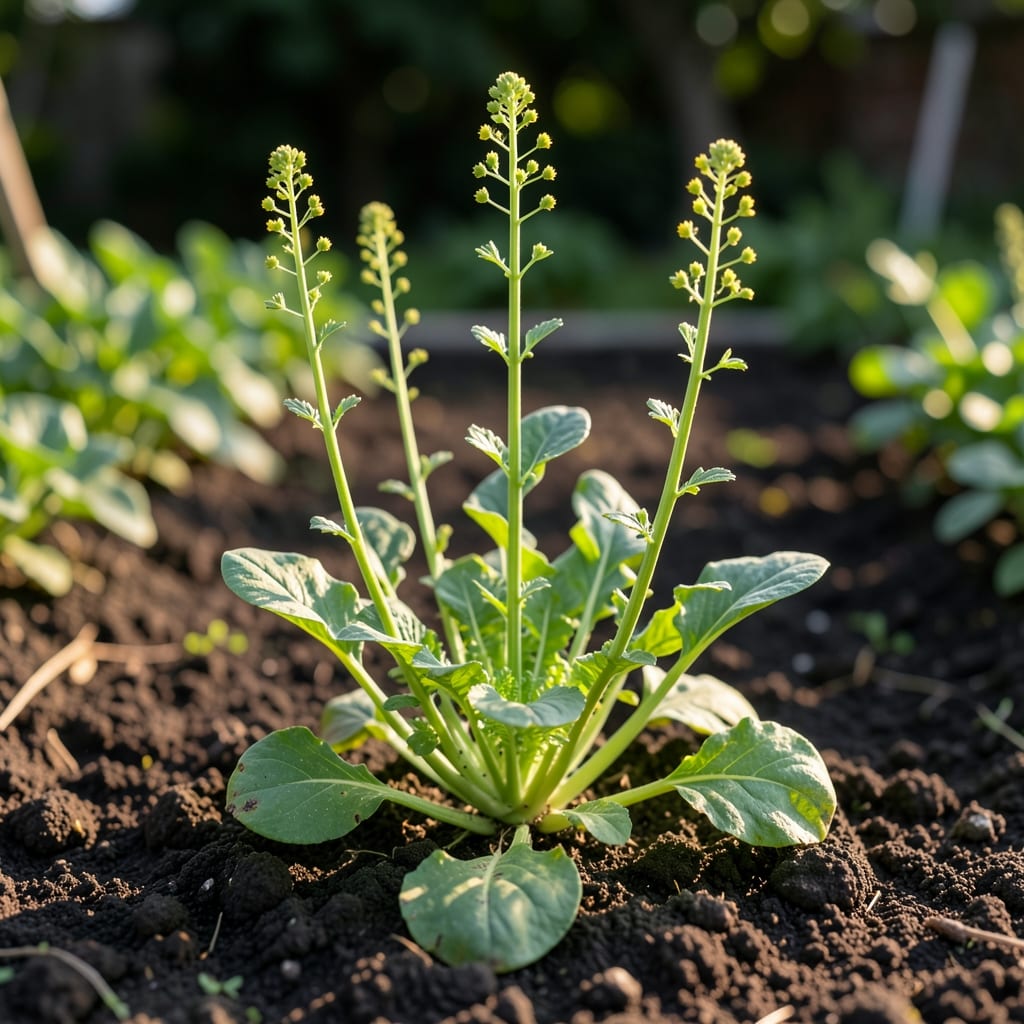
Bolting in plants is the rapid production of flowers and seeds, triggered by stress like heat or long daylight. This shifts energy from leaf growth to reproduction, often making leaves bitter.
I see this happen often in my garden when summer heat kicks in. The plant essentially panics, thinking its time to reproduce is running out, so it diverts all its resources to making seeds. For leafy greens like lettuce or spinach, this means bitter-tasting foliage and stunted growth. 🔥
You can spot early signs like sudden stem elongation or flower buds forming at the center.
💡 In This Article
Plants bolt when their internal clock detects stress signals from the environment. The primary trigger is photoperiodism—when days lengthen beyond 12-14 hours, many species interpret this as a cue to reproduce before seasonal changes.
Temperature spikes above 75-80°F accelerate this process, especially in cool-season crops like cilantro or arugula, which may bolt in as little as 2-3 weeks under heat stress. 🔥
Soil conditions play a subtle but critical role. Drought stress causes wilting, which the plant perceives as a survival threat. In response, it diverts energy from leaf production to seed development. Poor nutrient balance, particularly nitrogen deficiency, can also trigger bolting as the plant prioritizes reproduction over growth.
Even root disturbance from transplanting can shock the system into early flowering.
Plant age matters too. Mature plants are more likely to bolt than young ones, as they’ve completed most of their vegetative growth. In my garden, I’ve noticed that spinach planted in early spring will often resist bolting until temperatures consistently hit 85°F, while late-season plantings may bolt prematurely due to accumulated heat stress.
The variety makes a difference—some lettuces are bred to tolerate heat better than others.
What most gardeners don’t realize is that bolting isn’t just about survival—it’s an evolutionary advantage. By producing seeds quickly, the plant ensures the next generation will have a chance to grow when conditions improve. This is why wild ancestors of our garden plants often bolt more readily than modern cultivated varieties. ✨
For cool-season crops, the combination of long days and rising temperatures creates a perfect storm for bolting. In my experience, a heatwave of just 3-4 days above 90°F can push even healthy spinach plants into flowering mode. The key is monitoring both the calendar and the thermometer to anticipate these triggers.
It means the plant is shifting from leaf production to flower and seed production. This is a survival response to stress like heat or long daylight hours.
Yes, but leaves often turn bitter as energy redirects to reproduction. Harvest young leaves quickly or remove flower stems to delay this. The stems and flowers are edible but may be tougher.
Cool-season crops like cilantro, arugula, and spinach bolt rapidly in heat. Cilantro may flower in just 2-3 weeks above 75°F, while lettuce can last slightly longer.
No, bolting is a natural process, not a disease. However, the plant’s energy shifts from growth to seed production, often reducing yield and flavor quality.