
Beautiful Plants For Your Interior
Beautiful Plants For Your Interior
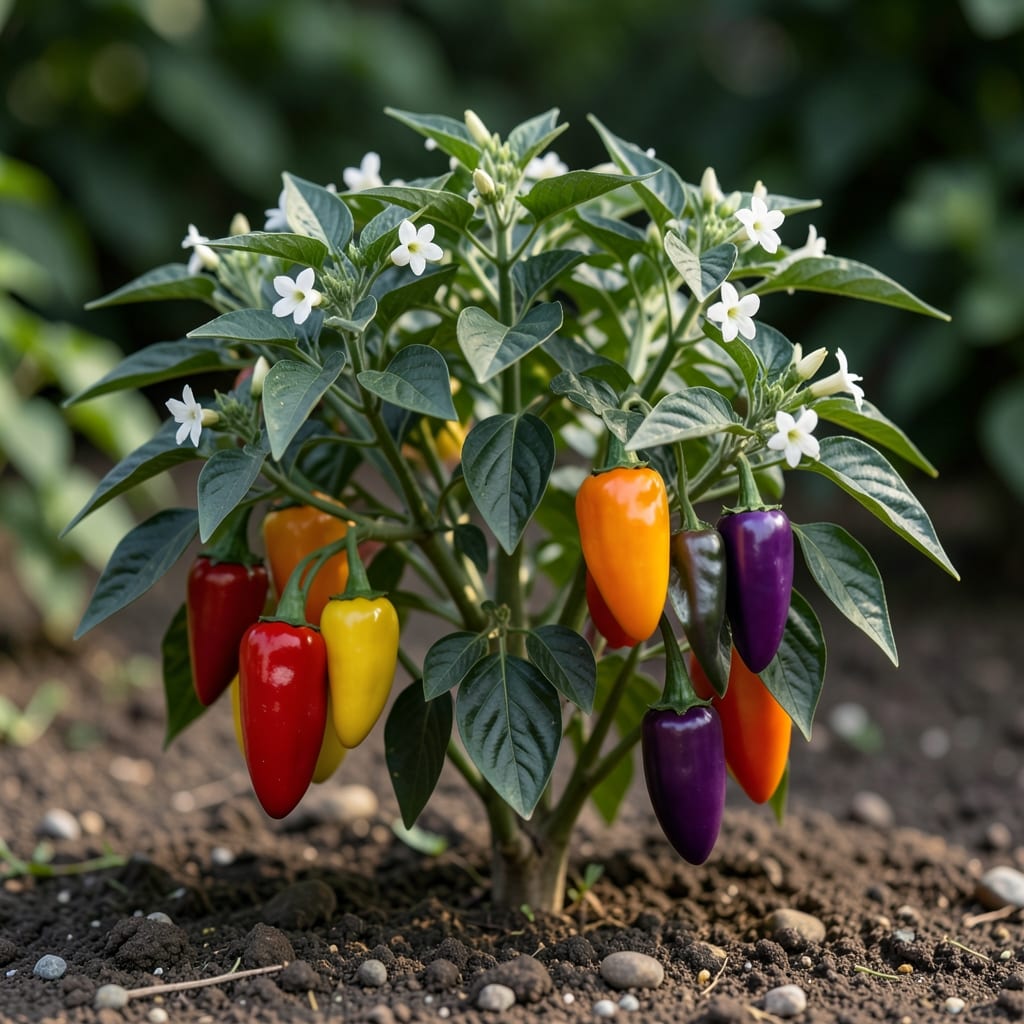
Bolivian rainbow pepper offers a fruity, citrusy heat with berry-like notes, ranging from mild to fiery depending on maturity. Its colorful pods add visual appeal to dishes.
I love how these peppers transform from mild to intense as they ripen, creating a flavor spectrum that works in everything from salsas to marinades. Their vibrant colors make dishes pop visually, while the complex taste keeps every bite interesting. I’ve found they pair especially well with tropical fruits and grilled meats. ✨
💡 In This Article
The complex taste begins with capsaicin levels that shift dramatically as the peppers mature. Young pods contain just 500-1,000 SHU, delivering mild warmth similar to a jalapeño. As they ripen through yellow, orange, red, and finally purple stages, the heat climbs to 10,000-15,000 SHU, approaching cayenne intensity.
This progression happens because the plant increases capsaicin production to deter pests as the fruit becomes sweeter and more nutritious. 🔥
What sets these peppers apart is their terroir. Grown in Bolivia’s Andean foothills at elevations of 1,500-2,500 meters, the cool nights and intense UV exposure concentrate the fruit’s natural sugars while preserving volatile compounds.
The result is a rare combination of tropical fruitiness (think mango and passionfruit) with bright citrus overtones that cut through the heat. These flavor compounds develop in the pepper’s placenta—the white pith where seeds attach—which is why the membrane tastes hotter than the flesh. ✨
The color-changing process also affects flavor chemistry. Anthocyanins, the pigments responsible for the purple hues, contribute subtle berry notes that become more pronounced in fully ripe peppers.
This is why a rainbow pepper salsa made with mixed maturity pods offers a layered taste experience: early-picked green peppers add freshness, while deep purple ones provide jammy depth. The visual spectrum isn’t just beautiful—it signals the evolving flavor profile. 🌟
Soil composition plays a crucial role too. The mineral-rich volcanic soils of Bolivia’s Yungas region create peppers with higher concentrations of aromatic compounds. Farmers report that peppers grown in limestone-heavy areas develop more pronounced citrus notes, while those from iron-rich soils lean toward earthier, more complex flavors.
This terroir effect means the same variety can taste noticeably different depending on where it’s cultivated. ⚡
For cooks, this means rainbow peppers offer built-in versatility. The mild green stage works beautifully in ceviches where you want flavor without overwhelming heat. Medium-heat orange peppers shine in stir-fries, while the fiery purple ones can transform a simple sauce into something extraordinary. The key is matching the pepper’s maturity to your dish’s heat tolerance.
💫
Young green peppers offer mild, fruity notes around 500-1,000 SHU. As they ripen to purple, heat intensifies to 10,000-15,000 SHU with citrusy, berry undertones.
Mature ones match cayenne’s heat, while jalapeños typically max at 5,000 SHU. The color change signals increasing capsaicin—green is mildest, purple is hottest.
Yes! Use 5-gallon pots with drainage. They need 6-8 hours of sun daily and consistent watering. Stake plants as they mature for support.
Pick at any color stage for desired heat. Use scissors to avoid plant damage. Wear gloves for mature purple peppers to prevent skin irritation.
Green ones shine in ceviche, orange in stir-fries. Purple peppers elevate sauces with their complex, jammy heat. Try them with tropical fruits too.