
Beautiful Plants For Your Interior
Beautiful Plants For Your Interior
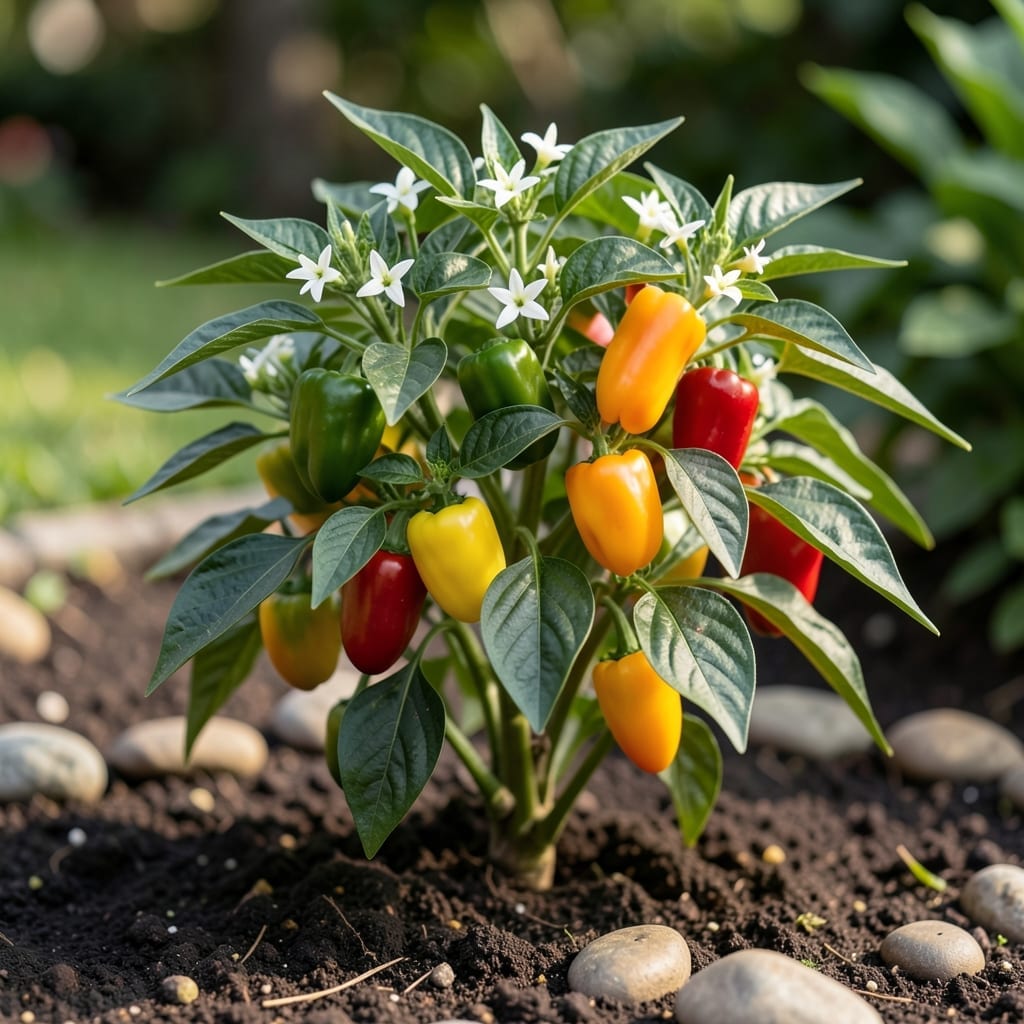
The Bolivian Rainbow pepper typically ranges from 10,000 to 30,000 Scoville Heat Units, offering a medium heat level with fruity, citrus-like notes.
What I find fascinating is how this range places it between a serrano and cayenne on the heat spectrum, making it versatile for both fresh and cooked applications. The citrus undertones make it particularly popular in salsas and marinades where brightness complements the heat. 🔥 This balance allows it to enhance dishes without overwhelming them.
💡 In This Article
The Scoville scale measures capsaicin concentration, the compound responsible for heat. Bolivian Rainbow peppers develop capsaicin in their placental tissue, where seeds attach to the inner wall. This is why the white pith inside is often hotter than the flesh itself.
The 10,000-30,000 SHU range comes from capsaicinoids accumulating as the pepper matures, with full ripeness bringing peak heat. 🔥
Environmental conditions significantly impact heat levels. More sunlight and warmer temperatures (75-85°F) during growth increase capsaicin production. Stress factors like inconsistent watering or poor soil can also boost heat as the plant defends itself. In contrast, cooler climates or shaded growth often result in milder peppers with more pronounced fruity notes.
What most people don’t realize is that the pepper’s color stages affect flavor and heat. Bolivian Rainbows transition through purple, yellow, orange, and red as they ripen. The earlier purple stage tends to be milder and more floral, while the final red stage delivers maximum heat and the characteristic citrus tang.
This color progression mirrors the capsaicin development timeline.
The Scoville measurement process itself is fascinating. Originally, it involved diluting pepper extract in sugar water until testers couldn’t detect heat. Today, high-performance liquid chromatography provides precise capsaicin measurements. For Bolivian Rainbows, this means the 10,000-30,000 SHU range is scientifically consistent, not just subjective. ⚡
Comparatively, this places Bolivian Rainbows at about 1/30th the heat of a habanero (100,000-350,000 SHU) but 10-30 times hotter than a jalapeño (2,500-8,000 SHU). This middle-ground heat makes them ideal for those who want noticeable spice without extreme intensity. The citrus notes become more pronounced when used fresh, while drying concentrates both heat and fruitiness.
It sits between a serrano and cayenne, packing 10-30 times the heat of a jalapeño but just 1/30th of a habanero. This makes it perfect for those seeking noticeable spice without overwhelming intensity.
Yes! Early purple peppers are milder and floral, while fully ripe red ones deliver maximum heat. The color change reflects capsaicin development, with each stage offering a unique flavor-heat balance.
They thrive in 75-85°F but can grow in cooler areas with protection. Use containers to move plants indoors when temperatures drop below 55°F at night. Expect milder heat in cooler conditions.
Keep them in the fridge for up to 1 week in a paper bag. For longer storage, dry them by hanging in a warm, ventilated area for 2-3 weeks, then store in an airtight container.