
Beautiful Plants For Your Interior
Beautiful Plants For Your Interior
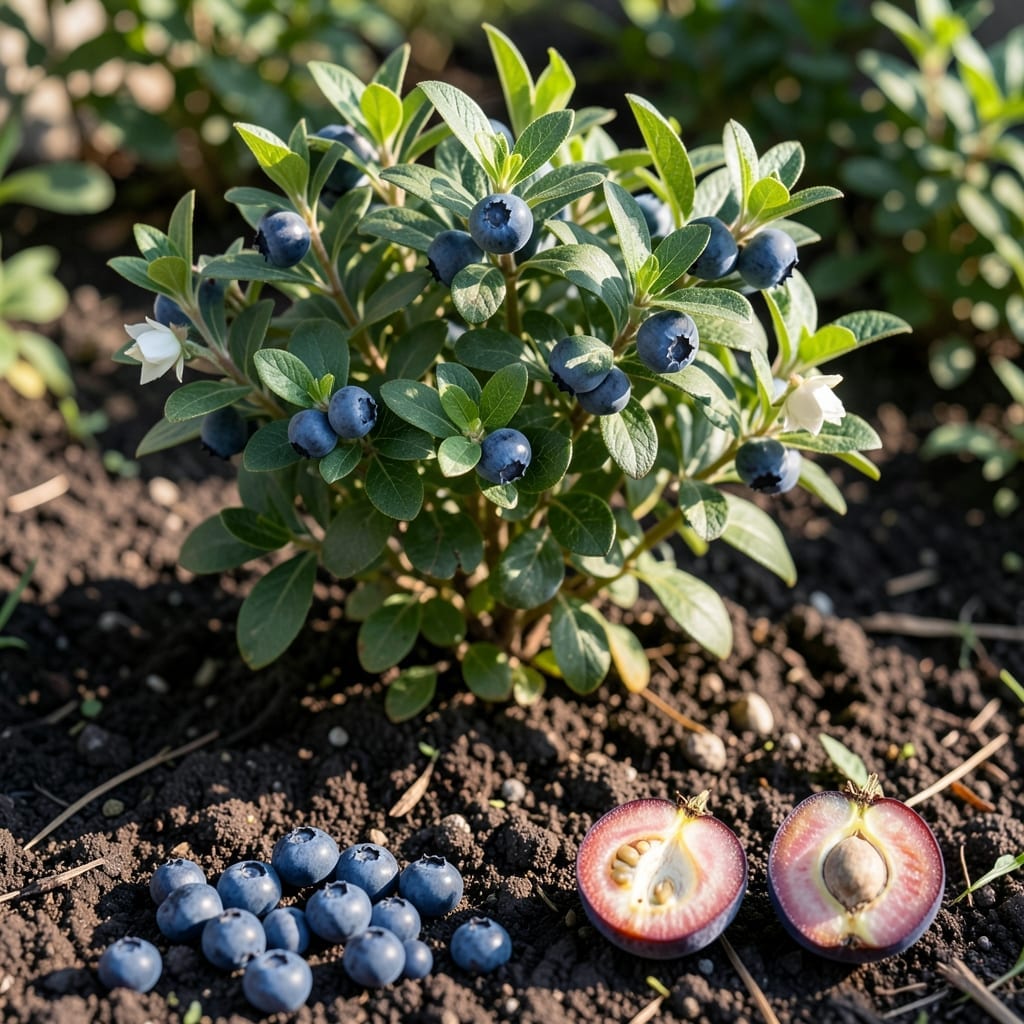
Blueberry seeds inside the fruit are tiny but viable for growing new plants. Extract them by mashing ripe berries in water, then dry and stratify the seeds before planting in well-draining soil.
What fascinates me about these seeds is their dormancy period—nature’s way of ensuring survival through cold months. 🌟 I’ve found that a 60-90 day cold stratification mimics winter conditions, breaking dormancy so they’re ready to sprout in spring. This process requires patience, but the reward of watching a new blueberry bush grow from something so small is incredibly satisfying.
💡 In This Article
Blueberry seeds enter dormancy immediately after ripening as a survival mechanism. This natural pause prevents germination during unfavorable seasons. The seed coat hardens, creating a protective barrier that must be broken through stratification—a cold treatment that mimics winter conditions to trigger metabolic activity.
The stratification process requires 60-90 days at temperatures between 34-40°F. This cold period softens the seed coat and activates enzymes that prepare the embryo for growth. Without this step, germination rates drop dramatically, often below 10%. 🔥
Once stratified, seeds need consistent moisture and temperatures around 68-72°F to sprout. The germination timeline typically spans 2-4 weeks, though some may take up to 2 months. The first signs are tiny green shoots breaking through the soil, followed by the emergence of seed leaves.
What many don’t realize is that blueberry seeds have a lower germination rate compared to other berries. Even under ideal conditions, expect only 50-60% of seeds to sprout. This variability makes patience essential when propagating blueberries from seed. ✨
The biological process also depends on seed maturity. Only fully ripe blueberries contain viable seeds. Underripe fruit often produces immature seeds that won’t germinate, which is why selecting the darkest, plumpest berries gives you the best chance of success.
Yes, they are! Each 1/16-inch seed can grow into a new plant with proper care. The key is using fully ripe berries, as underripe fruit often contains immature seeds that won’t sprout.
After mashing berries in water, let the mixture sit for 24 hours. Viable seeds sink to the bottom while pulp floats, making separation easy. This step prevents mold growth in your seed trays.
Most likely they lacked cold stratification. These seeds require 60-90 days at 34-40°F to break dormancy. Skipping this step reduces germination rates to below 10%.
Expect a wait of 2-3 years for your first berries. While slower than cuttings, seed-grown bushes often develop stronger root systems. The extra time is worth it for homegrown fruit!