
Beautiful Plants For Your Interior
Beautiful Plants For Your Interior
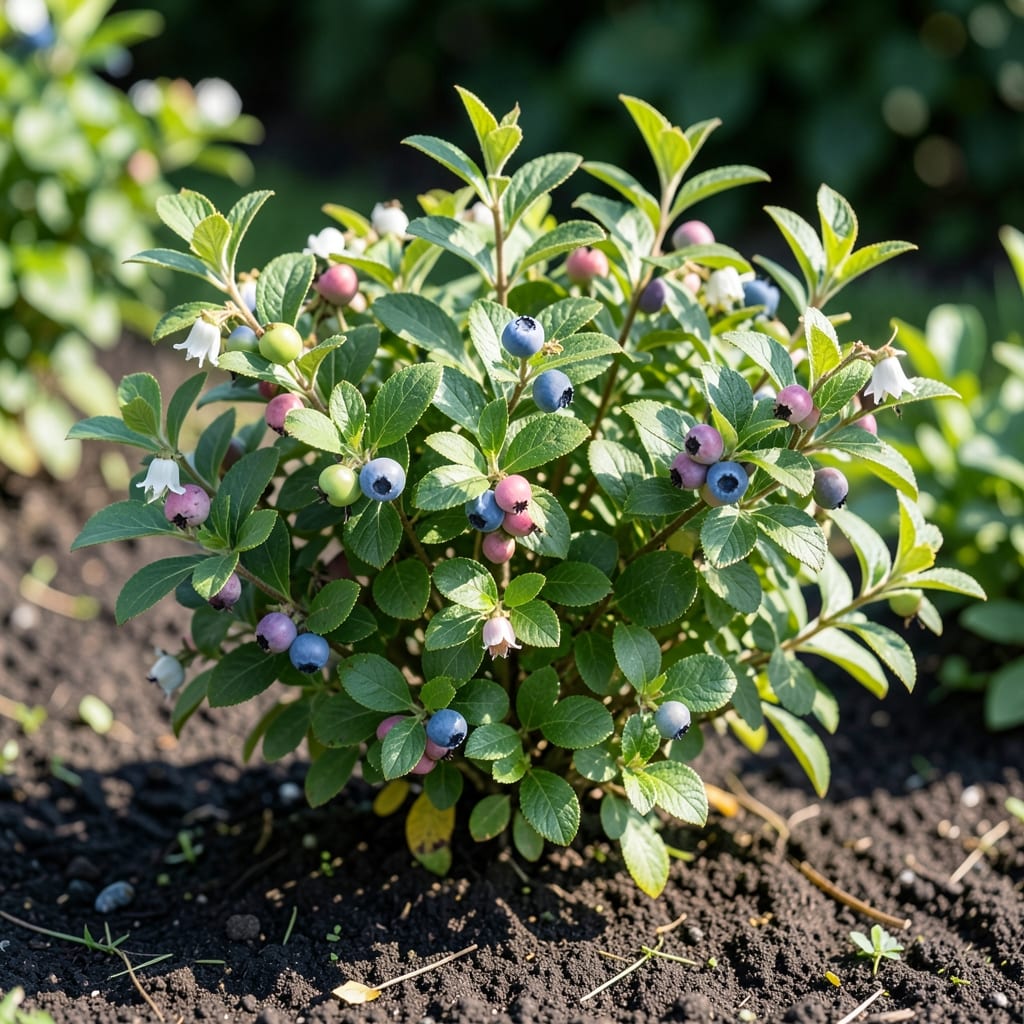
Blueberries progress through distinct stages: green when unripe, red-purple as they mature, and deep blue with a powdery coating when fully ripe and ready for harvest.
I love watching the transformation as these berries develop their signature deep indigo hue from natural pigments called anthocyanins. The waxy bloom that appears at the final stage isn’t just pretty—it’s nature’s way of protecting the fruit. Timing your harvest right after this coating forms ensures maximum sweetness and flavor concentration. 🔥
💡 In This Article
The color transformation begins with chlorophyll dominating the early green phase, giving unripe berries their firm texture and tart flavor. As sugars accumulate, the green fades and anthocyanins—powerful antioxidants—start developing in the skin, creating that first blush of red.
This pigment shift signals the berries are entering their sweetening phase, typically 10-14 days after the green stage begins. 🔥
You’ll notice the berries also swell significantly during this transition, often doubling in size as they absorb water and nutrients. The red-purple phase is particularly fascinating because it represents a chemical balancing act: chlorophyll is breaking down while anthocyanins are ramping up. At this point, the berries are about 70% ripe—edible but still slightly astringent.
The skin becomes slightly translucent, allowing you to see the developing seeds inside. ✨
The final transformation to deep blue occurs when anthocyanin production peaks, triggered by sunlight exposure and sugar concentration reaching about 12-15%. This is when the characteristic waxy bloom appears—a natural protective coating called pruinose that gives blueberries their matte finish.
The bloom forms as the berry’s cuticle produces microscopic wax crystals, creating that powdery texture we associate with perfect ripeness. 💫
Interestingly, the blue color isn’t just in the skin—it penetrates about 1-2mm into the flesh. This is why even when you cut open a ripe blueberry, you’ll see that beautiful blue-purple hue throughout, not just on the surface.
The internal color development is your best indicator that the berry has fully matured, as the pigments spread inward from the skin during the final ripening days. ⚡
Environmental factors can subtly alter these visual cues. Cooler temperatures may slow the color change, resulting in berries that stay in the red-purple phase longer, while intense sunlight can accelerate anthocyanin production. Commercial growers often use color charts with 6 distinct stages to precisely time their harvests, from immature green to overripe dark purple. 🌟
The full ripening process typically takes 30-60 days from flower to harvest. The green to red-purple transition usually occurs within 10-14 days, followed by another 7-10 days to reach full blue maturity.
This often happens in cooler climates or shaded areas where anthocyanin production is slower. The berries may still ripen but won’t develop the full blue color. They’re safe to eat but might be less sweet.
It’s best to wait until they’re fully blue. Berries picked too early won’t ripen further off the bush and will lack sweetness. The red stage means they’re only about 70% ripe.
That’s the natural waxy bloom called pruinose, produced by the berry’s cuticle. It protects the fruit and indicates peak ripeness. Don’t wash it off until ready to eat.