
Beautiful Plants For Your Interior
Beautiful Plants For Your Interior
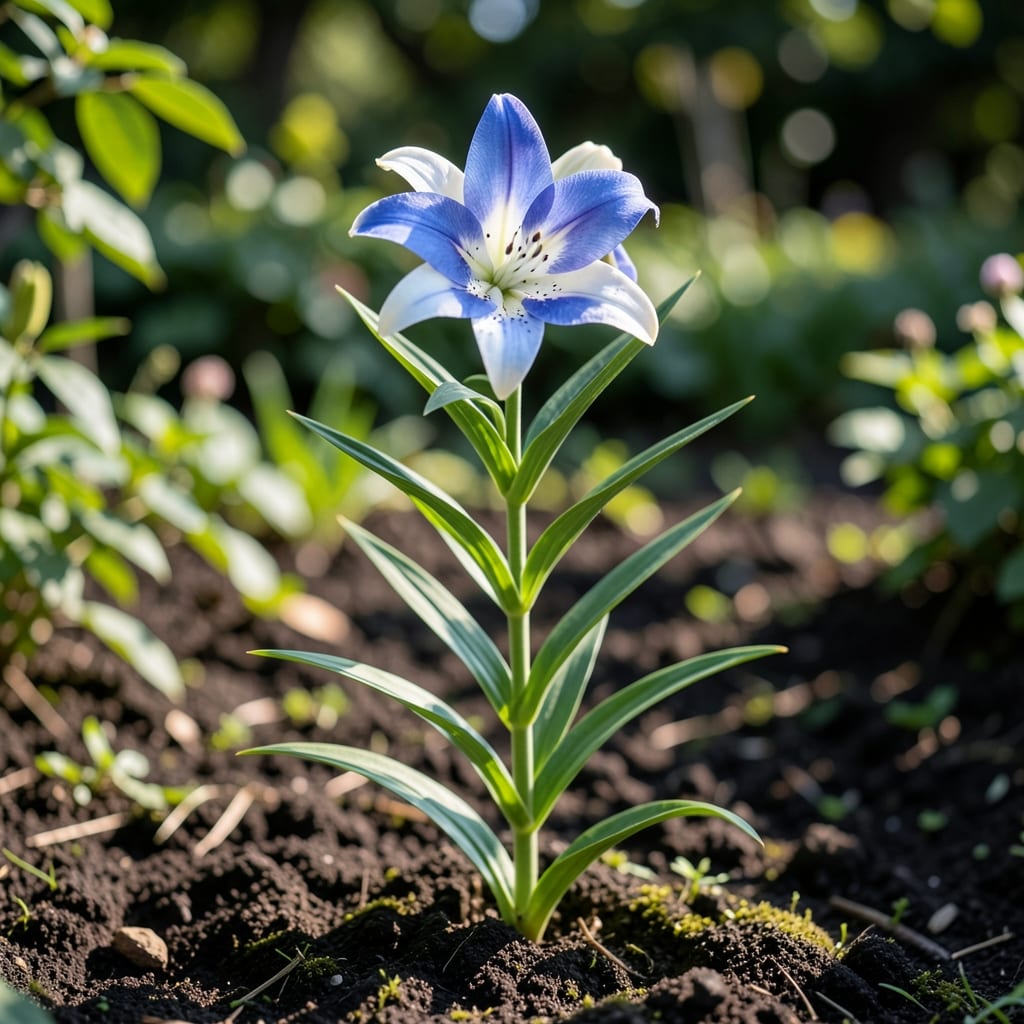
These striking blooms transform any garden into a sophisticated retreat. I first planted them along my fence line, and the contrast against green foliage was immediate magic.
They thrive in well-draining soil with morning sun and afternoon shade. With minimal care, you’ll get reliable blooms year after year that stop neighbors in their tracks.
📚 In This Guide
This method delivers stunning blooms with minimal fuss, even for first-time growers.
Select a site with full sun to partial shade—blue white lilies thrive with 6-8 hours of sunlight daily but tolerate afternoon shade in hotter climates. I always test the spot by checking sunlight patterns over a full day before planting. Avoid low-lying areas where water pools, as bulbs will rot in soggy soil.
Soil should be well-draining with a pH of 6.0-7.0. If your soil is heavy clay, amend it with compost or sand to improve drainage. These lilies prefer slightly acidic to neutral conditions, so a quick soil test is worth the effort.
Dig holes 4-6 inches deep and space bulbs 8-12 inches apart. The general rule is to plant at a depth three times the bulb’s height. Place the bulb with the pointed end facing upward—this seems obvious, but it’s easy to second-guess when the bulb looks symmetrical.
Cover with soil and press down gently to remove air pockets. Water thoroughly after planting to settle the soil around the bulbs. You’ll know it’s right when the soil surface looks evenly moist but not waterlogged.
Keep the soil consistently moist but not soggy during the growing season. Water deeply once or twice weekly, depending on rainfall. I check the soil by sticking my finger 2 inches deep—if it feels dry, it’s time to water.
Apply a 2-3 inch layer of organic mulch around the plants to retain moisture and suppress weeds. Straw or shredded bark works well. Mulch also insulates the soil, keeping roots cooler in summer and warmer in winter.
Feed the plants with a balanced, slow-release fertilizer in early spring when new growth appears. I use a 10-10-10 formula and follow the package instructions for application rates. Over-fertilizing leads to excessive leaf growth at the expense of blooms, so less is often more.
Taller varieties may need staking to prevent flopping. Insert stakes 6-8 inches from the bulb at planting time to avoid damaging roots later. Tie stems loosely with soft twine as they grow, allowing room for natural movement.
Watch for common issues like aphids, lily leaf beetles, or fungal diseases. Aphids cluster on new growth and can be blasted off with water or treated with insecticidal soap. Lily leaf beetles are bright red and chew through leaves—handpick them early to prevent infestations.
Fungal diseases often appear as brown spots on leaves. Ensure good air circulation by spacing plants properly and watering at the base rather than overhead. Remove affected leaves immediately to prevent the spread of disease.
Took me a few seasons to learn these the hard way, so here goes.
Sunlight Strategy: The 6-8 hours of daily sunlight mentioned in Step 1 isn’t just a suggestion—it’s the difference between vibrant blooms and lackluster growth. I learned this after planting a batch in too-shady a spot. If your garden gets intense afternoon sun, don’t hesitate to give them partial shade during peak heat. Afternoon shade protects the delicate petals from scorching.
Planting Precision: In Step 2, planting bulbs 4-6 inches deep is critical. The three-times-the-bulb-height rule ensures proper root development and stability. Confession: I skipped this step for years and wondered why my lilies kept flopping over. Always place the pointed end up—even if the bulb looks symmetrical, this orientation prevents stunted growth.
Moisture Management: The 2-inch soil check from Step 3 is your best tool for watering. Stick your finger in the soil—if the top 2 inches feel dry, it’s time to water deeply. Overwatering is just as dangerous as underwatering; soggy soil leads to bulb rot. The 2-3 inch mulch layer isn’t just for aesthetics—it maintains consistent moisture and regulates soil temperature.
Fertilizer Finesse: Step 4’s 10-10-10 formula works perfectly, but resist the urge to over-fertilize. More isn’t better here—excess nitrogen promotes leafy growth at the expense of those elegant blooms we’re after. Apply in early spring when you first see new shoots, and you’ll be rewarded with stronger stems and more flowers.
Keep the soil moist but well-drained, and place the plant in partial shade to full sun. Fertilize lightly in spring and deadhead spent blooms to encourage new growth.
Plant bulbs in early spring or fall, when temperatures are cool. This gives roots time to establish before extreme heat or cold.
Watch for aphids, slugs, and lily beetles. Fungal diseases like botrytis can occur in damp conditions—ensure good air circulation.
Yes! Use a deep pot with well-draining soil. Ensure it gets sunlight and regular watering, but avoid waterlogging.
Lack of sunlight, overcrowding, or poor nutrition may be the cause. Check growing conditions and fertilize as needed.