
Beautiful Plants For Your Interior
Beautiful Plants For Your Interior
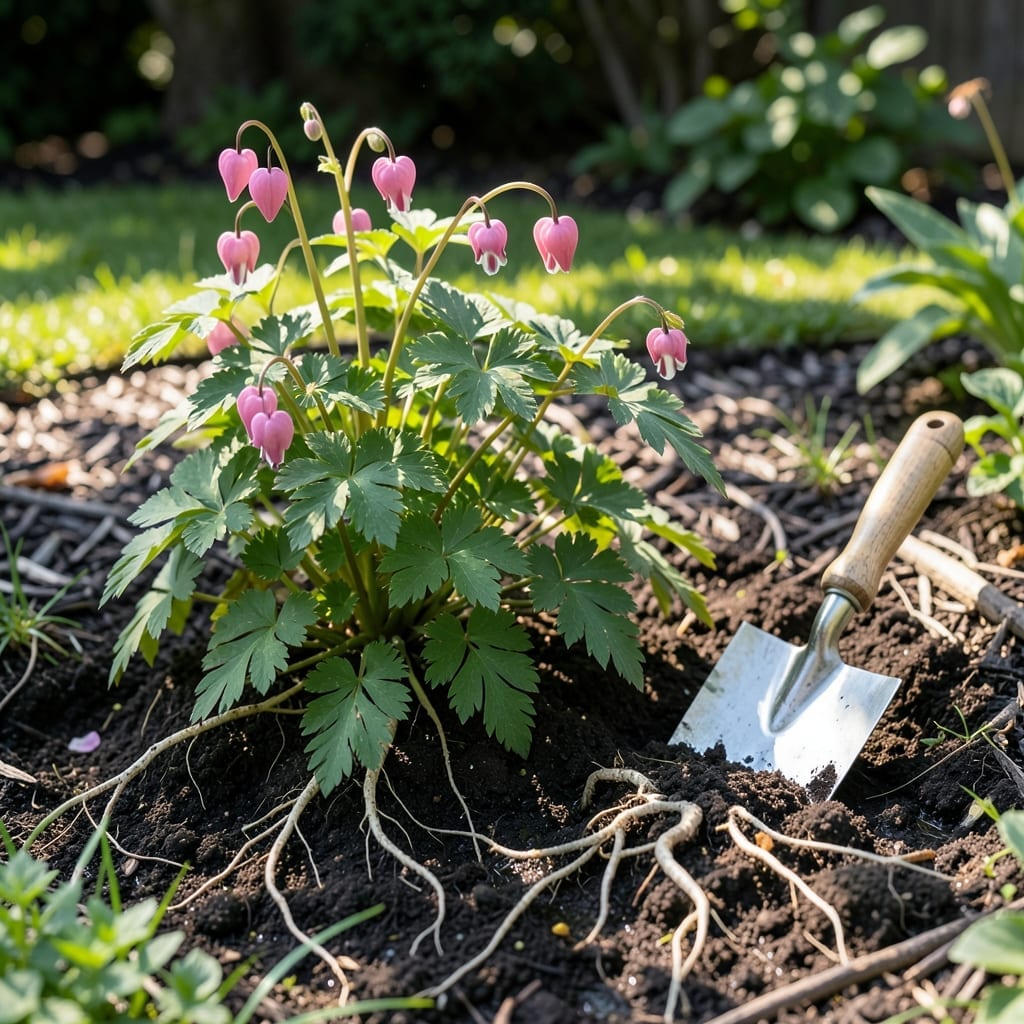
Bleeding heart roots are shallow, fibrous, and rhizomatous, spreading slowly underground to support the plant’s delicate foliage and iconic heart-shaped flowers.
This unique root structure allows the plant to thrive in wooded areas where surface nutrients are most abundant. I’ve noticed that the rhizomes store energy efficiently, which fuels the plant’s rapid spring growth. 💫
The shallow nature means they benefit from consistent moisture but can suffer in heavy, waterlogged soil. Proper drainage is key to keeping these roots healthy.
💡 In This Article
The root system begins with a central rhizome that acts as an energy reserve. This thick, horizontal stem grows just beneath the soil surface, producing fibrous roots that fan out in all directions. These fibrous roots typically extend 6-12 inches outward, creating a dense network that efficiently absorbs water and nutrients from the topsoil layer.
💫
What makes this system unique is its seasonal adaptation. In spring, stored energy in the rhizome fuels rapid leaf and flower development. As temperatures rise, the roots shift focus to nutrient uptake, supporting the plant’s lush foliage. The rhizome itself can grow 1-2 inches per year, though this varies by soil conditions and moisture levels.
This shallow structure explains why bleeding hearts thrive in forest understories. The fibrous roots specialize in capturing surface-level organic matter, while the rhizome’s horizontal growth pattern allows the plant to colonize new areas slowly but steadily. This growth habit also means the plant can struggle in compacted or poor-draining soils where root expansion is limited.
The roots’ efficiency comes from their fine, hair-like structures that maximize surface area for absorption. These root hairs create intimate contact with soil particles, allowing the plant to extract maximum moisture and nutrients from the top 4-6 inches of soil.
This adaptation is particularly effective in the plant’s native woodland habitats, where organic material accumulates near the surface. ✨
During dormancy in hot summer months, the roots remain active underground while the foliage dies back. The rhizome conserves energy during this period, preparing for the next spring’s growth cycle. Gardeners often notice this as the plant disappearing above ground while maintaining its root system’s vitality below.
The fibrous roots spread 6-12 inches outward just beneath the surface. The rhizomes stay in the top 4-6 inches of soil, making them very shallow-rooted plants.
Yes, choose a wide, shallow pot at least 12 inches deep. Ensure it has good drainage holes, as waterlogged soil will rot the rhizomes. Use a quality potting mix with compost.
Shallow roots dry out quickly. Check soil moisture 1 inch down—if dry, water deeply. Mulching helps retain moisture. Also avoid afternoon sun, which can scorch shallow roots.
Divide every 3-4 years in early spring or fall when dormant. This rejuvenates the plant and prevents overcrowding of the rhizome system.
Yes, the rhizomes are hardy and will survive freezing temperatures underground. The foliage dies back, but roots remain alive, storing energy for spring regrowth.