
Beautiful Plants For Your Interior
Beautiful Plants For Your Interior
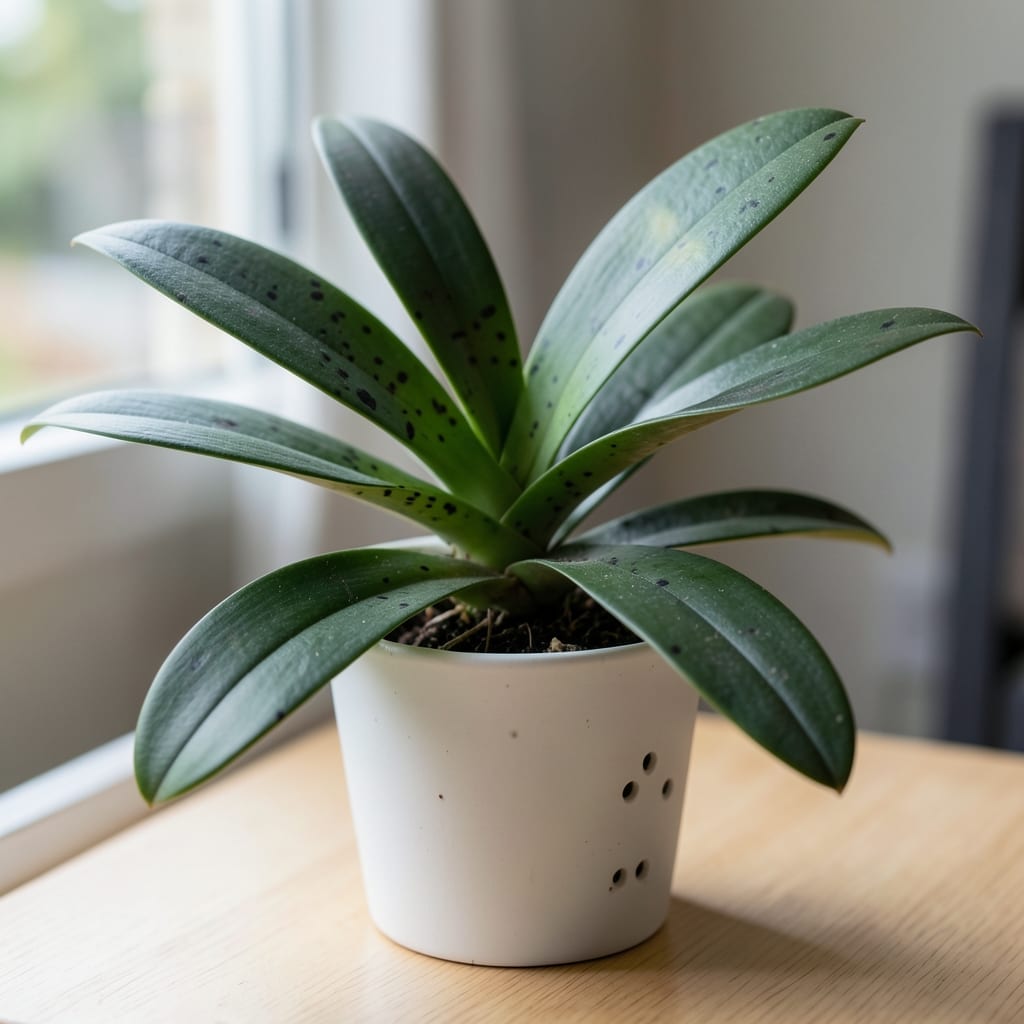
Those dark splotches on your orchid leaves aren’t just ugly—they’re a warning sign. I’ve lost count of how many plants I’ve saved by catching this early, and the solution starts with understanding what’s actually attacking your orchid.
Bacterial leaf spot thrives in damp, poorly ventilated conditions. Most growers overwater or mist too aggressively, creating the perfect breeding ground. The spots spread fast, but with the right approach, you can stop the damage and prevent future outbreaks.
You’ll learn to spot the difference between bacterial and fungal issues, then treat accordingly. The process involves simple adjustments to watering, air flow, and light—no fancy equipment needed.
Within 2-3 weeks, new growth will emerge clean and healthy. Here’s how to turn things around.
Black spots on orchid leaves often signal underlying issues that disrupt the plant’s health. Below are the most common causes, explained with actionable insights to help you diagnose and address the problem.
Fungi like Cercospora or Phyllosticta thrive in humid, poorly ventilated environments. These pathogens produce enzymes that break down leaf tissue, creating dark, sunken spots with yellow halos. Overwatering or splashing water on leaves accelerates fungal growth. To prevent this, improve airflow and avoid wetting the foliage.
Bacteria such as Pseudomonas or Xanthomonas enter through wounds or stomata, causing water-soaked lesions that turn black. High humidity and poor sanitation (e.g., contaminated tools or pots) spread these pathogens. Sterilize pruning tools and isolate infected plants to contain the issue.
Extreme temperature fluctuations, direct sunlight, or low humidity can stress orchids, leading to cellular damage that manifests as black spots. Orchids prefer stable conditions (60–80°F, 40–70% humidity). Shield them from harsh light and maintain consistent growing conditions.
Soggy roots suffocate the plant, reducing its ability to absorb nutrients. This stress weakens the orchid, making it susceptible to secondary infections that cause leaf discoloration. Use well-draining media (e.g., bark or sphagnum moss) and water only when the roots appear silvery-gray.
Pests like scale, thrips, or spider mites pierce leaf tissues, creating entry points for pathogens. Their feeding also causes localized necrosis (dead tissue), which appears as black spots. Inspect leaves regularly and treat infestations with neem oil or insecticidal soap.
Tackling black spots on orchid leaves starts with identifying the cause. Below are targeted solutions for common issues, along with prevention tips to keep your orchids thriving.
If the spots are water-soaked with yellow halos, it’s likely bacterial. Remove affected leaves with sterilized scissors and isolate the plant to prevent spreading. Apply a copper-based fungicide or a diluted hydrogen peroxide solution (1 part 3% peroxide to 10 parts water) to the remaining foliage. Prevention tip: 💡 Avoid overhead watering—always water at the base to keep leaves dry.
Black spots caused by pests like scale or spider mites? Wipe leaves with a damp cloth and mild insecticidal soap, then rinse. For stubborn infestations, use neem oil (mix 1 tsp per liter of water) and spray weekly. Prevention tip: ✨ Inspect new plants before bringing them near your orchids and maintain good airflow.
Crispy, dark patches often mean too much direct sunlight. Move your orchid to a spot with bright, indirect light (east or north-facing windows are ideal). If natural light is limited, supplement with a grow light 12–14 hours daily. Prevention tip: 🎯 Rotate your orchid occasionally for even light distribution.
Soft, mushy black spots signal root rot from excess moisture. Trim affected roots, repot in fresh, well-draining orchid mix (bark-based), and switch to a pot with drainage holes. Water only when the top inch of medium is dry. Prevention tip: 🌡️ Use a moisture meter to avoid guesswork—orchids prefer to dry out slightly between waterings.
Dark spots with weak growth may indicate a lack of nutrients. Use a balanced orchid fertilizer (20-20-20) diluted to half-strength, applied every 2–4 weeks during active growth. Flush the medium with water monthly to prevent salt buildup. Prevention tip: 🔥 Stick to a consistent fertilizing schedule, but pause during dormancy.
Yes, soggy roots suffocate orchids, leading to stress and secondary infections. Always let the medium dry slightly between waterings to prevent this.
Fungal spots often have yellow halos, while bacterial spots look water-soaked. Fungal thrives in humidity; bacterial spreads in wet, warm conditions.
Use sterilized scissors to remove damaged leaves and isolate the plant. This stops the spread of pathogens to healthy tissue.
A diluted hydrogen peroxide solution (1 part 3% peroxide to 10 parts water) works well for bacterial issues. Neem oil also helps repel pests.