
Beautiful Plants For Your Interior
Beautiful Plants For Your Interior
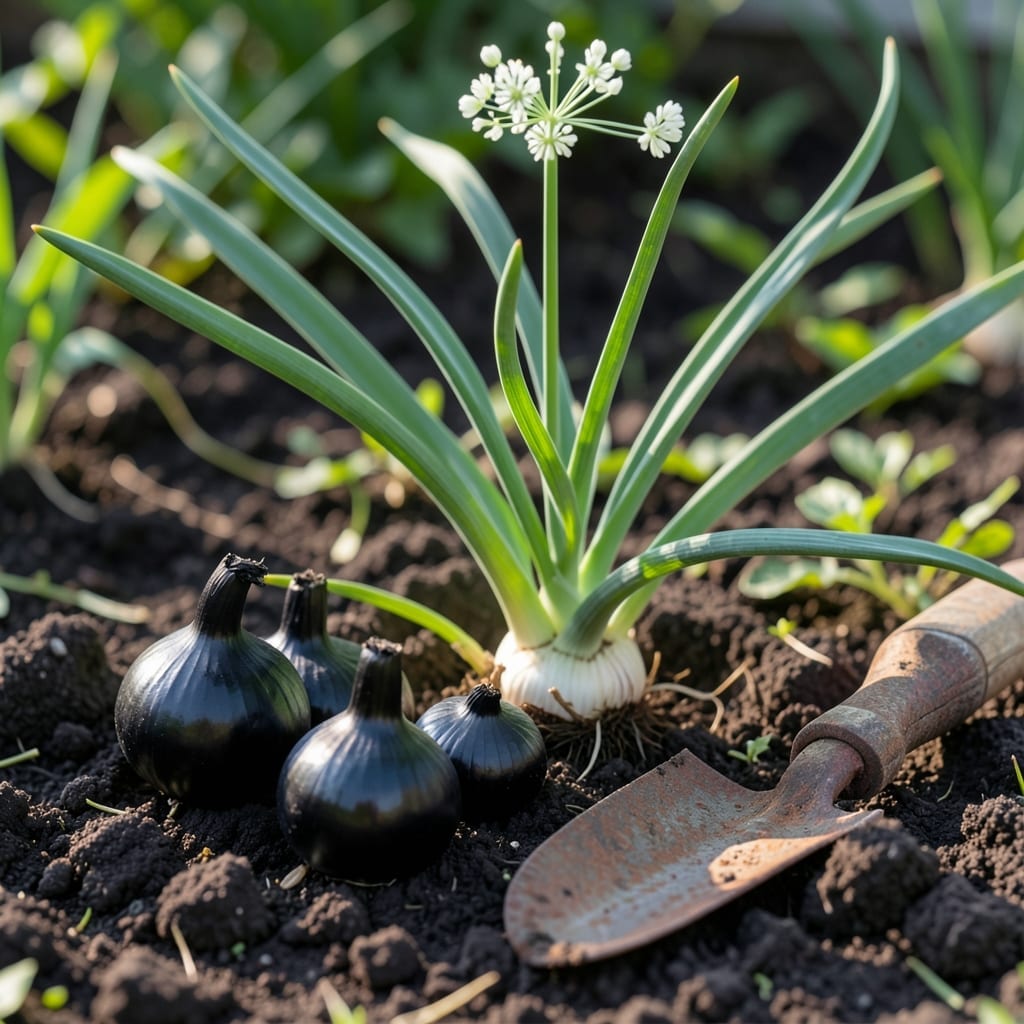
Black garlic is fermented garlic with a sweet, umami-rich flavor, and in Wisconsin it can be found at specialty grocers, farmers markets, or local producers. Use it to enhance dishes like sauces, marinades, or spreads.
I love how this ingredient transforms simple dishes with its deep, molasses-like sweetness and subtle tang. 🔥 The fermentation process, often taking 30-60 days at controlled humidity and warmth, breaks down the harsh compounds in raw garlic, creating its signature taste. Wisconsin’s local producers often experiment with small-batch methods, giving their versions unique character.
💡 In This Article
The transformation from raw garlic to black garlic is a precise process. Producers in Wisconsin typically age whole garlic bulbs at 140-180°F with 70-90% humidity for 30-60 days. This controlled environment triggers the Maillard reaction, where amino acids and sugars interact to create deep, caramelized flavors.
The result is striking: cloves turn jet black, develop a jelly-like texture, and lose their pungent bite. 🔥
Wisconsin’s climate offers unique advantages for production. The state’s cold winters and humid summers allow producers to leverage natural temperature fluctuations, reducing energy costs for fermentation chambers. Local artisans often use hardneck garlic varieties, which are particularly well-suited to the region’s growing conditions.
The slow fermentation process breaks down allicin, the compound responsible for garlic’s sharpness, while increasing concentrations of fructose and glucose.
What emerges is a product with 2-3 times the antioxidant content of fresh garlic. The flavor profile develops complexity reminiscent of balsamic vinegar or tamarind, with subtle molasses and licorice notes. Wisconsin producers often experiment with fermentation times—some extending to 90 days for an even more intense, almost port-like depth.
This patience creates a versatile ingredient that can elevate both sweet and savory dishes. ✨
The chemical changes are remarkable. During fermentation, sulfur compounds transform into odiferous pyruvic acid, while the garlic’s natural enzymes break down complex carbohydrates into simple sugars. This explains why black garlic pairs so well with rich foods: its sweetness balances fatty or salty elements.
Wisconsin’s small-batch producers often emphasize these natural processes, avoiding additives that could mask the garlic’s pure, developed flavors.
Quality indicators include uniform black color throughout each clove, a slight stickiness, and a consistency similar to soft dates. The aroma should be sweet and earthy, without any harsh or bitter notes.
When sourcing from Wisconsin producers, look for bulbs that maintain their shape but yield slightly to gentle pressure—a sign that the fermentation has fully softened the structure. 💫
The fermentation process breaks down harsh compounds, creating a sweet, molasses-like flavor with umami depth. Wisconsin producers often achieve complex notes reminiscent of balsamic vinegar or tamarind through careful 30-60 day aging.
Whole bulbs stay fresh for 1-2 months in a cool, dark place. For maximum shelf life, store in an airtight container after opening. Pre-peeled cloves should be used within 2-3 weeks for best flavor.
Yes, but it requires precise control. Use a slow cooker or fermentation chamber set to 140-180°F with 70-90% humidity for 30-60 days. Wisconsin’s climate can help, but home setups often lack commercial consistency.
Spread on bread, blend into sauces, or mince into marinades. Its sweetness pairs well with rich foods like cheese or fatty meats. Try mixing with butter for a unique compound spread.