
Beautiful Plants For Your Interior
Beautiful Plants For Your Interior
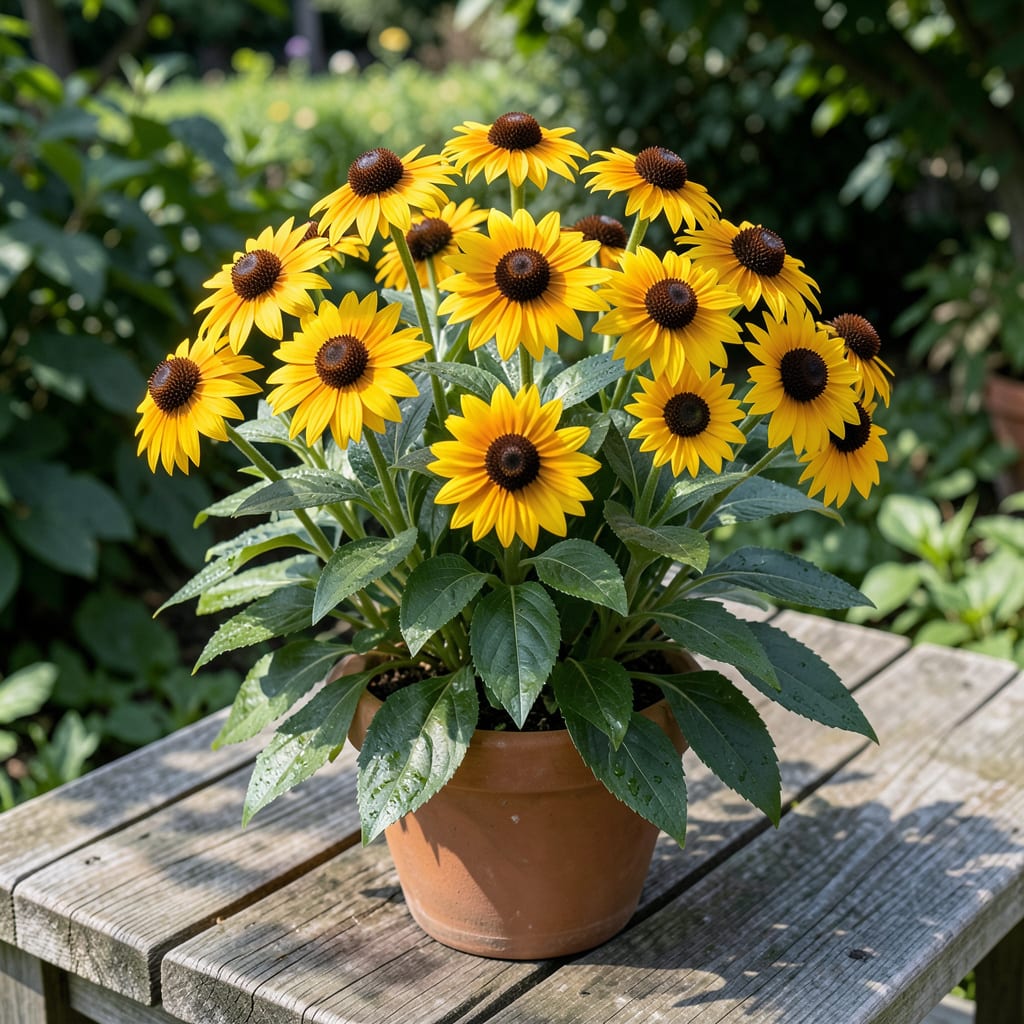
Golden blooms that keep coming back year after year. Black Eyed Susans are the foolproof way to add color to any garden while feeding bees and butterflies.
They thrive in full sun with well-draining soil and need almost no maintenance once established. I’ve seen them flourish in drought conditions where other flowers give up.
📚 In This Guide
Here’s my tried-and-true method for establishing these cheerful, pollinator-friendly perennials in any garden.
Select a spot with full sun to partial shade, as these plants thrive with at least 6 hours of direct sunlight daily. I always check the area throughout the day to confirm it gets consistent light, especially in the morning when the sun is strongest.
The soil should drain well—black eyed susans hate soggy roots. If your soil is heavy clay, work in some compost to improve drainage. A simple test: dig a 1-foot hole, fill it with water, and see if it drains within an hour. If not, amend the soil before planting.
Loosen the soil to a depth of about 12 inches using a garden fork or tiller. This helps the roots spread easily and access nutrients. I like to mix in a 2-3 inch layer of compost to give the plants a nutrient boost right from the start.
Remove any weeds or debris from the area, as these can compete with your new plants for water and nutrients. A clean planting bed ensures your black eyed susans have the best chance to establish themselves quickly.
Dig a hole that’s about twice the width of the root ball but no deeper than the container. Gently remove the plant from its pot and loosen the roots if they’re circling—this encourages outward growth. Place the plant in the hole and backfill with soil, pressing lightly to remove air pockets.
Space plants 18-24 inches apart to allow for their mature spread. Water thoroughly after planting to help settle the soil and hydrate the roots. You’ll know you’ve watered enough when the soil feels moist but not waterlogged.
Keep the soil consistently moist for the first 2-3 weeks after planting to help the roots establish. After that, black eyed susans are fairly drought-tolerant, but they’ll bloom best with 1 inch of water per week during dry spells.
Apply a 2-3 inch layer of mulch around the base of the plants to retain moisture and suppress weeds. Keep the mulch a few inches away from the stems to prevent rot. You’ll see the plants respond with vigorous growth and abundant blooms.
Deadhead spent flowers regularly to encourage continuous blooming throughout the season. Simply snip off the faded blooms just above a set of leaves. This keeps the plants looking tidy and redirects energy into producing more flowers.
In late fall or early spring, cut back the stems to 6 inches above the ground to promote healthy new growth. These plants are low-maintenance, but this step helps them stay vigorous year after year. Watch for the first new shoots in spring—it’s a sure sign they’re ready to thrive again.
Here’s what I’ve learned from years of growing these cheerful perennials in my own garden.
Sunlight Strategy: The 6 hours of direct sunlight mentioned in Step 1 is non-negotiable for vibrant blooms. I learned this the hard way when my first batch in a shady corner produced sparse, pale flowers. Morning sun is ideal since it’s less intense, but consistent light throughout the day works too.
Drainage Test: That 1-foot hole test in Step 1 is genius—don’t skip it. If water doesn’t drain within an hour, your plants will suffer. I amend heavy clay with compost and a bit of sand to improve drainage, and my black eyed susans thank me with lush growth.
Planting Depth: In Step 3, resist the urge to plant deeper than the container. Burying the stem too low can cause rot. Instead, focus on making the hole twice the width of the root ball—this gives roots room to spread and establish quickly.
Mulching Wisdom: The 2-3 inch layer of mulch in Step 4 is a game-changer for moisture retention. Keep it a few inches away from the stems to prevent rot, as mentioned. I use shredded bark—it breaks down slowly, feeding the soil as it decomposes.
Keep soil moist but well-drained, and ensure full sun to partial shade. Deadhead spent blooms to encourage more flowers. Cut back in late fall or early spring.
Plant in early spring or fall for best results. This allows roots to establish before extreme heat or cold. Avoid planting in peak summer heat.
Pair with purple coneflowers, Russian sage, or ornamental grasses for a vibrant, pollinator-friendly garden. These combinations enhance visual appeal and support biodiversity.
Lack of sunlight, over-fertilizing, or poor soil drainage may be the cause. Ensure 6+ hours of sun daily, avoid high-nitrogen fertilizers, and check soil moisture levels.
Yes, it’s generally deer-resistant due to its coarse foliage. However, in areas with high deer pressure, additional protection like fencing may still be needed.
