
Beautiful Plants For Your Interior
Beautiful Plants For Your Interior
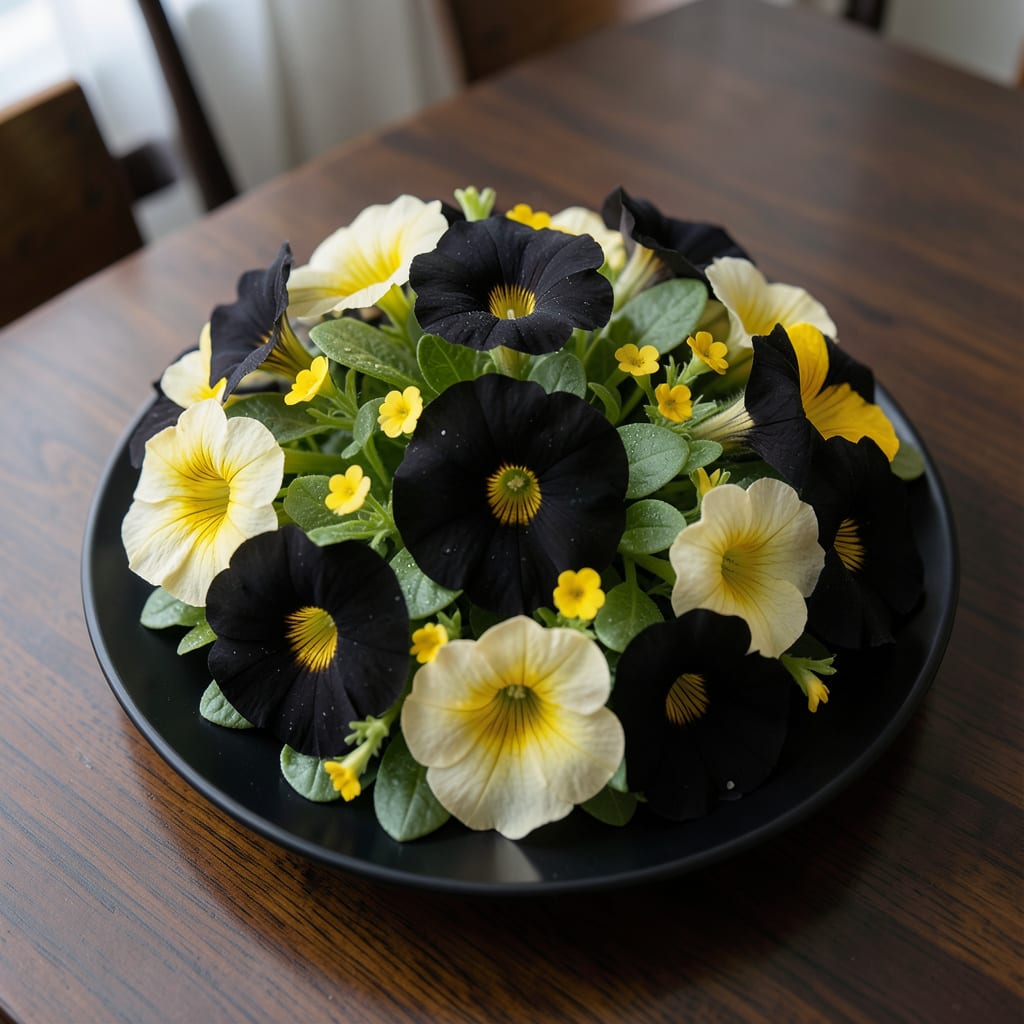
Last summer, I planted black and yellow petunias along my front walkway and stopped traffic. The color contrast is that dramatic.
These aren’t your typical petunias. The deep purple-black blooms with bright yellow centers create a vibrant statement that holds up in full sun. They spread quickly, filling gaps between other plants with minimal effort from you.
You’ll get continuous blooms from spring until frost with basic care. Well-draining soil and regular watering keep them thriving, while deadheading encourages even more flowers.
Perfect for borders, containers, or anywhere you want that bold pop of color. Here’s how to make them shine in your space.
The striking black and yellow appearance in petunias often results from specific biological and environmental factors. Below are the primary causes, explained clearly to help gardeners understand and address them.
Some petunias naturally develop dark, near-black foliage due to anthocyanin overproduction, a pigment responsible for deep purples and blacks. When paired with yellow blooms, this creates a dramatic contrast. These varieties are often bred selectively for ornamental purposes.
Excessive nitrogen or phosphorus can trigger abnormal pigmentation. Nitrogen promotes leaf growth but may darken foliage excessively, while phosphorus deficiency can cause yellowing (chlorosis) in leaves. A balanced fertilizer (10-10-10 NPK) helps maintain healthy coloration.
Prolonged exposure to intense sunlight or extreme temperatures can stress petunias, leading to color changes. Yellowing may signal sunburn or heat damage, while blackening could indicate fungal infections (e.g., Alternaria) thrive in humid, crowded conditions.
Overwatering causes root rot, which blocks nutrient uptake and turns leaves black. Underwatering, conversely, leads to yellowing and wilting. Ensure well-draining soil and water only when the top inch of soil feels dry.
Addressing these factors can restore vibrant, healthy growth—or help you cultivate the bold black-and-yellow look intentionally!
If your black and yellow petunias aren’t thriving, these targeted fixes will get them back on track. Address each issue methodically to restore their vibrant contrast and healthy growth.
Cause: Overwatering or nutrient deficiency.
Fix: Let the soil dry slightly between waterings. Use a balanced, water-soluble fertilizer every 2 weeks to replenish nutrients. Trim affected leaves to redirect energy to healthy growth.
Prevention tip: 💡 Ensure pots have drainage holes and use well-draining soil to avoid waterlogged roots.
Cause: Fungal disease like botrytis or powdery mildew.
Fix: Remove infected blooms immediately to prevent spread. Apply a fungicide or a homemade solution of 1 tsp baking soda mixed in 1 quart of water. Spray evenly on leaves and stems.
Prevention tip: 💡 Space plants for airflow and water at the base to keep foliage dry.
Cause: Aphids, slugs, or spider mites.
Fix: Blast aphids off with water or apply insecticidal soap. For slugs, set up beer traps or sprinkle diatomaceous earth around the base. Neem oil works well for spider mites.
Prevention tip: 💡 Inspect plants regularly and introduce beneficial insects like ladybugs to keep pests in check.
Cause: Insufficient sunlight or lack of pruning.
Fix: Relocate pots to a sunnier spot (6+ hours of sunlight daily). Pinch back stems by 1-2 inches to encourage bushier growth and more blooms.
Prevention tip: ✨ Rotate pots weekly for even sun exposure and deadhead spent flowers to promote continuous blooming.
They thrive in full sun, so aim for at least 6-8 hours of direct sunlight. Less light may result in leggy growth and fewer blooms.
Use a well-draining potting mix and ensure containers have drainage holes. They’ll spread beautifully in pots, hanging baskets, or window boxes.
This often happens with inconsistent watering or extreme heat. Water when the top inch of soil is dry and provide afternoon shade in scorching climates.
Yes! Their bright contrast draws bees, butterflies, and hummingbirds, making them a great choice for pollinator gardens.
