
Beautiful Plants For Your Interior
Beautiful Plants For Your Interior
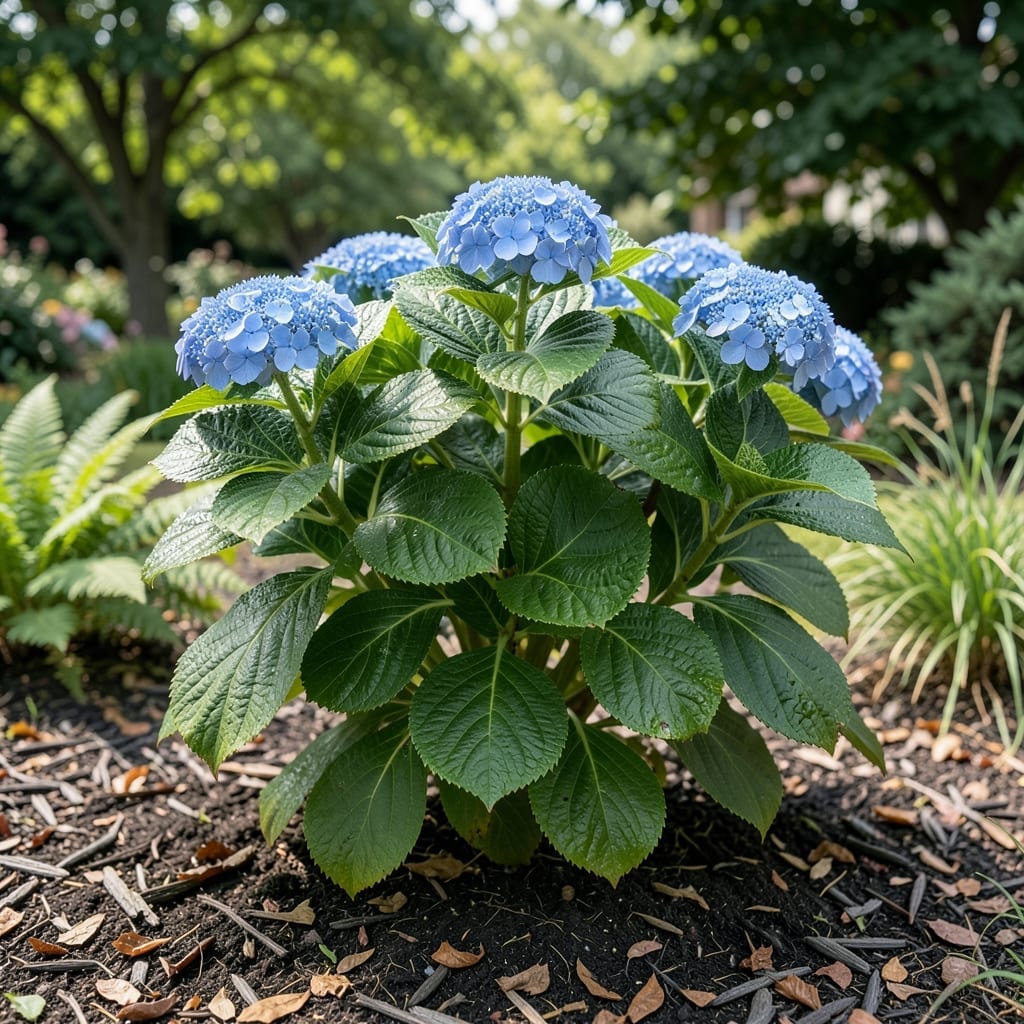
Bigleaf hydrangea thrives in partial shade with moist, well-draining soil. Its large, vibrant blooms change color based on soil pH, and it requires regular watering and occasional pruning for optimal growth.
I love how these plants transform gardens with their bold floral displays. The color shifts—from pink to blue—happen because aluminum availability in the soil changes with pH levels. For best results, I test my soil annually and amend it with lime or sulfur as needed to achieve my desired bloom hues. 🌟
Consistent moisture keeps the leaves lush, but I avoid waterlogging by ensuring good drainage. Pruning at the right time, just after flowering, helps maintain shape while encouraging next season’s growth.
💡 In This Article
The color shift in bigleaf hydrangea blooms is a fascinating chemical process. At the heart of this is aluminum uptake—when soil pH drops below 5.5, aluminum becomes more soluble and is absorbed by the plant. This aluminum then reacts with anthocyanin pigments in the petals, turning them from pink to blue.
The lower the pH, the more intense the blue hue becomes. 🔥
Soil pH above 6.5 locks aluminum in an insoluble form, preventing absorption. This is why blooms stay pink in alkaline conditions. Gardeners can manipulate this by adding sulfur to acidify soil for blue flowers or lime to raise pH for pink.
The process isn’t instant—it takes 2-3 months for the plant to respond to pH changes.
Genetics also play a role. Some cultivars like ‘Nikko Blue’ are bred to produce more stable blue blooms, while others like ‘Forever Pink’ maintain their color regardless of soil pH. This genetic predisposition means not all bigleaf hydrangeas will respond the same way to pH adjustments.
Testing your soil with a kit gives precise readings to guide your amendments. ✨
What many don’t realize is that white bigleaf hydrangea varieties lack the anthocyanin pigments needed for color change. Their blooms remain white regardless of soil chemistry. This is why it’s important to know your specific cultivar before attempting to alter bloom colors. The science is elegant but requires patience and precision. 💫
For the most dramatic color shifts, I’ve found that consistent soil monitoring is key. A pH of 5.2-5.5 produces the deepest blues, while 6.5-7.0 yields vibrant pinks. Remember that local water quality can affect soil pH over time, so annual testing helps maintain your desired color palette. 🌟
Water deeply 2-3 times per week during the first growing season. Once established, reduce to 1 inch weekly, including rainfall. Always check the top 1-2 inches of soil first.
It tolerates morning sun but struggles in hot afternoon sun, especially in warmer zones. In southern climates, partial shade is essential to prevent leaf scorch.
Brown edges often indicate underwatering or too much direct sun. Yellowing leaves may signal overwatering. Check soil moisture and adjust your watering schedule accordingly.
Plant in early spring or fall when temperatures are mild. This gives roots time to establish before summer heat or winter cold sets in.