
Beautiful Plants For Your Interior
Beautiful Plants For Your Interior
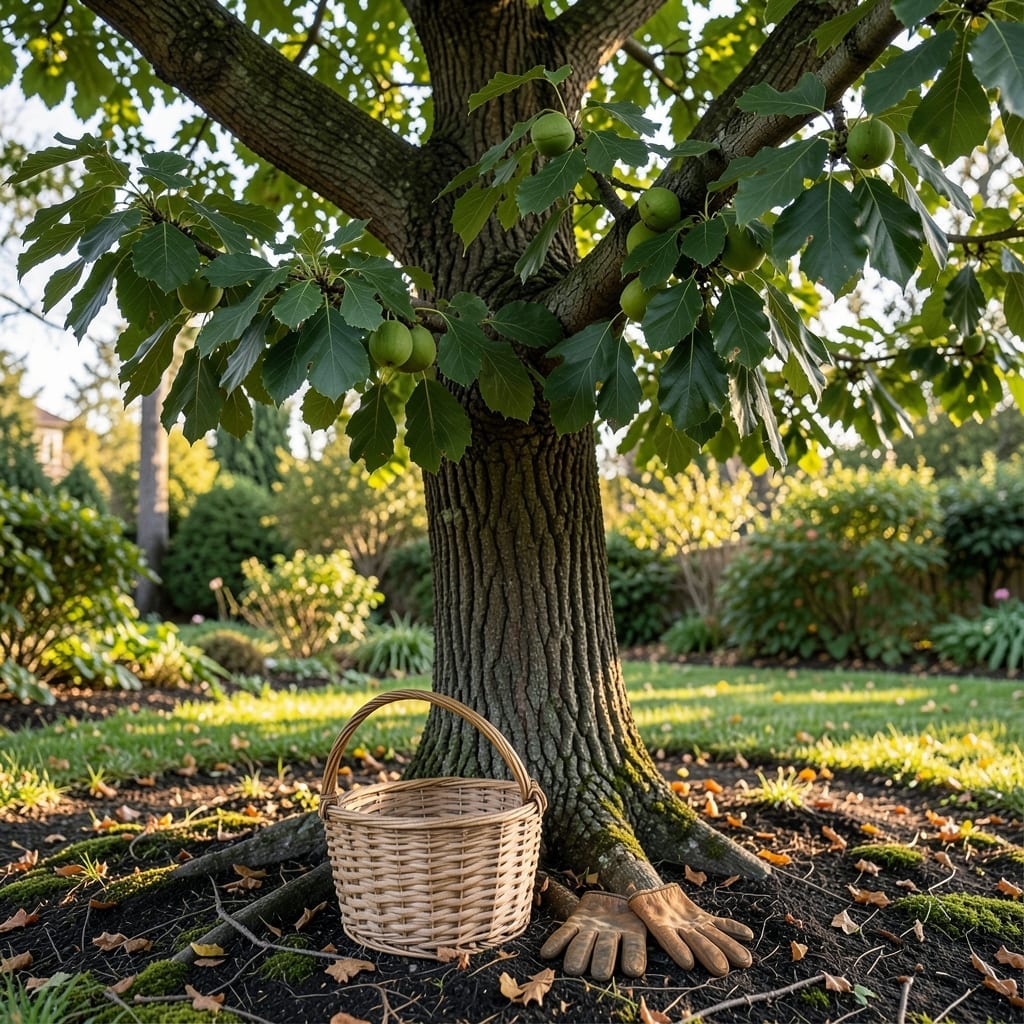
The big green tree nut is typically a hickory or walnut variety, identifiable by its thick, green husk covering a hard shell. It matures in late summer or early fall, often dropping from deciduous trees.
I often find these nuts under black walnut or shagbark hickory trees, where their vibrant husks stand out against the forest floor. The husk turns from bright green to yellowish-brown as it ripens, signaling the perfect time for harvest. These varieties are especially common in temperate climates, making them a favorite for foragers. ✨
What makes them unique is their dual-layer protection—the husk guards the shell, which then shields the edible kernel. 🔥
💡 In This Article
The most striking feature is the husk, which starts bright emerald green and turns yellow-brown when ripe. It’s thick, slightly spongy, and often sticky to touch due to natural tannins. This outer layer protects the hard, woody shell inside, which encases the edible nut meat. 🔥
Look for compound leaves with 5-9 leaflets on walnut trees, or 7-9 leaflets on hickory. The bark differs too: shagbark hickory peels in long strips, while black walnut bark forms deep furrows. These visual clues help distinguish them from similar species like butternut or pecan.
The nuts themselves vary in shape—hickory nuts are usually oval or round, while walnuts are more spherical with a rough, brain-like texture on the shell. A mature walnut husk can reach 2-3 inches in diameter, making it easy to spot among fallen leaves. ✨
For tactile identification, the husk of a fresh walnut feels smooth yet firm, while hickory husks are thicker and split into 4 sections as they dry. The shell beneath is extremely hard, requiring significant force to crack open—this is your final confirmation. 💫
Timing matters: hickory nuts typically drop in September-October, while black walnuts often fall earlier, in late August. The green husk stage is brief, so check trees weekly during peak season to catch them at the right moment. ⚡
Harvest when the husks turn from bright green to yellowish-brown, usually in late August for walnuts or September-October for hickory. They should fall naturally from the tree.
Place nuts in a burlap sack for 3-5 days in a dry area. Once husks turn black and mushy, wash them off with water or stomp on them while wearing boots.
No, the husk contains tannins that are bitter and can stain. Always remove the husk and dry the nuts for 2-3 weeks before cracking the shell.
In a cool, dry place, they’ll last 3-6 months. For longer storage, freeze in airtight containers for up to 1 year to prevent spoilage.
This often happens from impact when they fall. Use these first, as cracked shells reduce shelf life and increase the risk of pest infestation.