
Beautiful Plants For Your Interior
Beautiful Plants For Your Interior
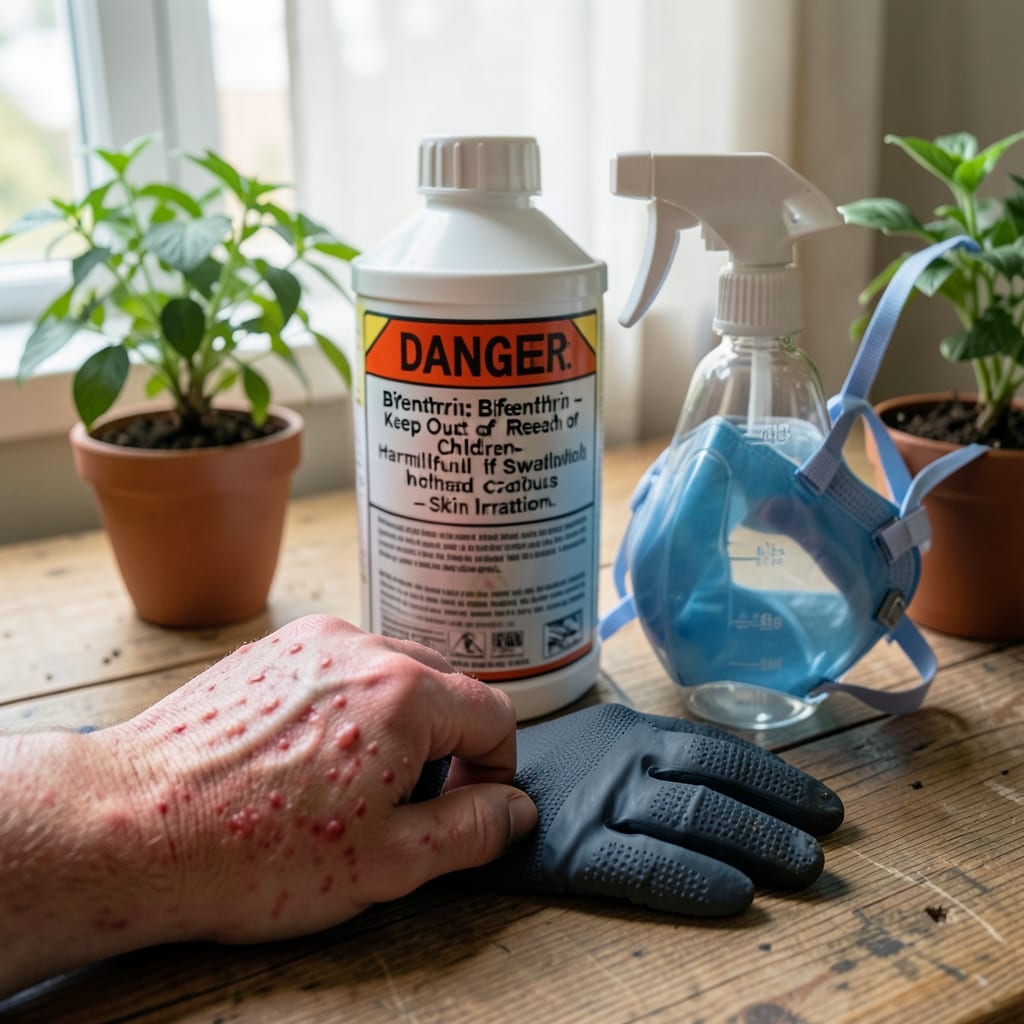
Bifenthrin is low to moderately toxic to humans, causing mild skin and eye irritation, nausea, or dizziness with exposure. Severe poisoning is rare but may lead to neurological symptoms like tremors.
I’ve found that most cases stem from direct contact or accidental ingestion, which can happen during garden work. The compound disrupts nerve signals in insects, and in high doses, it may similarly affect human nervous systems. That’s why proper handling is critical. 🔥
For context, the EPA classifies it as a Class C chemical, meaning moderate toxicity, but real-world incidents are uncommon when used as directed.
💡 In This Article
Bifenthrin disrupts sodium channels in nerve cells, overstimulating the nervous system. This mechanism targets insects but can affect humans at high exposures. The compound binds to nerve cell membranes, causing prolonged excitation and potential misfiring of signals.
Skin contact is the most common exposure route, with absorption rates around 1-2% for intact skin. Inhalation poses risks when spraying concentrates, with airborne droplets measuring 10-50 microns able to reach the lungs. Ingestion, though rare, can occur from contaminated hands or food, with gastrointestinal absorption nearing 30-40%.
The body metabolizes bifenthrin primarily in the liver, breaking it down into less toxic compounds. These metabolites are then excreted through urine and feces within 24-48 hours. The half-life in human blood is approximately 6-8 hours, meaning most of the substance leaves the body relatively quickly.
Neurological symptoms occur because bifenthrin interferes with normal nerve signal transmission. At high doses, this can lead to hyperexcitation of the central nervous system. The threshold for these effects is typically 10-20 mg/kg of body weight, far above normal environmental exposure levels.
Individual sensitivity varies based on factors like body weight, age, and pre-existing conditions. Children may be more susceptible due to their developing nervous systems and higher surface area-to-body weight ratio. Proper ventilation and protective equipment significantly reduce exposure risks. 🔥
Mild skin or eye irritation often appears first, along with a tingling sensation. Inhalation may cause dizziness or nausea within 30-60 minutes. Severe cases can lead to muscle twitching or headaches.
The body typically eliminates half the substance in 6-8 hours. Most is processed by the liver and excreted within 24-48 hours. Drinking water helps speed up this process.
Chronic exposure may affect the nervous system over time. However, occasional low-level contact is unlikely to cause lasting harm. Always follow safety guidelines to minimize risk.
Call poison control or seek emergency care immediately. Do not induce vomiting unless instructed. Have the product container ready for medical personnel.