
Beautiful Plants For Your Interior
Beautiful Plants For Your Interior
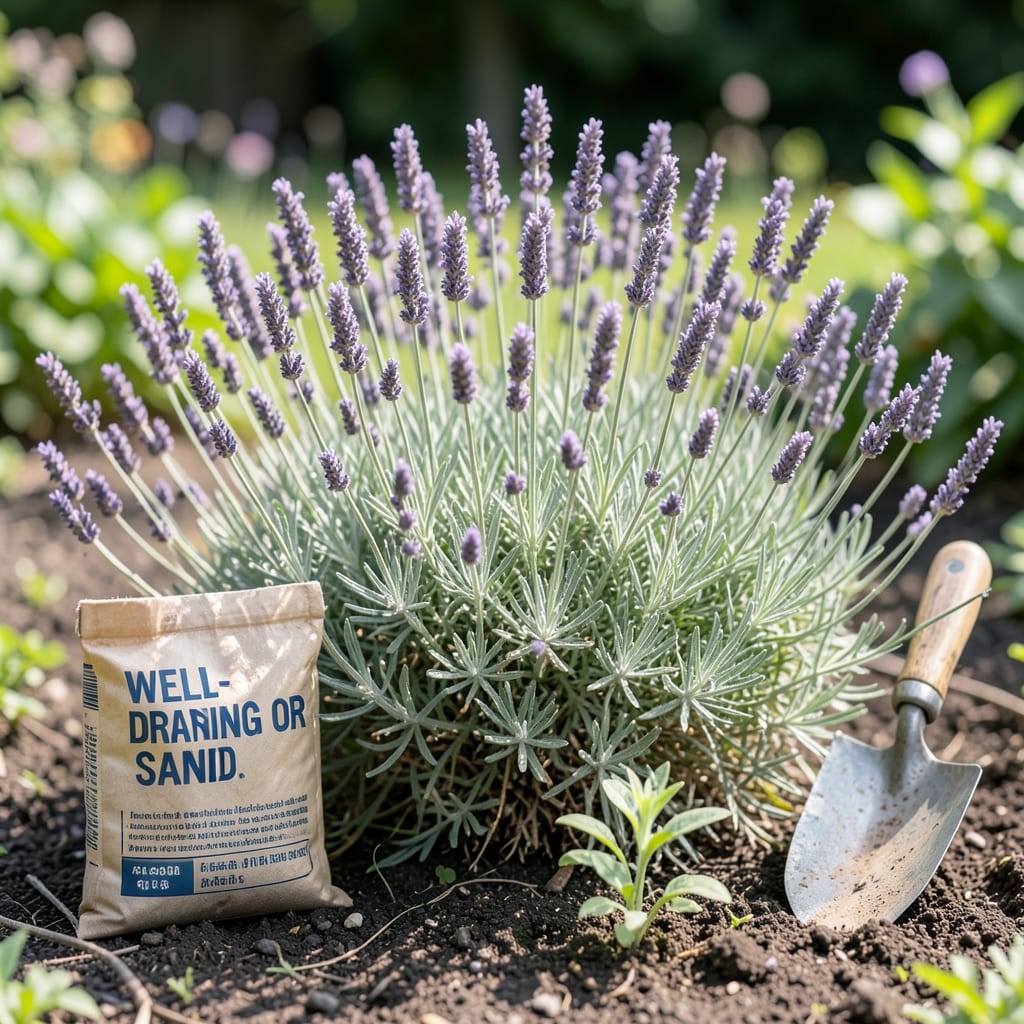
Lavender thrives in well-draining, sandy or gravelly soil with a pH between 6.5 and 8.0. Avoid heavy clay or overly rich soil, as it can cause root rot.
I’ve learned this plant’s Mediterranean roots mean it’s built for lean, rocky conditions where water doesn’t linger. 🌟 In my experience, amending native soil with coarse sand or perlite creates the ideal environment, preventing waterlogged roots while maintaining just enough nutrients. This mimics its natural habitat and keeps the plant healthy and fragrant.
💡 In This Article
Lavender’s Mediterranean roots shape its soil needs. Native to rocky, arid regions, this plant evolved with a deep taproot system designed to seek water efficiently. The roots can’t tolerate moisture sitting around them for long periods, which is why soggy soil quickly leads to rot. 🌟
In its natural habitat, lavender grows in limestone soils with excellent drainage. These conditions allow water to pass through quickly while retaining just enough moisture for the plant’s needs. The soil pH in these areas typically ranges from 7.0 to 8.5, which is why lavender prefers slightly alkaline conditions over acidic ones.
When soil doesn’t drain well, the root system suffocates. The plant’s vascular system can’t deliver oxygen to the roots, causing them to turn black and mushy. This is particularly problematic in heavy clay soils, which compact easily and hold water like a sponge. Even in cooler climates, poor drainage can create the same deadly conditions.
What most people don’t realize is that lavender’s silver-green foliage is actually an adaptation to its native environment. The tiny hairs on the leaves reflect sunlight and reduce water loss, while the aromatic oils help deter pests. These features work best when the soil mimics its natural growing conditions.
The plant’s preference for lean soil isn’t just about drainage—it’s also nutritional. Overly rich soil encourages excessive leafy growth at the expense of flowers. In its native Mediterranean, lavender thrives in nutrient-poor soils, which is why it produces so many fragrant blooms when grown in similar conditions at home. ✨
Water deeply once after planting, then wait until the top 1-2 inches of soil are dry. Established plants need water every 2-3 weeks in dry climates, less in humid areas. Overwatering causes root rot.
No, regular potting soil retains too much moisture. Mix 50% potting soil with 30% perlite and 20% sand for proper drainage. Always use pots with drainage holes.
Add garden lime to raise the pH to 6.5-8.0. Test soil first, then apply lime as directed. Avoid wood ash, as it can make soil too alkaline too quickly.
Wilting can mean underwatering or root rot. Check soil moisture 2 inches down. If dry, water deeply. If soggy, improve drainage and reduce watering frequency.