
Beautiful Plants For Your Interior
Beautiful Plants For Your Interior
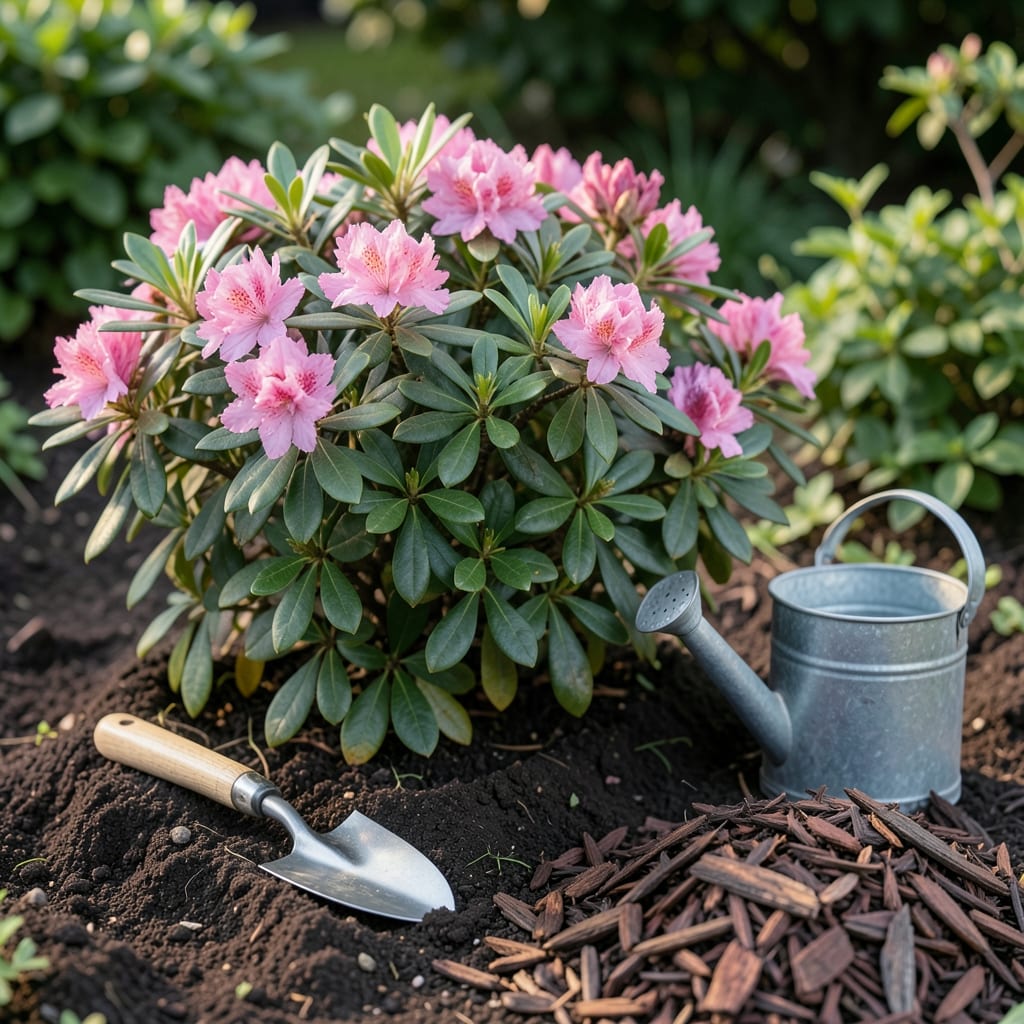
Plant azalea bushes in partial shade with morning sun and afternoon shade, in well-draining, acidic soil rich in organic matter. Avoid low-lying areas with poor drainage or full sun exposure.
I’ve found azaleas thrive when shielded from harsh afternoon rays, which can scorch their delicate petals. 🌟 The acidic soil requirement comes from their natural forest floor habitat, where leaf litter creates that ideal pH balance. While they’ll tolerate some sun, especially morning light, too much exposure often leads to stressed plants with fewer blooms.
💡 In This Article
Azaleas evolved in forest understories where decaying leaves create naturally acidic conditions. Their roots can’t absorb iron in neutral or alkaline soils, leading to a condition called iron chlorosis where leaves turn yellow with green veins. The ideal pH range of 4.5-6.0 allows these plants to access essential nutrients like iron, manganese, and phosphorus. 🌟
Well-draining soil prevents root rot, a common killer of azaleas. These plants hate “wet feet”—when roots sit in water for more than 24-48 hours, they suffocate and decay. A simple test: dig a 12-inch hole, fill it with water, and see how long it takes to drain.
If it takes longer than 4 hours, you’ll need to amend the soil with organic matter like compost or pine bark fines. ✨
Organic matter does double duty: it maintains acidity as it breaks down and improves drainage. I recommend mixing in 50% peat moss or compost with your native soil when planting. This mimics their natural habitat and gives roots the loose, airy structure they prefer. Without this, azaleas often develop stunted growth and poor flowering. 💫
Watch for warning signs of poor soil conditions: yellowing leaves (often pH-related), wilting despite moist soil (possible root rot), or leaf drop. These symptoms typically appear 2-4 weeks after planting if conditions aren’t right. A simple soil test kit from your local garden center can confirm whether you need to adjust pH or improve drainage.
⚡
For existing azaleas with soil issues, don’t despair. You can gradually acidify soil by top-dressing with 1-2 inches of pine needles or oak leaves annually. For drainage problems, consider creating raised beds or installing French drains. The key is consistency—azaleas adapt slowly to soil changes. 🔥
Space dwarf varieties 2-3 feet apart and larger types 4-6 feet apart. This allows for proper air circulation and future growth. Crowding can lead to disease and reduced blooming.
Yes, they thrive in pots with good drainage. Use a container at least 16 inches deep and fill with acidic potting mix. Ensure the pot has drainage holes to prevent root rot.
Full sun exposure often causes leaf scorch, faded blooms, and heat stress. Leaves may turn brown or drop prematurely, especially in hot climates. Afternoon shade is crucial.
Early spring or fall are ideal, avoiding extreme heat or cold. This gives roots time to establish before summer stress or winter dormancy. Planting in summer requires extra watering.
Use a soil test kit to check pH levels. Azaleas prefer 4.5-6.0 pH. If needed, amend with sulfur or acidic organic matter like pine needles. Test every 2-3 years.