
Beautiful Plants For Your Interior
Beautiful Plants For Your Interior
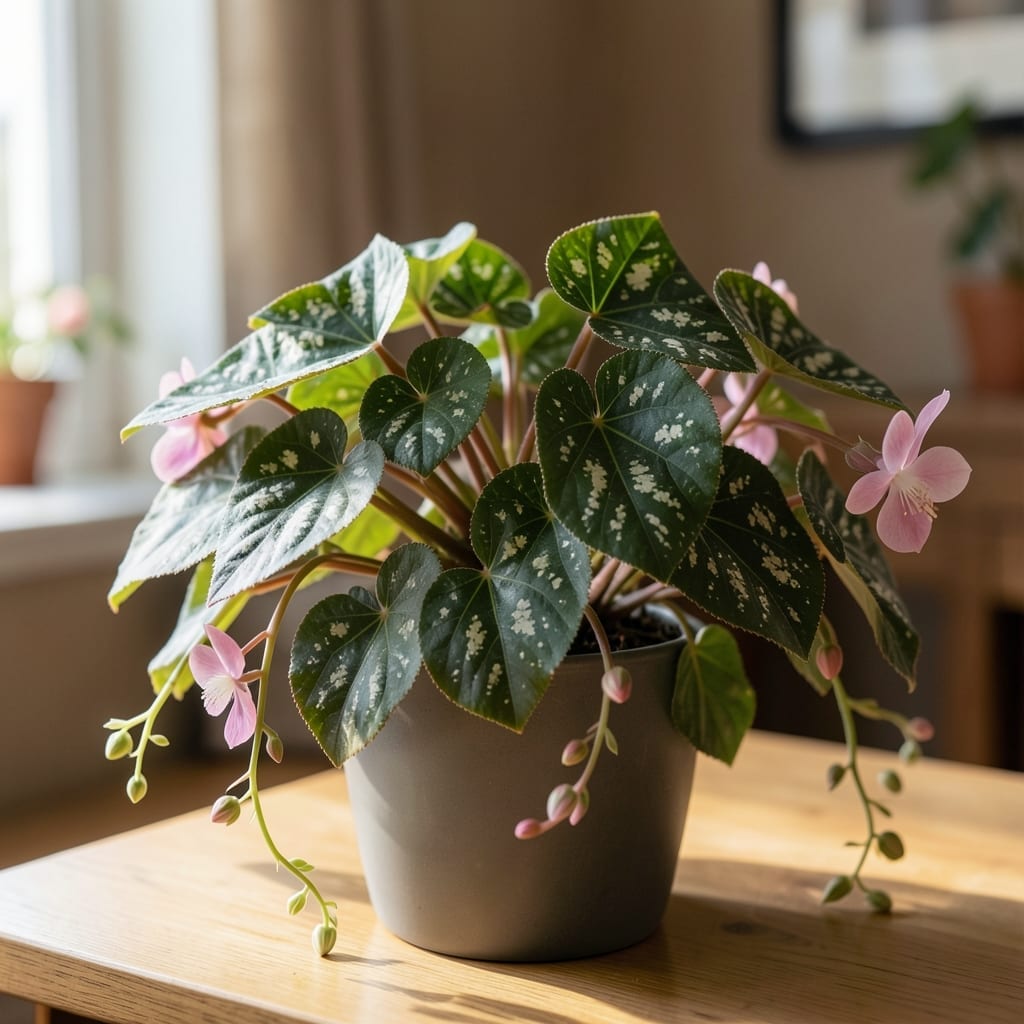
White spots on your begonia leaves aren’t just unsightly—they’re a cry for help. I’ve seen this exact pattern on my own plants, and the fix is simpler than you’d think.
Most cases trace back to 3 common culprits: powdery mildew, mealybugs, or water spots from overhead sprinkling. Each leaves a distinct mark, so identifying the pattern is your first step toward a solution.
With a few adjustments to airflow, watering habits, or a gentle wipe-down, you’ll see those spots disappear within 1-2 weeks. The plant bounces back faster than you’d expect.
Works for all begonia types, whether you’re growing them indoors or out. Here’s how to diagnose and treat it for good.
Those unsightly white spots on your begonia leaves aren’t random—they’re signals from your plant. Here’s what’s likely triggering them:
Powdery mildew (Erysiphe spp.) is a common culprit, thriving in high humidity and poor air circulation. This fungus creates a white, powdery coating on foliage, often starting on the upper leaf surfaces. Downy mildew (Peronospora spp.) may also appear as pale, yellowish-white patches, usually on the undersides of leaves. Both spread rapidly in damp, crowded conditions.
Tiny pests like mealybugs and scale insects leave cottony or waxy white residue as they feed on plant sap. Mealybugs cluster in leaf axils, while scale insects often attach themselves along stems and leaf veins. Their feeding weakens the plant and can introduce secondary infections.
If you’re watering with hard tap water, calcium and magnesium can accumulate on leaves, forming chalky white spots. This is especially common if water drips onto foliage and evaporates, leaving behind minerals. While not harmful to the plant’s health, these deposits can block sunlight and reduce photosynthesis efficiency.
Begonias prefer bright, indirect light. Direct, intense sunlight can bleach patches of leaves, creating white or pale yellow spots. This often happens when plants are suddenly moved to a sunnier location without acclimation. Heat stress can also cause similar discoloration, particularly in variegated varieties.
A deficiency in essential nutrients like iron or magnesium can manifest as white or yellow interveinal spotting. Iron deficiency often starts with young leaves turning pale, while magnesium deficiency affects older leaves first. Over-fertilization, particularly with high-salt fertilizers, can also cause salt burn, leading to white, crispy spots on leaf edges.
White spots on your begonia can be frustrating, but most causes are treatable with simple adjustments. Below are targeted solutions for the most common issues, along with prevention tips to keep your plant thriving. 🌿
Pro Tip: Isolate heavily affected plants to avoid spreading issues to healthy ones. Always sterilize tools (like pruners) with rubbing alcohol between uses! 💡
Yes, if caused by pests or fungi. Isolate affected begonias immediately and treat with neem oil or insecticidal soap to prevent spreading.
Pests like mealybugs leave cottony clusters, while fungal spots appear powdery or patchy. Check leaf undersides for tiny insects or webbing.
Existing spots won’t disappear, but new growth will be healthy. Remove heavily damaged leaves to help the plant focus energy on recovery.
Yes, mineral deposits from hard water are cosmetic. Switch to filtered water and wipe leaves gently to prevent buildup.