
Beautiful Plants For Your Interior
Beautiful Plants For Your Interior
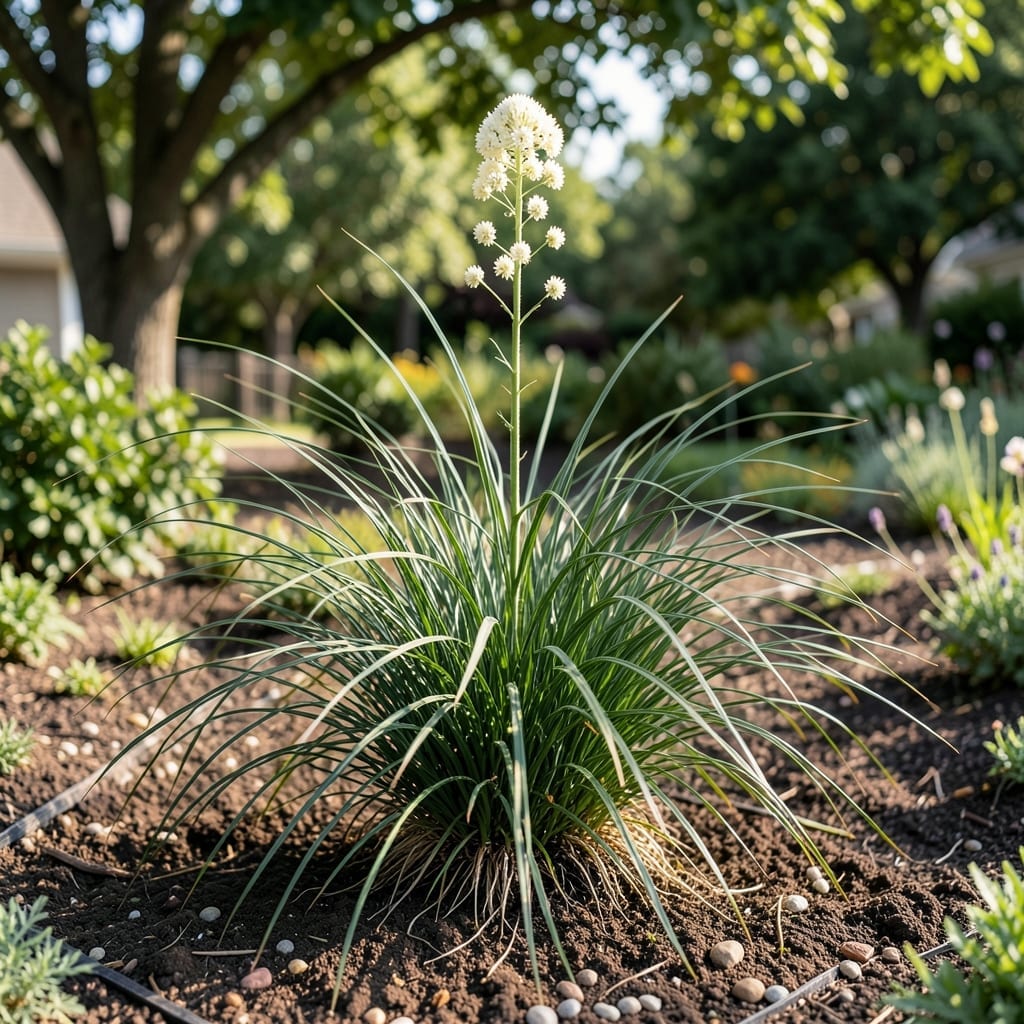
Bear grass in Arizona is a native perennial with long, slender leaves and tall flower stalks, thriving in dry, rocky soils and partial shade. It’s drought-tolerant and often found in mountainous regions.
This hardy plant stands out with its clumping growth habit and striking white flower clusters. 🌟 I’ve noticed it thrives particularly well between 4,000-8,000 feet elevation, where its deep roots help it survive the state’s intense heat. Gardeners love it for its low maintenance and ability to attract pollinators like bees and butterflies.
💡 In This Article
Bear grass stands out with its dense, grass-like clumps of 1-3 foot long leaves that are dark green and slightly stiff to the touch. The leaves emerge from a central base and arch gracefully outward, creating a fountain-like appearance that’s unmistakable in the wild. 🌿
Come late spring to early summer, the plant sends up tall, slender stalks that can reach 5-6 feet in height. These stalks are topped with dense, creamy-white flower clusters that resemble large, frothy umbrels. The blooms emit a sweet, honey-like fragrance that attracts pollinators from miles around.
What sets bear grass apart from similar plants is its year-round interest. Even when not in bloom, its evergreen foliage provides texture and movement in the landscape. Unlike yuccas or agaves, bear grass lacks sharp spines or thick, fleshy leaves, making it safer for gardens frequented by children or pets.
The plant’s growth pattern is equally distinctive. It spreads slowly via underground rhizomes, forming tight clumps rather than aggressive, running colonies. This controlled growth habit makes it ideal for border plantings or as a focal point in rock gardens. 💫
Seasonal changes bring subtle variations. In winter, the foliage may take on a slightly bronzy hue, while new growth in spring emerges with a fresh, bright green color. The flower stalks persist through summer before drying to a papery tan, adding architectural interest even after the blooms fade.
Look for dense clumps of 1-3 foot long, dark green leaves arching outward. In late spring, tall stalks with creamy-white flower clusters appear, emitting a sweet fragrance.
Use well-draining, rocky or sandy soil to mimic its natural habitat. Avoid heavy clay soils that retain too much moisture around the roots.
Once established, water deeply every 2-3 weeks. During the first growing season, water weekly to help roots establish.
Yes, but provide afternoon shade in Arizona’s intense heat. It thrives best in partial shade to full sun at elevations between 4,000-8,000 feet.
Divide clumps in early spring or fall, ensuring each section has healthy roots. Space divisions 2-3 feet apart for mature growth.