
Beautiful Plants For Your Interior
Beautiful Plants For Your Interior
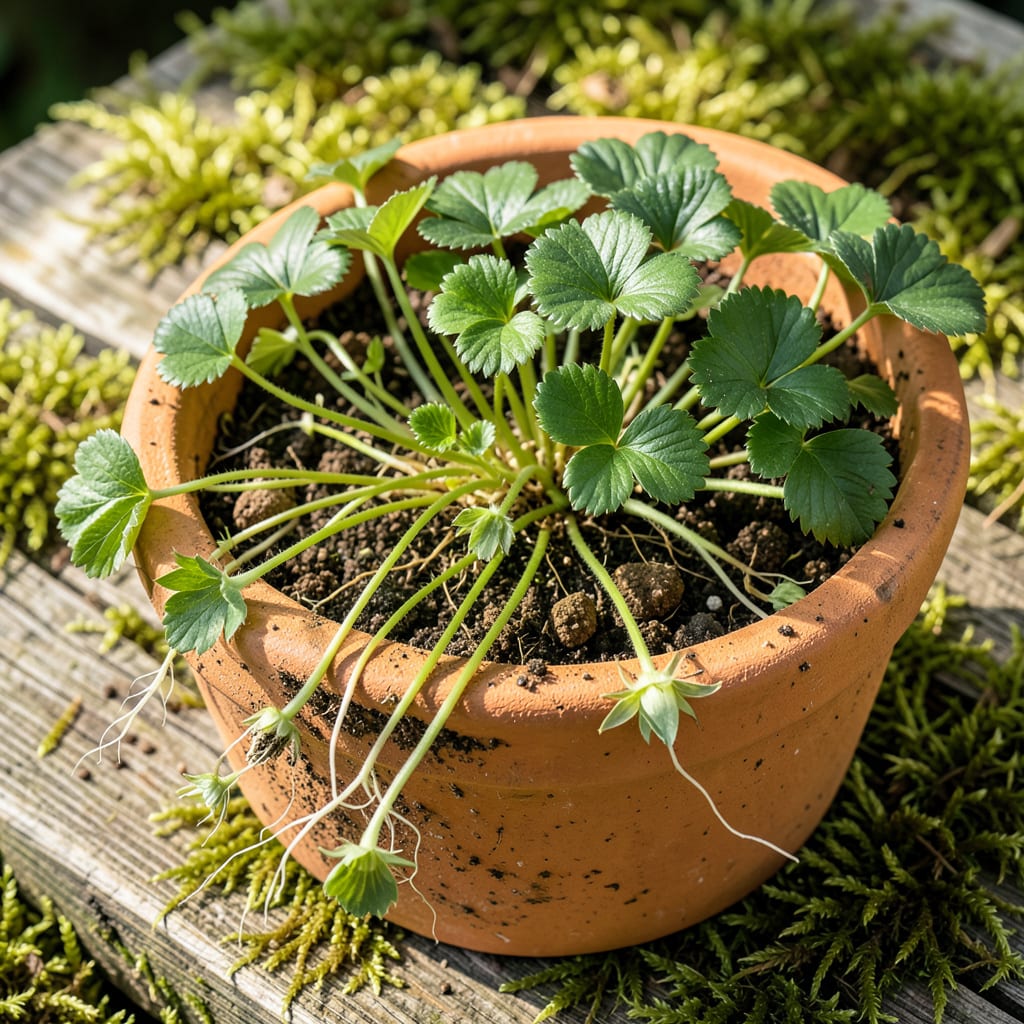
Free strawberry plants from your existing patch. Bare root runners let you expand your berry crop without spending a dime, turning one plant into dozens over a single season.
Plant them in early spring or late summer for best results. Keep the soil moist and protect the tender roots from drying out. Within 4-6 weeks, you’ll see new growth and soon, a bountiful harvest.
📚 In This Guide
Here’s the method I rely on to turn existing plants into a whole new patch.
Look for long, thin stems (runners) extending from your established strawberry plants, typically appearing in late summer. Each runner has tiny plantlets spaced along its length. I choose the ones with 3-4 well-formed leaves and a small root system beginning to develop.
Real talk: weak or diseased parent plants produce weak runners. Skip any stems that look thin, yellowed, or show signs of pest damage. The healthiest runners come from plants that produced a good harvest earlier in the season.
Don’t detach them yet—leave them connected to the mother plant until roots form. This connection provides essential nutrients during the critical early growth phase.
Gently position the plantlet at the end of the runner onto the soil surface. I use a small rock or bent piece of wire to pin it down where it makes contact with the earth. The tiny roots need firm contact with moist soil to establish themselves.
Keep the soil consistently damp but not soggy during this period. You’ll know it’s working when you see white root hairs emerging from the base of the plantlet after about 2-3 weeks.
This is the moment that matters: if the soil dries out now, the developing roots will die back. A light mulch of straw helps retain moisture without smothering the new growth.
Once the new plantlet shows strong root growth (usually 4-6 weeks after pinning), it’s time to separate it from the mother plant. Use clean pruners to snip the runner stem about 1 inch from the new plant’s base.
I know it seems weird, but don’t be tempted to separate them earlier. Cutting too soon forces the plantlet to rely on underdeveloped roots, which often leads to failure. The mother plant is essentially nursing the baby along until it can thrive independently.
After cutting, leave the new plant undisturbed in its current location for another 1-2 weeks to allow the roots to fully establish before transplanting.
Carefully dig up the new plant, keeping as much of the root system intact as possible. I use a trowel to lift a generous portion of soil with the roots to minimize transplant shock. The root ball should be at least 2 inches in diameter.
Plant in a prepared bed with well-draining soil, setting it at the same depth it was growing. Space new plants 12-18 inches apart in rows 2-3 feet apart for optimal air circulation and growth.
Water thoroughly after planting and maintain even moisture for the first 2 weeks. You’ll see new leaf growth within 7-10 days, which confirms the transplant was successful.
Here’s what I learned the hard way about propagating strawberry runners successfully.
Selection Wisdom: In Step 1, only choose runners from plants that produced abundantly earlier in the season. Weak or diseased parent plants always produce weak runners that struggle to establish. Look for plantlets with exactly 3-4 well-formed leaves—this is the sweet spot for viability.
Root Development Secret: During Step 2, that 2-3 week period when you’re waiting for white root hairs to appear is critical. If the soil dries out even once, the developing roots will die back. I use a light mulch of straw to maintain moisture without smothering the new growth.
Patience Pays Off: Don’t rush Step 3. Cutting the runner too soon—before you see strong root growth—forces the plantlet to rely on underdeveloped roots. The mother plant is nursing the baby along, and cutting that connection early often leads to failure. Wait the full 4-6 weeks for best results.
Transplant Timing: After severing, leave the new plant undisturbed for another 1-2 weeks as mentioned in Step 3. This extra time allows roots to fully establish before the stress of transplanting. When you do move them in Step 4, keep that 2-inch root ball intact to minimize shock.
Early spring or fall is ideal, as cooler temperatures reduce stress on the plants. Aim for 4-6 weeks before the last frost in spring or after the worst summer heat has passed. This gives roots time to establish before extreme weather.
Keep them in a cool, moist environment (like a refrigerator) for up to a week. Wrap roots in damp paper towels and place them in a sealed bag. Avoid freezing or letting them dry out—this can kill the runners.
Yes! Use a well-draining pot at least 8-12 inches deep. Fill with potting mix and ensure containers have drainage holes. Strawberries thrive in pots, hanging baskets, or even strawberry towers—just keep soil consistently moist.
Common issues include poor soil contact, overwatering, or planting too deep. Ensure the crown (where roots meet leaves) is above soil. Check for rot or pests, and keep soil moist but not soggy. Patience helps—some runners take 2-3 weeks to show growth.
