
Beautiful Plants For Your Interior
Beautiful Plants For Your Interior
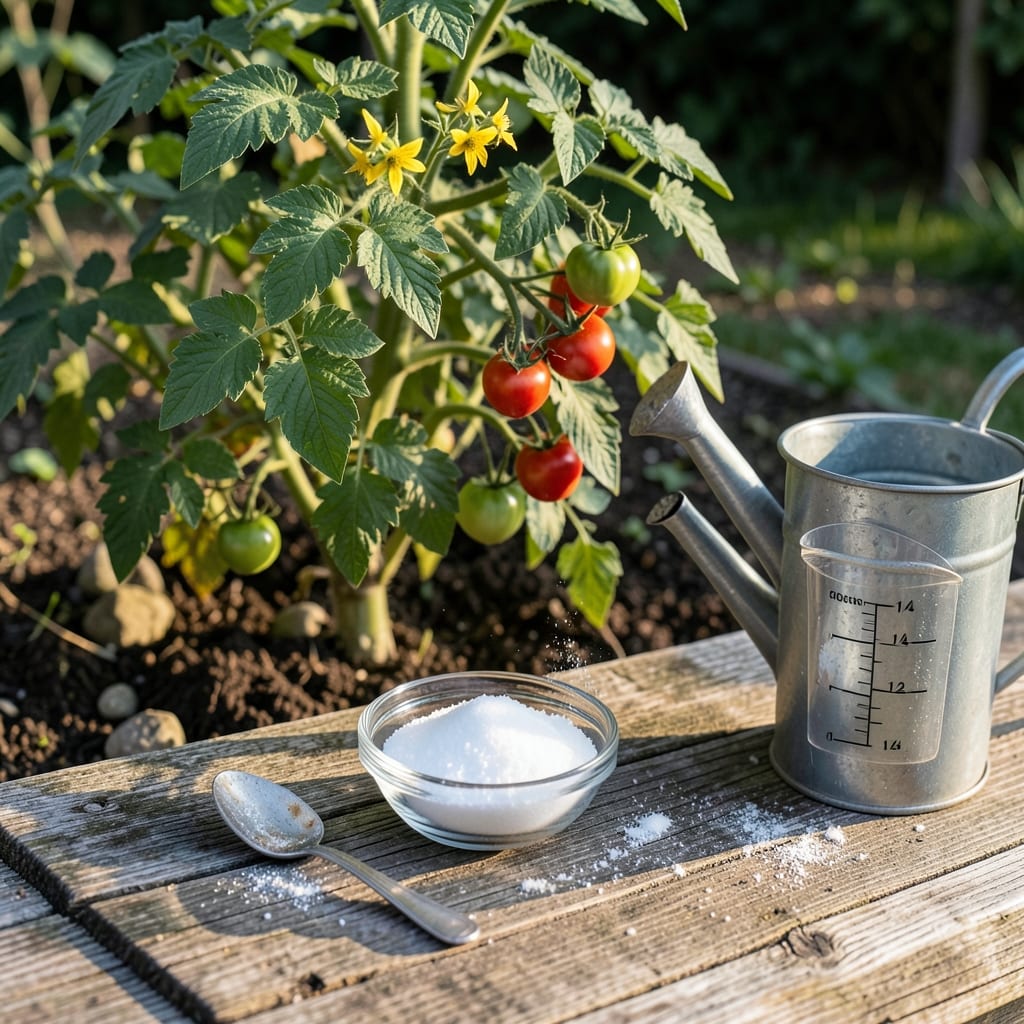
Baking soda can naturally control fungal diseases, deter pests, and sweeten tomato flavors in gardens when used correctly in small amounts.
I love using this pantry staple for its versatility in the yard. The sodium bicarbonate alters surface pH, creating an environment that’s hostile to fungal spores while being gentle on plants. For tomatoes specifically, it can enhance natural sugars, giving you sweeter harvests with minimal effort. 🔥
Just remember that proper dilution is key—too much can harm your soil’s balance or burn delicate foliage. ✨
💡 In This Article
Sodium bicarbonate disrupts fungal cell membranes through osmotic pressure. When sprayed on leaves, it creates an alkaline environment on the plant surface, making it hostile for fungal spores to germinate. This is particularly effective against powdery mildew, which thrives in slightly acidic conditions.
The pH shift to about 8.0-8.5 on leaf surfaces inhibits enzyme activity in fungal cells. I’ve seen this work especially well on cucumbers and roses, where powdery mildew often appears as white, powdery spots. The baking soda doesn’t kill existing fungi but prevents new spores from establishing, breaking the disease cycle.
For best results, combine with a surfactant like 1 teaspoon of dish soap per quart to help the solution stick to leaves. The soap also helps distribute the baking soda evenly, creating a protective film. This method is most effective when applied preventatively or at first signs of disease. 🔥
What many don’t realize is that baking soda’s fungicidal properties work because it’s a weak base. This gentle alkalinity is strong enough to disrupt fungal growth but mild enough to avoid damaging most plant tissues when used correctly. The key is consistency—reapplying every 7-10 days or after rain.
Tomatoes particularly benefit from this treatment, as it not only controls fungi but may also help sweeten the fruit by reducing stress-related compounds. The alkaline environment can neutralize some acidic compounds in the soil, potentially improving flavor. ✨
No, avoid using on acid-loving plants like blueberries or azaleas. It can disrupt their preferred soil pH. Always test on a small area first for sensitive plants.
Reapply every 7-10 days or after rain. Early morning or late afternoon is best to prevent leaf burn from the sun.
Yes, but avoid combining with vinegar or acidic fertilizers, as this neutralizes its effectiveness. Stick to mild soap as a surfactant.
No, it’s non-toxic to bees and ladybugs when used as a foliar spray. It only targets fungal spores and some soft-bodied pests.
Yes! A 1.5 tablespoon per gallon solution sprayed on leaves may enhance sweetness by reducing stress-related compounds.