
Beautiful Plants For Your Interior
Beautiful Plants For Your Interior
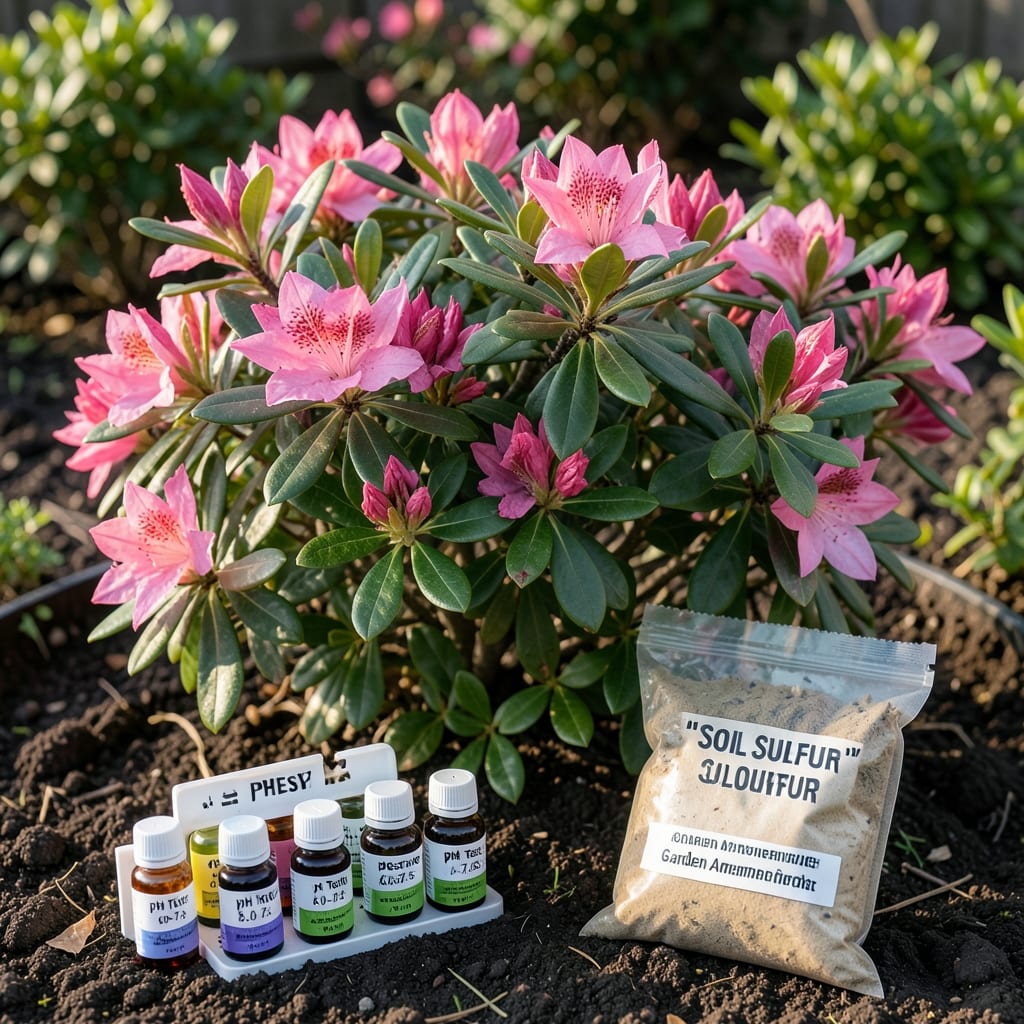
Azaleas thrive in acidic soil with a pH between 4.5 and 6.0. This acidity helps roots absorb essential nutrients like iron, preventing yellowing leaves and poor growth.
I’ve seen firsthand how the wrong pH can turn vibrant azaleas into struggling plants. The acidic environment unlocks nutrients like iron and manganese that these shrubs crave, while also supporting beneficial soil microbes. Without this balance, you’ll often notice stunted blooms or chlorotic leaves despite regular fertilizing. Testing your soil is the only way to be sure it’s in the right range. 🔥
💡 In This Article
The chemistry is simple: azalea roots evolved to absorb nutrients in low pH environments. At 4.5-6.0 pH, iron and manganese become soluble, allowing roots to take them up efficiently. In neutral or alkaline soils, these minerals lock into insoluble forms, starving the plant of what it needs most.
This is why azaleas in the wrong soil often show interveinal chlorosis—yellow leaves with green veins.
Mycorrhizal fungi play a crucial role here. These beneficial microbes form symbiotic relationships with azalea roots, expanding their surface area for nutrient absorption by up to 700%. They thrive in acidic conditions, creating a mutually beneficial ecosystem that supports the plant’s health.
Without this partnership, azaleas struggle to access phosphorus and other key nutrients, even if present in the soil. 🌟
Alkaline soil creates a cascade of problems. It disrupts the mycorrhizal network while also reducing the availability of other micronutrients like zinc and copper. Over time, this leads to stunted growth, poor flowering, and increased susceptibility to diseases. The plant essentially starves while surrounded by nutrients it can’t access.
What’s fascinating is how azaleas have adapted to this specific environment. Their root systems produce organic acids that further acidify their immediate soil environment, creating a micro-ecosystem that supports their unique nutritional needs. This is why they’re often found thriving in wooded areas with pine needle mulch, which naturally lowers soil pH over time. ✨
Temperature and moisture also influence this relationship. In cooler, consistently moist acidic soils, the nutrient uptake process works most efficiently. This is why azaleas often perform better in partial shade with good drainage—conditions that maintain their preferred acidic environment while preventing waterlogged roots that could suffocate the beneficial microbes. 💫
Test your soil every 2-3 months after amending. Once you hit the ideal range of 4.5-6.0, annual testing is sufficient to maintain proper acidity.
While vinegar is acidic, it’s not recommended for soil adjustment. It provides only temporary results and can harm beneficial soil microbes. Stick with elemental sulfur or organic amendments like peat moss for lasting changes.
Yellow leaves with green veins, called interveinal chlorosis, are the classic sign. You may also notice stunted growth and fewer blooms despite proper care. These symptoms appear when iron and other nutrients become unavailable in higher pH soils.
Often yes! Rainwater is naturally slightly acidic, while tap water can be alkaline in some regions. If your tap water has a pH above 7.0, consider collecting rainwater or using distilled water for your azaleas.