
Beautiful Plants For Your Interior
Beautiful Plants For Your Interior
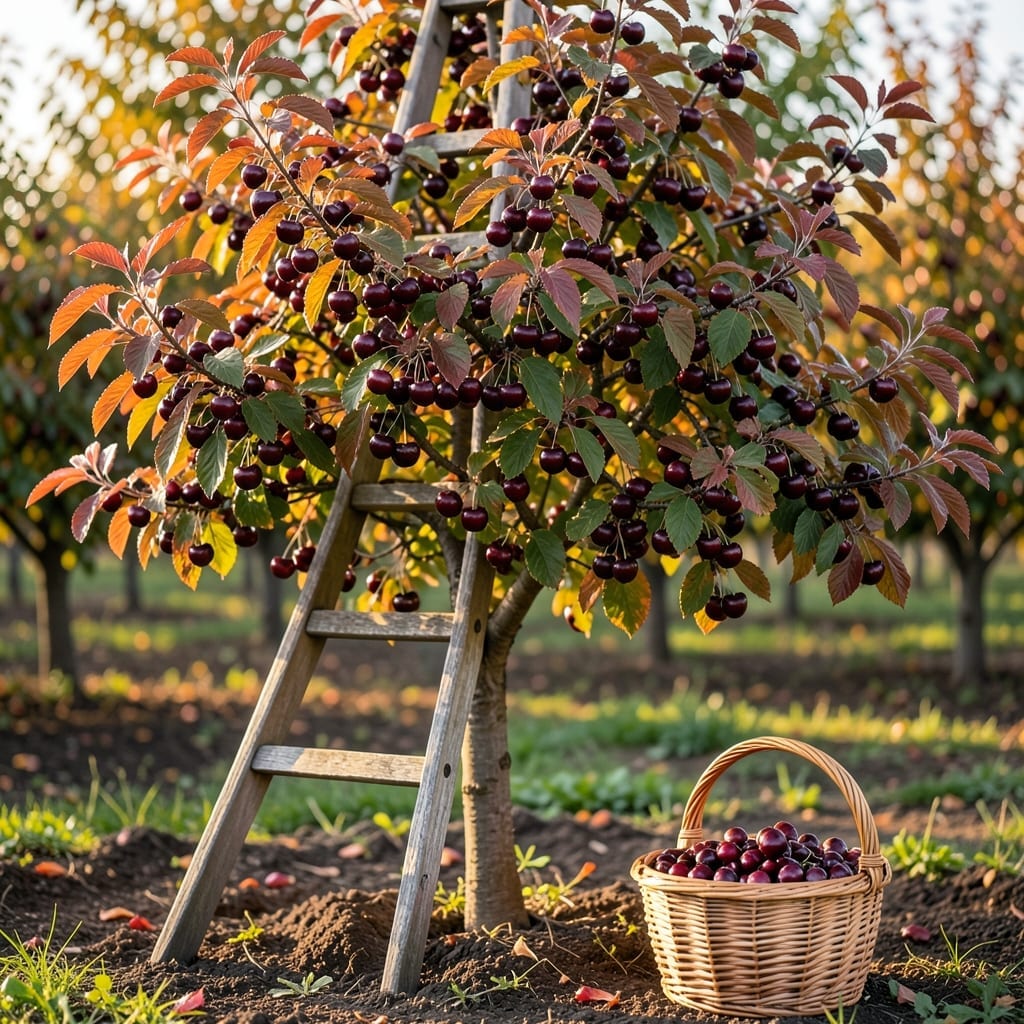
Autumn cherry tree fruit is small, tart, and edible when fully ripe, often used in jams, jellies, or wildlife feeding. It’s rich in antioxidants but best consumed in moderation due to its astringent taste.
I love how these tiny fruits pack a nutritional punch with their deep color indicating high antioxidant content. Their sharp flavor works beautifully in preserves or as a natural sweetener for birds and other wildlife. The key is waiting until they’re fully ripe to reduce the bitterness. ✨
💡 In This Article
The fruit starts as a hard, green drupe in early summer, gradually transitioning to deep red or nearly black hues by late autumn. This color shift signals rising sugar content and decreasing astringency, as tannins break down during the 8-12 week ripening period.
The skin develops a glossy sheen when fully mature, while the flesh softens from firm to slightly yielding under gentle pressure.
Size typically ranges from 0.3-0.5 inches in diameter, with a single hard pit surrounded by thin, juicy flesh. The flavor profile evolves dramatically—early harvests taste intensely bitter and mouth-puckering, while late-season fruits develop balanced sweet-tart notes with subtle almond undertones from the pit.
The ideal harvest window is when fruits detach easily from stems with a slight twist.
Autumn cherries contain high levels of anthocyanins, the same antioxidants that give blueberries their color. These compounds increase as the fruit ripens, peaking at 3-5 times the concentration found in commercial sweet cherries. The skin’s waxy cuticle helps preserve these nutrients while providing natural protection against pests during the extended ripening period. 🌟
Weather conditions significantly impact development. Cool autumn nights enhance sugar accumulation through a process called “cold sweetening,” similar to how frost improves maple syrup flavor. Adequate rainfall prevents the fruits from becoming overly astringent, while drought conditions can concentrate both sugars and tannins, creating an intensely flavorful but challenging eating experience.
For best results, harvest in the morning when temperatures are cooler to preserve the fruit’s integrity. The pit-to-flesh ratio averages about 1:3, meaning you’ll need approximately 3 pounds of whole fruit to yield 1 pound of usable pulp for preserves. This ratio explains why they’re more commonly used in processed forms rather than fresh eating.
✨
Look for deep red to nearly black color with a glossy sheen. The fruit should detach easily from the stem with a gentle twist. Early picks taste bitter, so wait until late autumn for best flavor.
High tannin content creates the astringent, mouth-puckering taste, especially in unripe fruit. As it matures, sugars develop and tannins break down, creating a more balanced sweet-tart flavor. The pit also contributes subtle almond notes.
Use a small knife to split the fruit, then pop out the pit. For large batches, a cherry pitter works well. Expect a 1:3 pit-to-flesh ratio, so plan accordingly for recipes.
Yes! Birds and wildlife love these cherries. The high antioxidant content makes them nutritious. Scatter them in your yard or string them for natural bird feeders.