
Beautiful Plants For Your Interior
Beautiful Plants For Your Interior
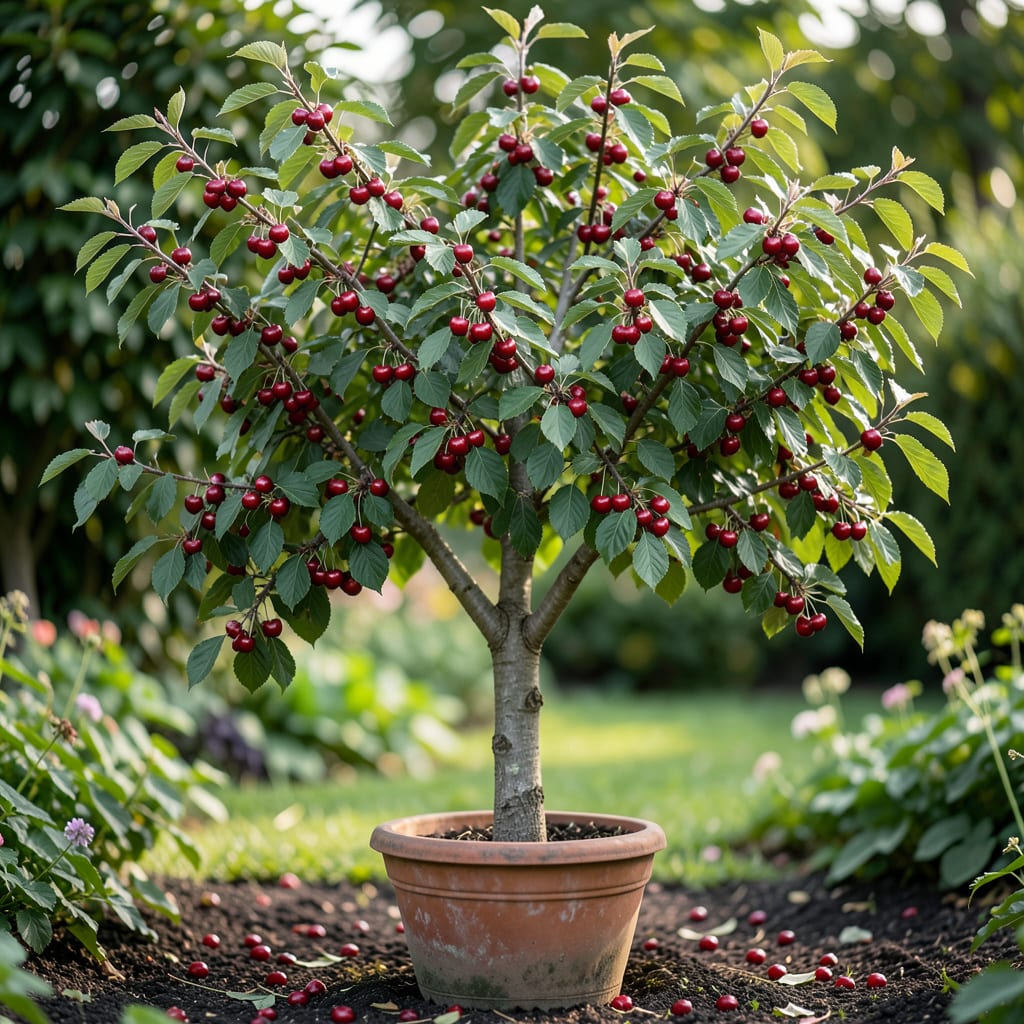
When planting a 🍒 Cherry Tree, understanding its growth potential is crucial. These trees can grow to varying heights depending on factors like rootstock and pruning practices.
In USDA Zone 6a, you can expect different Cherry Tree varieties to reach different mature heights – from 8-12 feet for dwarf varieties to 20-30 feet for standard trees. Proper care will help you manage their size effectively.


Cherry fruit trees can grow to varying heights depending on several key factors. The rootstock plays a crucial role in determining the mature height of the tree. Different rootstocks can result in dwarf, semi-dwarf, or standard-sized trees 🌳.
The variety of cherry tree also significantly impacts its growth. Sweet cherry and sour cherry trees have different growth habits and mature heights. Understanding these differences is essential for proper planning and placement in your garden 🍒.
Growing conditions such as soil quality, sunlight exposure, and climate also play a significant role in determining the height of cherry trees. Trees grown in optimal conditions tend to reach their full potential height 🌟.
Pruning practices are another critical factor in managing cherry tree height. Regular pruning can help control and promote a healthy, productive tree 🌱.
The height of cherry fruit trees is influenced by a combination of genetic and environmental factors. By understanding these factors, gardeners can make informed decisions about tree selection and care.
Rootstock selection is a critical decision when planting a cherry tree. Dwarfing rootstocks can significantly reduce the mature height of the tree, making it more suitable for smaller gardens.
Variety selection is also important. Sweet cherries tend to grow taller than sour cherries. Choosing the right variety for your space is crucial.
Growing conditions like full sun and well-drained soil can promote healthy growth. Cherry trees generally require 6+ hours of direct sunlight daily 🌞.
Pruning is essential for maintaining the desired height and promoting fruiting. Annual pruning can help control the tree’s size and shape.
By considering these factors and taking appropriate care, gardeners can enjoy a productive and healthy cherry tree that fits their garden’s needs.
Understanding the factors that affect cherry tree height allows gardeners to make informed decisions about tree care and management.
Proper care and maintenance can help ensure that cherry trees reach their full potential while remaining manageable for gardeners.
Cherry fruit trees come in various types, each with its own growth characteristics. The height of these trees can vary significantly based on the specific variety 🌳.
Sweet cherry and sour cherry trees are the most common types. Sweet cherries tend to grow taller than sour cherries. Understanding these differences is crucial for garden planning 🍒.
The height of cherry trees is a critical factor in garden design. Standard sweet cherry trees can grow quite tall, reaching heights of 20-30 feet 🌲.
Dwarf varieties are more suitable for smaller gardens, growing to heights of 8-12 feet. These compact trees are ideal for limited spaces 🌟.
Sour cherry trees generally have a more moderate growth habit, typically reaching heights of 15-20 feet. They are a good choice for those who want a productive tree without excessive height 🍒.
When selecting a cherry tree variety, it’s essential to consider the mature height to ensure it fits your garden’s space and needs.
Growth habits also vary among cherry tree varieties. Some have an upright, vigorous growth pattern, while others are more compact 🌿.
Understanding these growth characteristics can help gardeners make informed decisions about tree placement and care.
By choosing the right variety for your space, you can enjoy a healthy and productive cherry tree.
Pruning is a crucial maintenance task for cherry fruit trees, helping control their height and promote healthy growth. Regular pruning can keep your tree at a manageable size while encouraging fruit production 🌳.
The best time to prune cherry trees is during their dormant season, typically in late winter or early spring. This timing helps minimize the risk of disease and allows the tree to heal quickly 🔧.
Start by removing any dead, diseased, or damaged branches. This improves the tree’s overall health and appearance.
Thin out the center of the tree to allow better air circulation and sunlight penetration. This helps reduce disease risk and promotes even fruit ripening.
Shape the tree by cutting back overgrown branches and maintaining a balanced structure. This helps control the tree’s height and promotes a healthy shape 🌿.
When pruning, make clean cuts at a 45-degree angle, just above a bud or lateral branch. This technique encourages healthy regrowth and minimizes damage to the tree 🌟.
Regular pruning not only controls the height of your cherry tree but also enhances its overall health and productivity. By following these steps, you can maintain a well-shaped tree that produces abundant fruit 🍒.
Pruning is an ongoing process that requires annual attention. Consistent care will help you achieve the desired tree size and maximize fruit production.
By mastering pruning techniques, you can enjoy a thriving cherry tree that fits perfectly in your garden space.
Most cherry trees typically grow between 15-30 feet tall, depending on the variety and rootstock. Standard sweet cherries tend to be the tallest, while dwarf varieties remain more compact.
Regular pruning is key to managing cherry tree height. Prune during the dormant season, removing dead or diseased branches and shaping the tree to maintain a balanced structure. This helps keep the tree at a manageable size while promoting fruit production.
Yes, different cherry tree varieties have distinct growth habits. Standard sweet cherries can reach 20-30 feet, while dwarf varieties grow to 8-12 feet. Sour cherries typically fall in between, reaching 15-20 feet. Choosing the right variety for your space is crucial.
Cherry trees generally take 5-10 years to reach their mature height, depending on growing conditions and care. Factors like soil quality, sunlight, and pruning practices all impact growth rate. Proper care will help your tree reach its full potential.
