
Beautiful Plants For Your Interior
Beautiful Plants For Your Interior
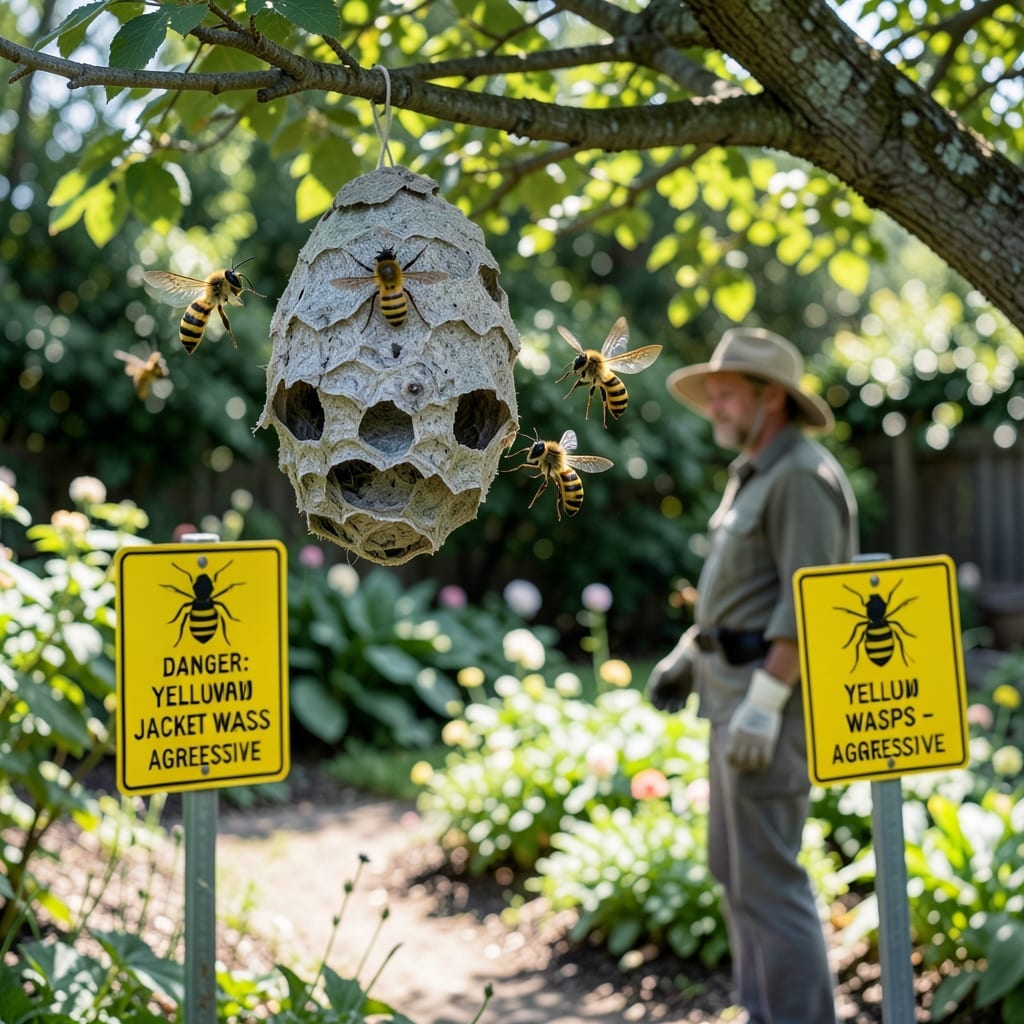
Yellow jackets are aggressive and can sting repeatedly, causing pain, swelling, and in rare cases, severe allergic reactions. They are considered dangerous, especially to those with bee venom allergies.
Unlike honeybees that die after one sting, these insects have smooth stingers allowing multiple attacks. I’ve seen their territorial nature firsthand at picnics where they aggressively defend food sources. For those with venom sensitivities, even a single sting can trigger anaphylaxis, making immediate medical attention crucial. 💫
💡 In This Article
Unlike honeybees with barbed stingers that tear away after one use, yellow jackets have smooth stingers allowing multiple stings in rapid succession. This biological advantage makes them far more aggressive when defending their colony or food sources. Their venom contains acetylcholine, which amplifies the pain signal to your nervous system. 🔥
Colony defense drives much of their aggression. A single nest can house 1,000-4,000 workers by late summer, and they’ll attack in swarms if they perceive a threat.
Unlike bees that primarily defend their hive, yellow jackets are also highly territorial about food—especially proteins and sugars—which is why they become particularly aggressive at picnics or outdoor dining areas. ✨
Their foraging behavior differs significantly from other wasps. While bees collect pollen, yellow jackets are scavengers that aggressively compete for human food. This brings them into close contact with people more frequently. The combination of their smooth stingers, large colonies, and food aggression creates a perfect storm for dangerous encounters. ⚡
Another key factor is their nesting habits. Yellow jackets often build nests underground or in wall voids, making them harder to detect until it’s too late. When disturbed, they release alarm pheromones that trigger other colony members to attack, creating a coordinated defense response that can overwhelm a person within seconds. 💫
For those with insect venom allergies, this aggression is particularly dangerous. Yellow jacket venom contains different proteins than honeybee venom, which means someone allergic to bees might not react to yellow jackets—and vice versa. This unpredictability makes their stings especially hazardous, as first-time reactions can be severe without prior warning. 🌟
Unlike honeybees, they can sting repeatedly thanks to their smooth stingers. A single insect may deliver 5-10 stings in rapid succession when threatened. This ability makes them particularly dangerous during encounters.
Carry an epinephrine auto-injector at all times. Even one sting can trigger anaphylaxis within minutes. Seek emergency care immediately after using the injector, as symptoms may return.
Colonies peak at 1,000-4,000 workers by then, and food becomes scarcer. This combination makes them extra defensive and more likely to attack when disturbed.
Clean the area with soap and water, then apply ice to reduce swelling. Take antihistamines for itching, but watch for breathing difficulties or swelling beyond the sting site.