
Beautiful Plants For Your Interior
Beautiful Plants For Your Interior
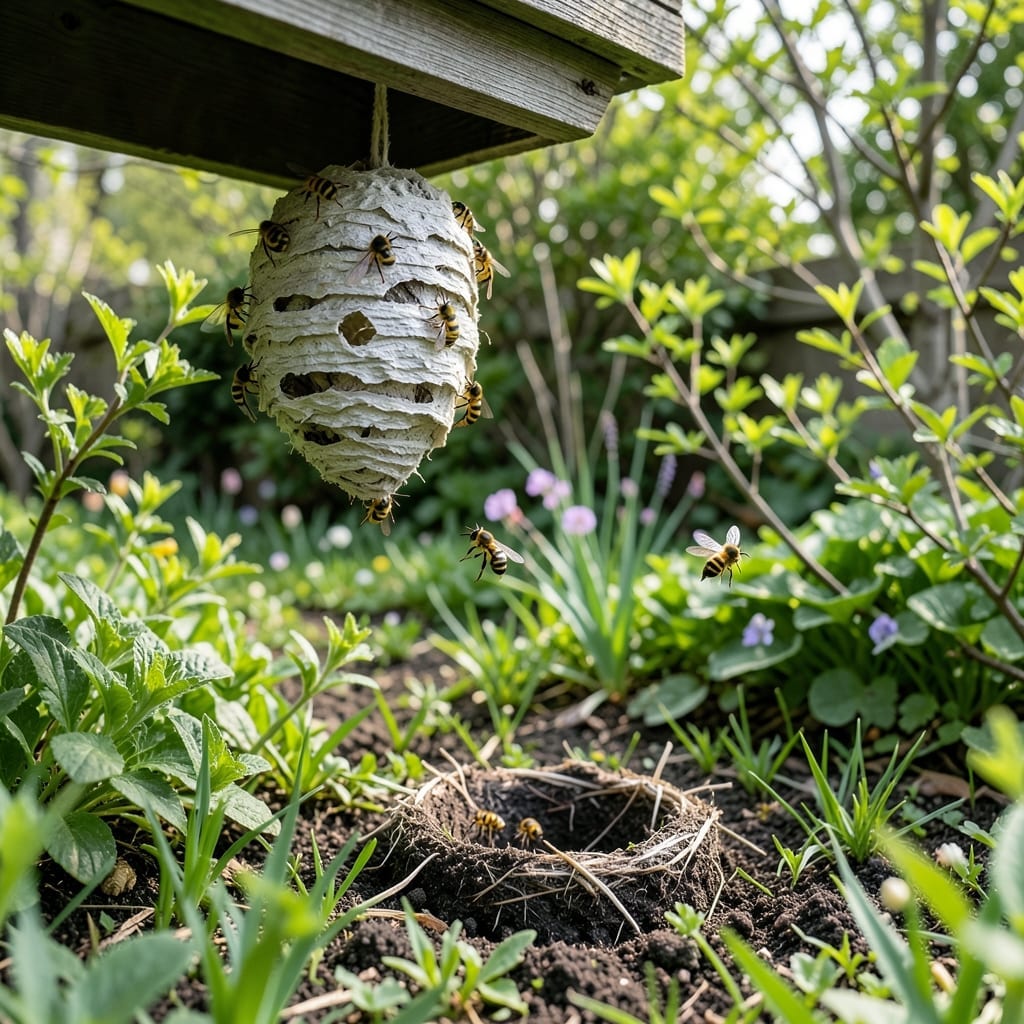
Yellow jackets typically begin constructing nests in early spring, usually between March and May, when temperatures rise and queens emerge from winter hibernation to establish new colonies.
I notice these insects become most active as the weather warms above 50°F. Queens scout for ideal locations like underground burrows or wall voids, often near human structures. This early activity explains why you might spot lone yellow jackets investigating potential nesting sites before the colony becomes visible. ✨
What’s fascinating is how quickly they progress—within weeks, a small nest can grow to house thousands of workers by summer. 🔥
💡 In This Article
The process kicks off when overwintered queens awaken from their dormancy. These queens have survived the winter by finding shelter in protected areas like tree bark, attics, or underground burrows. As ambient temperatures consistently reach 50-55°F, their metabolism activates, triggering the search for nesting sites.
This temperature threshold is critical—it signals the queen that conditions are suitable for colony establishment. ✨
Once a queen selects a site, she begins constructing the nest’s foundation using chewed wood fibers mixed with her saliva to create a papery substance. The initial nest is small, often no larger than a golf ball, but grows rapidly.
In just 4-6 weeks, the colony can expand to the size of a basketball, housing hundreds of workers. The queen lays her first eggs, which hatch into sterile female workers within 30 days. 🔥
These workers then take over nest expansion and foraging duties. The colony’s growth accelerates through late spring and summer, with peak populations occurring in August and September. By this time, a single nest can contain 1,000-4,000 workers and multiple reproductive queens.
The original queen continues laying eggs, producing up to 250 per day at her peak. 💫
Geographic location influences the exact timing. In warmer southern regions, nest building may begin as early as February, while in cooler northern areas, it often starts in late April or early May.
The queens are highly selective about nesting sites, preferring locations that offer protection from the elements and predators, such as abandoned rodent burrows, wall voids, or dense shrubbery.
This seasonal pattern explains why yellow jacket activity seems to explode in late summer. The colony has spent months growing and storing resources, and by August, the workers are aggressively foraging to support the developing reproductive queens and males.
This is also when nests are most visible and conflicts with humans are most likely to occur. ⚡
Queens emerge when temperatures consistently reach 50-55°F in early spring. This warmth activates their metabolism after winter dormancy, signaling it’s safe to establish new colonies. They begin scouting immediately for protected nesting sites.
A nest starts as small as a golf ball but can reach basketball size in 4-6 weeks. The colony expands rapidly as workers take over construction, housing hundreds by late spring.
No, yellow jackets build new nests each year. The previous year’s nest disintegrates over winter, and queens always establish fresh colonies in new locations come spring.
Colonies reach maximum size in August and September, with 1,000-4,000 workers. This is when they’re most aggressive while foraging for food to support new queens.