
Beautiful Plants For Your Interior
Beautiful Plants For Your Interior
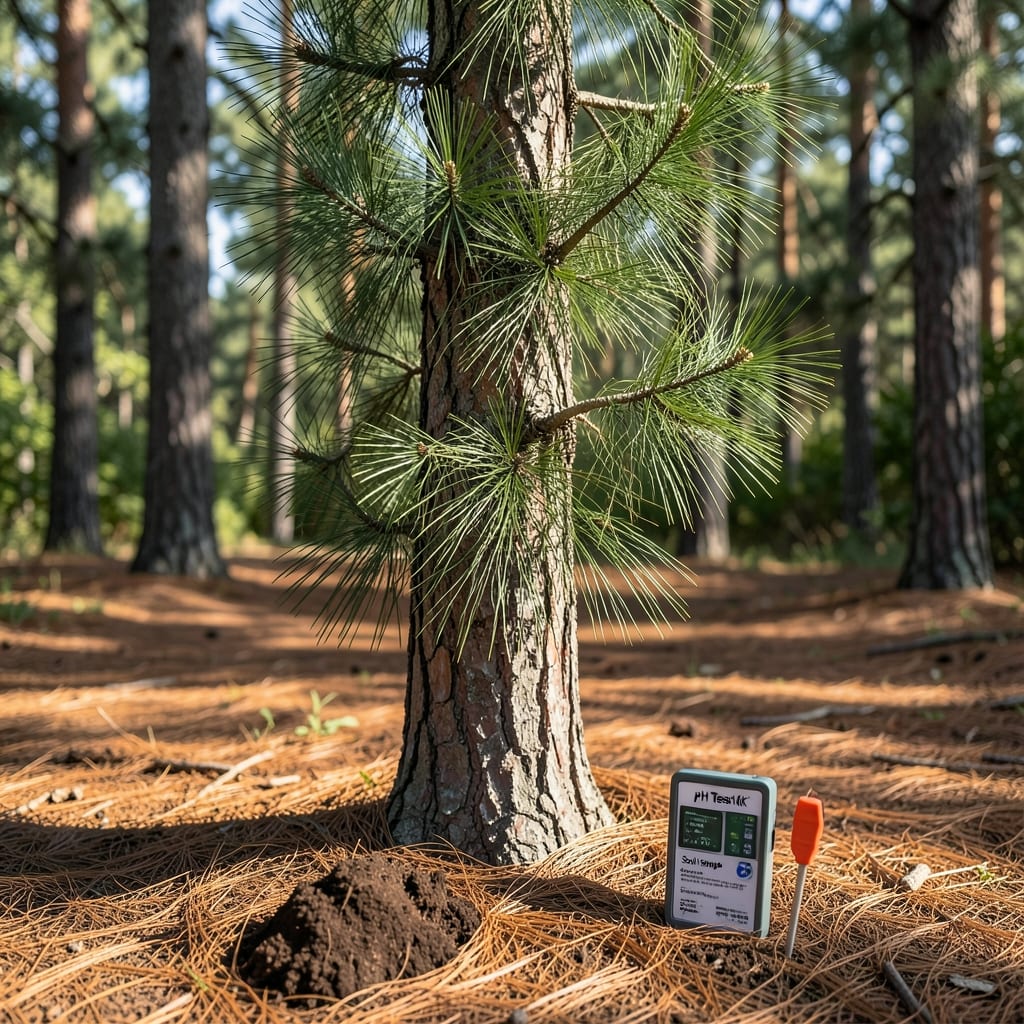
Pine needles are mildly acidic, typically with a pH between 3.2 and 3.8 when fresh, though this varies by species and can neutralize over time as they decompose.
I’ve noticed this acidity comes from natural organic compounds in the needles, which slowly release as they break down. 🔥 Gardeners often use them to slightly lower soil pH for acid-loving plants like blueberries or azaleas. Over months, the effect becomes more pronounced, but it’s a gentle process compared to chemical amendments.
💡 In This Article
The acidity in pine needles comes from organic acids like tannic and citric acid, which leach into the soil as they decompose. These compounds gradually lower the pH, creating a more acidic environment. Eastern white pine may start at pH 3.4, while ponderosa pine can be slightly less acidic at pH 3.6. 🔥
As needles break down, they release hydrogen ions that displace calcium and magnesium in the soil. This ion exchange process happens slowly—often taking 6-12 months to show measurable pH changes. The effect is more noticeable in sandy or loamy soils than in clay, which resists pH shifts more stubbornly. ✨
Fresh needles have the strongest acidic impact, but as they age and weather, their pH rises toward neutral. A study of loblolly pine needles showed pH increasing from 3.2 to 5.8 over two years of decomposition. This means their acidifying effect diminishes over time unless you regularly add fresh material. 💫
The rate of pH change depends on several factors: needle species, soil type, moisture levels, and temperature. In warm, moist conditions, decomposition accelerates, releasing acids faster. For gardeners, this means more frequent monitoring and potential adjustments to maintain desired soil acidity. ⚡
What many don’t realize is that pine needles also add organic matter as they break down, improving soil structure. This can actually buffer the acidity somewhat, creating a more balanced environment than you might expect from the initial pH numbers. The dual effect makes them valuable for both acid-loving plants and general soil health. 🌟
Pine needles affect soil pH gradually, with noticeable changes appearing after 6-12 months. The process speeds up in warm, moist conditions but remains slower than chemical amendments.
Acid-loving plants like blueberries, azaleas, and rhododendrons thrive with pine needle mulch. It naturally creates their preferred soil conditions without harsh chemicals.
No, acidity varies by species. Eastern white pine often starts at pH 3.4, while ponderosa pine may be slightly less acidic at pH 3.6. Fresh needles are always more acidic than decomposed ones.
Yes, over time they can over-acidify soil. Test every 6 months and balance with lime if needed. Their effect diminishes as they decompose, so regular monitoring is key.