
Beautiful Plants For Your Interior
Beautiful Plants For Your Interior
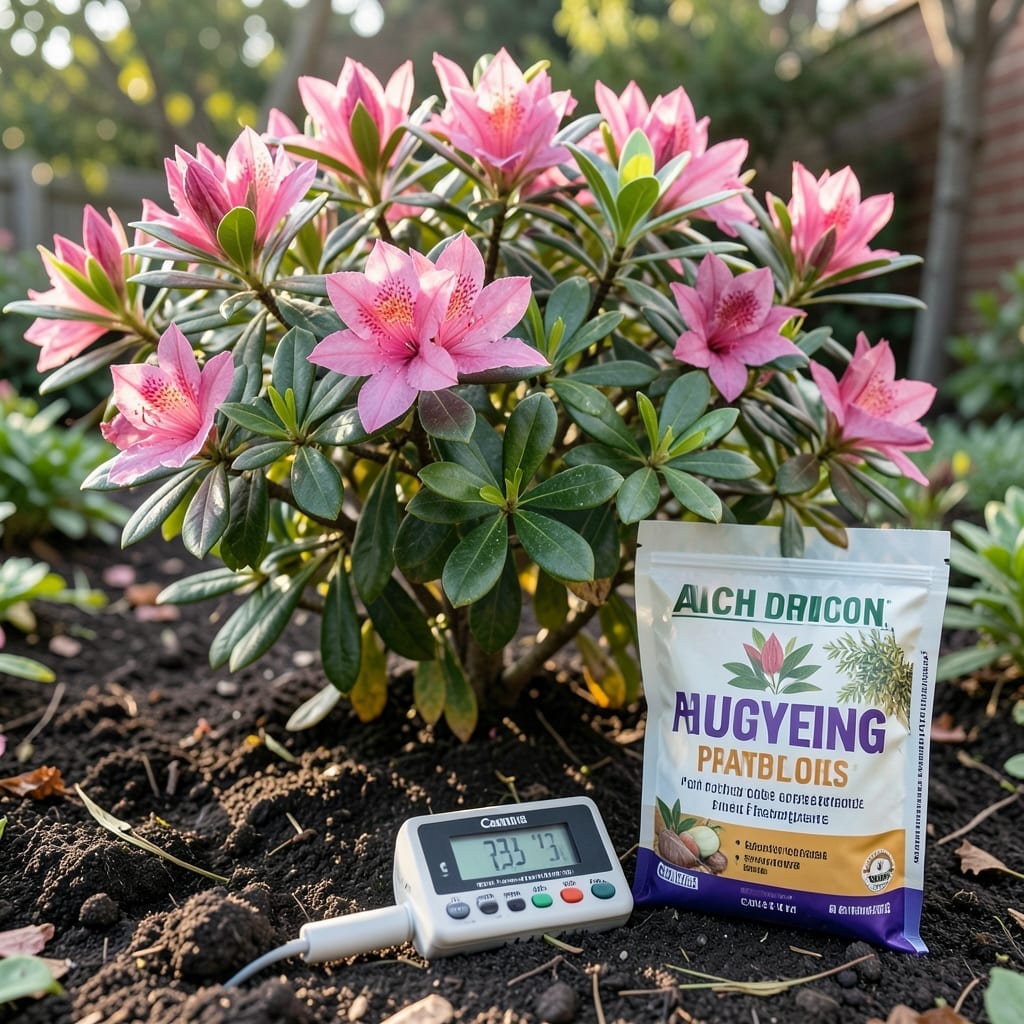
Yes, azaleas thrive in acidic soil with a pH between 4.5 and 6.0, as this allows them to absorb essential nutrients like iron and aluminum effectively.
I’ve learned through experience that azaleas struggle in neutral or alkaline soils because they can’t access the nutrients they need. Iron chlorosis often appears as yellow leaves with green veins when the pH climbs too high. To keep them vibrant, I test my soil regularly and amend it with peat moss or sulfur when needed. 💫
💡 In This Article
Azaleas belong to the Ericaceae family, which has evolved to thrive in naturally acidic environments. Their roots have a unique symbiotic relationship with mycorrhizal fungi that only functions optimally when soil pH stays between 4.5-6.0. This partnership helps the plant absorb nutrients that would otherwise remain locked in the soil. 🔥
At higher pH levels, iron becomes chemically unavailable to azaleas, even if it’s present in the soil. The plant’s roots can’t process iron in alkaline conditions, leading to iron chlorosis—a condition where leaves turn yellow while veins stay green. This is why azaleas planted in limestone-rich soil often show immediate signs of distress.
Aluminum toxicity becomes another issue in very acidic soils below 4.5 pH, but azaleas have adapted to handle moderate aluminum levels. In fact, they’ve developed a tolerance that actually helps them outcompete other plants in their native forest understory habitats. This evolutionary advantage explains why they struggle in neutral garden soils.
The ideal pH range also enhances phosphorus availability, though too much can be problematic. Azaleas need about 0.05-0.1% phosphorus in soil—higher concentrations can inhibit mycorrhizal fungi growth. This delicate balance is why regular soil testing is crucial for maintaining healthy azalea plants. ✨
In their natural habitat, azaleas grow beneath pine trees where falling needles continuously acidify the soil. Mimicking this environment in home gardens through organic amendments like pine bark fines or cottonseed meal creates the perfect growing conditions for these acid-loving shrubs. 💫
Azaleas in neutral soil often develop iron chlorosis, showing yellow leaves with green veins. This occurs because iron becomes unavailable at higher pH levels, starving the plant of this essential nutrient.
Test soil pH at least once a year, preferably in early spring before new growth starts. Use a 3-in-1 meter for quick checks. Retest 2-3 months after amending to verify changes.
Vinegar provides a temporary fix but isn’t recommended long-term. For lasting results, use elemental sulfur or organic amendments like peat moss. Vinegar can create uneven pH pockets in the soil.
Look for stunted growth, pale or yellowing leaves, and poor flowering. These symptoms often appear gradually as the plant struggles to absorb nutrients from alkaline soil.