
Beautiful Plants For Your Interior
Beautiful Plants For Your Interior
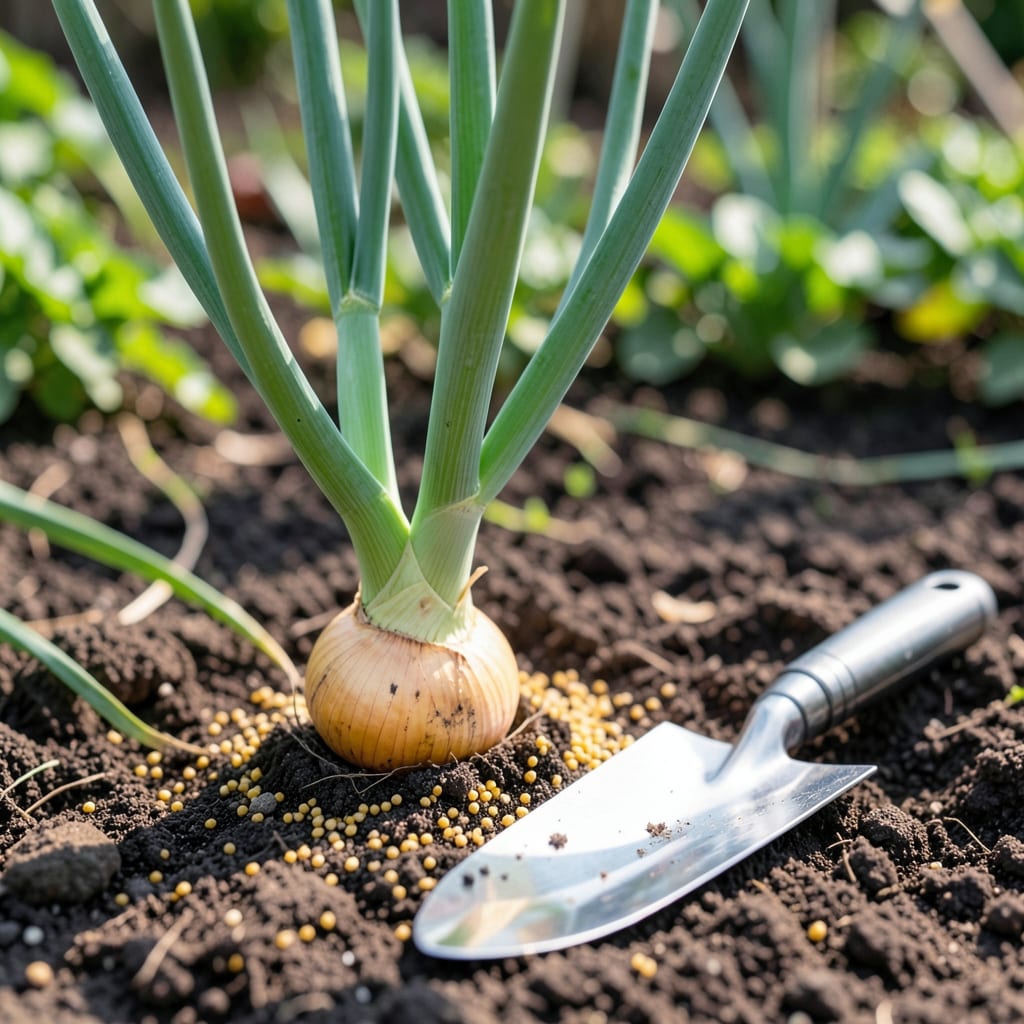
Onions are moderate feeders that require consistent nitrogen early for leaf growth and potassium later for bulb development, but they don’t demand as many nutrients as heavy feeders like corn or tomatoes.
I’ve found that their nutrient needs shift dramatically as they mature. Early on, they rely on nitrogen to build strong green tops, while later stages demand more potassium to form firm bulbs. This makes them less demanding than crops that need heavy, consistent feeding throughout their entire growth cycle. 🔥
What works well is amending soil with compost before planting, then supplementing with balanced fertilizers as the plants develop. This approach ensures steady growth without overwhelming the soil with excessive nutrients.
💡 In This Article
Onions follow a precise nutrient timeline. During the first 4-6 weeks, they prioritize leaf development, pulling nitrogen from soil to build green tops. This phase mirrors how lettuce grows, focusing on foliage rather than roots or bulbs. The plant’s energy shifts dramatically once bulbing begins, typically after 10-12 hours of daylight exposure.
At the bulbing stage, potassium becomes critical. This nutrient strengthens cell walls, helping form the tight, layered structure we recognize as an onion. Phosphorus also plays a key role here, supporting root development and energy transfer.
Think of it like building a house: nitrogen lays the foundation (leaves), while potassium and phosphorus construct the walls (bulb). 🔥
Soil pH dramatically affects nutrient uptake. Onions thrive in slightly acidic to neutral soil, between 6.0-7.0 pH. Outside this range, micronutrients like sulfur become less available. Sulfur is particularly important—it contributes to that characteristic pungent flavor and helps form the compounds that give onions their tear-inducing reputation.
What most gardeners miss is the micronutrient dance. Molybdenum, for example, helps onions process nitrogen efficiently. A deficiency shows as yellowing leaves, even when nitrogen is present. Meanwhile, boron supports cell division during bulbing. These trace elements often exist in sufficient quantities in healthy soil, but become crucial in intensive planting scenarios.
This staged approach explains why onions aren’t heavy feeders. They don’t need constant high nutrient levels throughout their life cycle. Instead, they require strategic nutrient availability at specific times, much like how a marathon runner needs different fuel at different race stages. 💫
Apply a balanced 10-10-10 fertilizer at planting, then switch to low-nitrogen 5-10-10 every 3-4 weeks during bulbing. Always water after fertilizing to prevent root burn.
Onions thrive in slightly acidic to neutral soil, between 6.0-7.0 pH. Test your soil before planting and adjust with lime or sulfur if needed.
Yes! Work in 2-3 inches of aged compost 4-6 weeks before planting. It builds fertility naturally without overwhelming young plants.
This often signals nitrogen deficiency or micronutrient issues. Even with nitrogen present, a lack of molybdenum can cause yellowing. Test your soil to pinpoint the problem.