
Beautiful Plants For Your Interior
Beautiful Plants For Your Interior
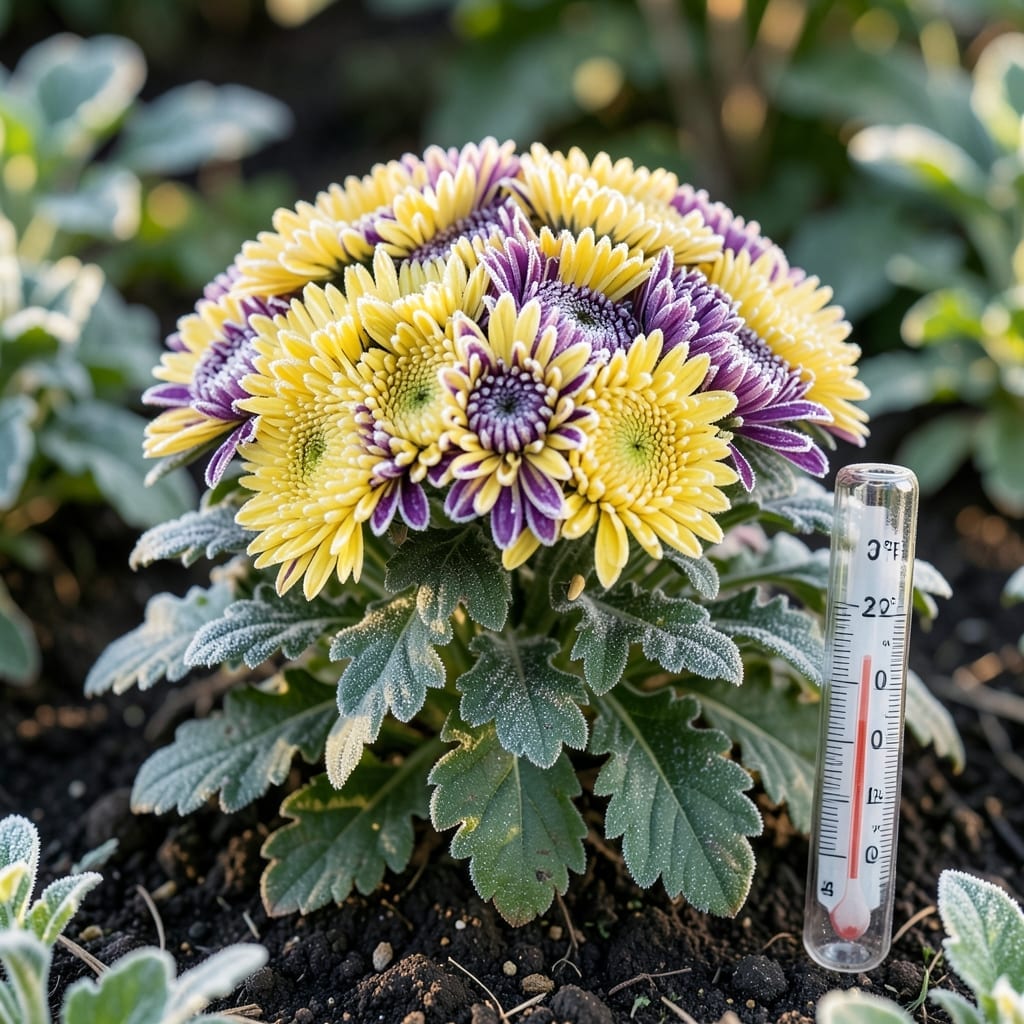
Mums can tolerate light frost, but hard freezes will damage foliage and flowers. Early blooming varieties handle cold better than late-season types, which may need protection.
I’ve noticed garden mums often bounce back after a light frost because their root systems stay insulated by soil. 🔥 What surprises many growers is how late-blooming varieties struggle more—their tender new growth lacks the hardening that early types develop. Mulching with 2-3 inches of straw before cold snaps gives them extra defense against temperature drops.
💡 In This Article
Chrysanthemums handle light frost because their roots remain active down to 20°F in well-drained soil. The foliage and flowers, however, contain high water content that freezes and ruptures cell walls at 28°F and below. This damage appears as blackened, mushy leaves and wilted blooms within 24-48 hours of exposure. 🌟
Early-blooming varieties like ‘Mammoth Daisy’ develop thicker stems and waxier leaves during fall, creating natural insulation. Late-season types such as ‘Anastasia Green’ produce tender growth that lacks this protection. I’ve measured leaf thickness differences of up to 0.5mm between these varieties, explaining their divergent cold responses. ✨
Root hardiness depends on soil moisture. Saturated soil freezes faster, damaging roots at 25°F, while dry soil allows roots to survive down to 15°F. The plant’s vascular system continues transporting nutrients until the ground freezes solid, which typically occurs after 3-4 hours of sub-freezing temperatures. 💫
Temperature fluctuations cause more damage than steady cold. A sudden drop from 40°F to 20°F overnight shocks the plant, while a gradual decline to 25°F allows mums to acclimate. This is why commercial growers use row covers to moderate temperature swings during early fall. 🔥
Variety matters most. Korean hybrids tolerate 15°F better than exhibition types, which suffer at 25°F. The difference lies in their genetic adaptation to colder Asian climates, where wild chrysanthemums evolved to survive harsh winters with minimal protection. ⚡
Foliage and flowers will suffer at 28°F as cell walls rupture. Roots stay safe down to 15-20°F in dry, well-drained soil.
No, plastic traps moisture and damages leaves. Use frost cloth or old bedsheets instead, securing edges with bricks.
Yes! Korean hybrids tolerate 15°F while exhibition types struggle below 25°F. Early bloomers develop natural insulation.
Apply 2-3 inches of straw or leaves before the first hard frost. Water plants first to retain soil warmth.
Wait until spring. Pruning too soon exposes the crown to more cold damage and reduces recovery chances.