
Beautiful Plants For Your Interior
Beautiful Plants For Your Interior
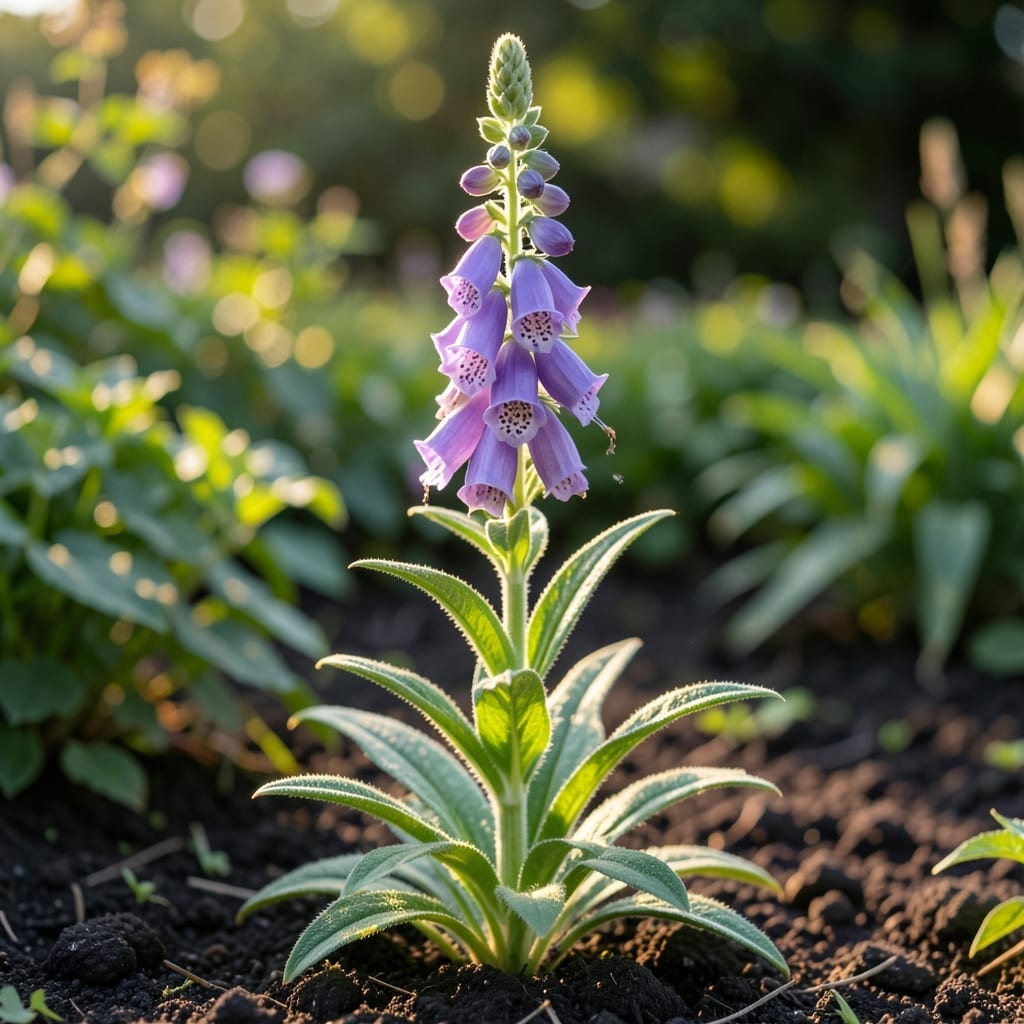
Foxgloves are typically biennial, forming a leaf rosette the first year and blooming the second before dying, though some varieties may act as short-lived perennials in ideal conditions.
I’ve noticed these plants often surprise gardeners with their two-year pattern. The first season focuses on leafy growth close to the ground, while the second year brings those iconic bell-shaped flowers on tall spikes. In perfect conditions with mild winters, some types may regrow for a third year, but this is less common. ✨
💡 In This Article
The two-year life span begins with seed germination in late summer or early fall. The seedlings develop into a dense, low-growing rosette of fuzzy, lance-shaped leaves that stay green through winter. This first year is all about building a strong root system and leaf mass to support future flowering.
The plant remains compact, typically reaching only 6-12 inches in height. 🌱
As spring arrives in the second year, the stored energy triggers rapid vertical growth. A central flower stalk emerges, shooting upward at an impressive rate—often growing 1-2 inches per day under ideal conditions. This stalk can reach heights between 3-6 feet, depending on the variety and growing conditions.
The transformation is dramatic, as the once-ground-hugging plant becomes a towering floral display.
Blooming occurs from late spring through summer, with the characteristic bell-shaped flowers opening sequentially from the bottom up. Each flower produces thousands of tiny seeds, ensuring the plant’s legacy. After flowering completes, the plant’s energy is spent, and it typically dies back by late summer. This completes the classic biennial cycle. 💫
What makes this cycle fascinating is its reliability. The timing is so consistent that gardeners can plan foxglove displays by sowing seeds in alternate years. This guarantees continuous blooms, as new rosettes form while older plants flower. The cycle also explains why established foxglove patches often contain plants at different stages simultaneously.
Environmental factors can influence this pattern. In regions with mild winters, some foxgloves may survive to produce a second, though weaker, flush of blooms in their third year. Conversely, extreme cold or poor soil conditions might prevent the plant from completing its full two-year cycle.
The most consistent results occur in USDA zones 4-8, where the biennial pattern is most predictable. ✨
Typically no, they focus on leaf growth in year one. Some fast-growing varieties in ideal conditions may produce a few flowers, but this is rare and often weakens the plant.
Sow seeds in alternate years. This ensures new rosettes form as older plants flower. Allow some seed pods to mature for natural self-sowing.
This is normal for biennials. After blooming and seed production, the plant completes its life cycle. In mild climates, some may regrow weakly for a third year.
They thrive in USDA zones 4-8, where the two-year cycle is most predictable. In warmer zones, they may act as short-lived perennials.