
Beautiful Plants For Your Interior
Beautiful Plants For Your Interior
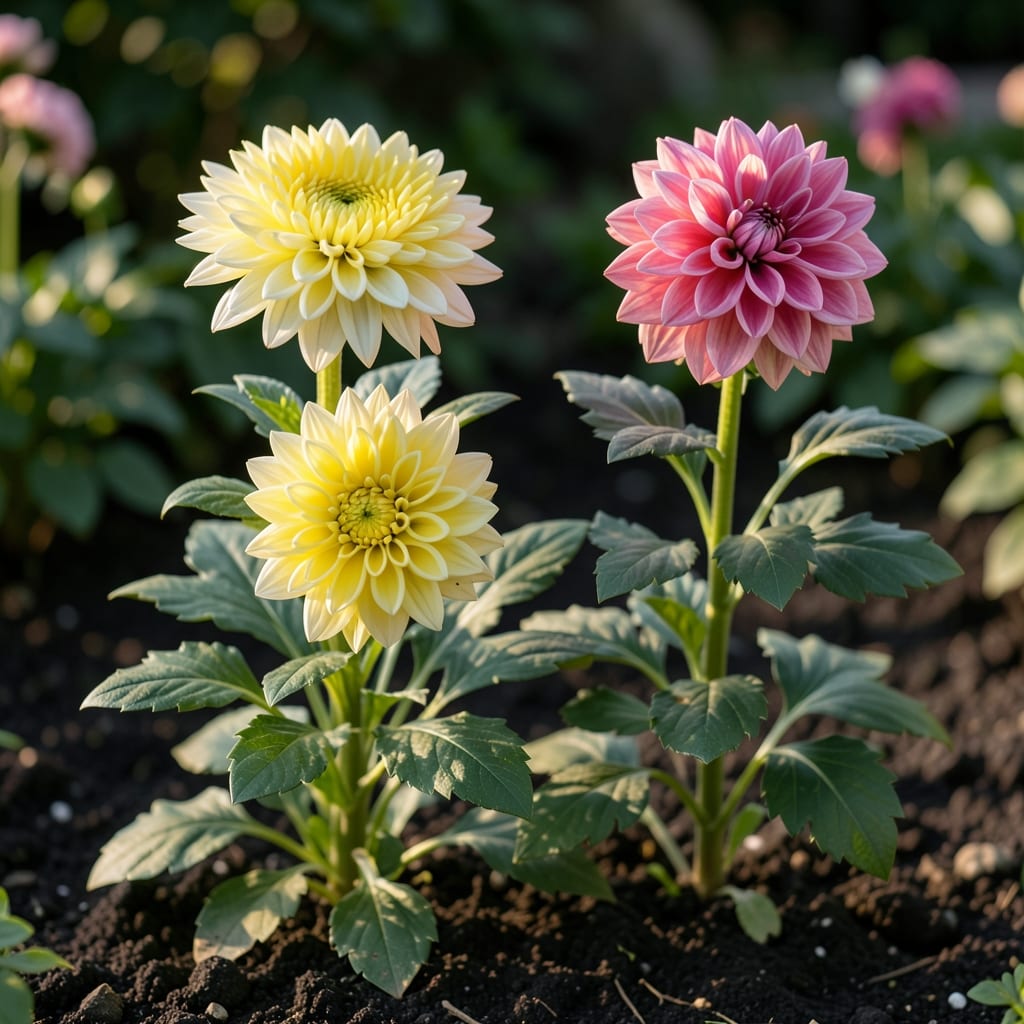
No, dahlias and chrysanthemums are not closely related. Dahlias belong to the Asteraceae family but are in a different genus, while chrysanthemums are in the Chrysanthemum genus within the same family.
While they share the same plant family, their genetic paths diverge significantly at the genus level. 🌟 I find this fascinating because both produce stunning blooms yet require different care approaches. Dahlias thrive as tubers, while chrysanthemums often grow from cuttings or divisions, showing how diverse the Asteraceae family truly is.
This distinction matters for gardeners planning companion plantings or rotation schedules. ✨
💡 In This Article
Both plants belong to the Asteraceae family, the second-largest flowering plant family with over 32,000 species. This massive group includes sunflowers, daisies, and lettuce, showing its incredible diversity. The key difference lies in their genus classification: dahlias are Dahlia while chrysanthemums are Chrysanthemum. 🔥
Taxonomically, they’re like distant cousins at a family reunion. The Asteraceae family splits into 13 subfamilies, with dahlias in Coreopsideae and chrysanthemums in Asteroideae. This separation occurred millions of years ago, creating distinct evolutionary paths. Genetic studies show their DNA sequences differ by about 20-25% at the genus level. ✨
Dahlias originate from Central America and Mexico, evolving in mountainous regions with 15-25°C average temperatures. Chrysanthemums, however, trace their roots to East Asia and Northeastern Europe, thriving in temperate climates. This geographic separation contributed to their distinct growth habits and flower structures. 💫
Their flower structures reveal the divergence. Dahlias have composite blooms with both disc and ray florets, often forming perfect geometric patterns. Chrysanthemums also have composite flowers but typically feature more elongated ray florets, giving them their characteristic “pom-pom” or “spider” appearances. This structural difference affects how they attract pollinators.
For gardeners, this means they won’t cross-pollinate. You can safely plant them side by side without worrying about hybrid offspring. Their care needs differ too: dahlias prefer well-drained soil with pH 6.5-7.0, while chrysanthemums tolerate a wider range of pH 6.0-7.5. 🌟
This classification explains why they respond differently to pests and diseases. Dahlias are particularly susceptible to slugs and snails, while chrysanthemums often attract aphids and spider mites. Their distinct evolutionary paths created unique vulnerabilities and resistances within the same plant family.
Yes, both belong to the Asteraceae family, but they diverge at the genus level. Dahlias are Dahlia while chrysanthemums are Chrysanthemum, making them distant relatives.
No, their genetic differences prevent cross-pollination. You can safely plant them side by side without worrying about hybrid offspring forming.
Chrysanthemums are generally more forgiving, tolerating a wider soil pH 6.0-7.5 range and partial shade. Dahlias require more precise conditions, like well-drained soil and full sun.
Millions of years of evolution created distinct flower structures. Dahlias form geometric patterns, while chrysanthemums develop elongated ray florets for their “pom-pom” or “spider” shapes.