
Beautiful Plants For Your Interior
Beautiful Plants For Your Interior
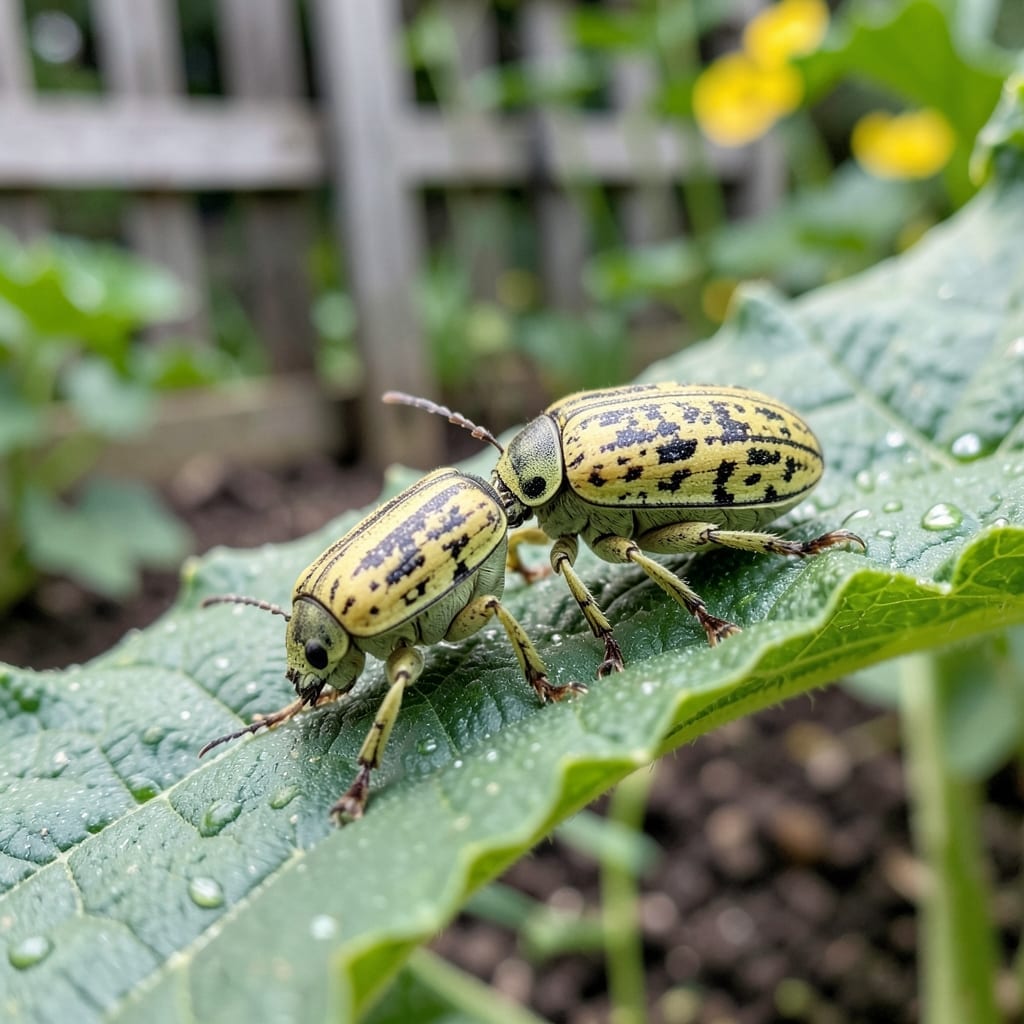
Yes, cucumber beetles are harmful pests that damage cucumber, melon, and squash plants by feeding on leaves, stems, and flowers, while also spreading bacterial wilt disease.
I’ve seen firsthand how these striped or spotted pests can devastate a garden overnight. 🔥 They don’t just chew through foliage—they introduce bacterial wilt, which clogs a plant’s vascular system, causing rapid wilting and death. For organic gardeners, early detection and intervention are critical to protecting your cucumber and squash crops from total loss.
💡 In This Article
These pests attack plants in multiple ways. Adult beetles chew on leaves, creating jagged holes that reduce photosynthesis. Their larvae feed on roots, weakening the plant’s foundation. 🔥
More critically, they transmit bacterial wilt via their mouthparts. The bacteria Erwinia tracheiphila clogs the plant’s vascular system, blocking water and nutrient flow. Symptoms appear within 1-2 weeks: leaves wilt during the day and recover at night, then permanently collapse.
Yield loss can be devastating. A single beetle can infect multiple plants, and bacterial wilt has no cure. Infected plants often die within 2-4 weeks of the first symptoms. ✨
Even without disease, heavy feeding reduces fruit quality. Cucumber beetles target flowers and young fruit, causing scarring and deformities. This is especially damaging during the first 3-4 weeks of growth when plants are most vulnerable.
Their feeding also creates entry points for other pathogens. The open wounds invite fungal infections and further stress the plant. This compounded damage makes cucumber beetles one of the most destructive pests for cucurbit crops. 💫
They primarily attack cucurbits like cucumbers, melons, squash, and pumpkins. These plants share similar vine structures and leaf textures that attract the beetles for both feeding and egg-laying.
Without intervention, a single beetle can transmit bacterial wilt that kills a plant within 2-4 weeks. Heavy feeding alone can reduce yields by 50% in just 1-2 weeks.
Yes! Ground beetles, parasitic wasps, and soldier beetles all feed on their eggs and larvae. Plant dill, fennel, or marigolds to create a welcoming habitat for these helpers.
Act at first sighting, ideally in early morning when beetles are sluggish. Focus on the first 3-4 weeks of plant growth when they’re most vulnerable.