
Beautiful Plants For Your Interior
Beautiful Plants For Your Interior
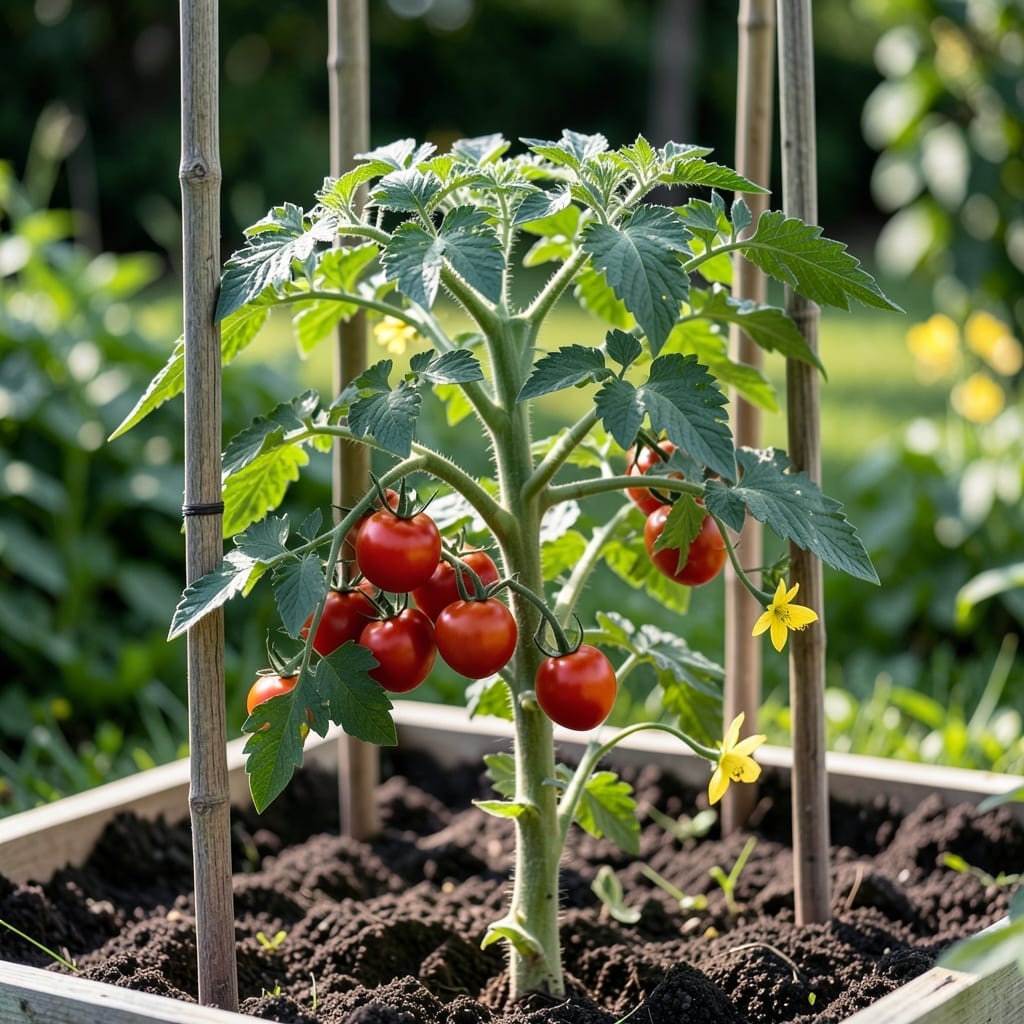
Cherry tomatoes are usually indeterminate, meaning they grow continuously and produce fruit throughout the season. Some dwarf varieties are determinate, but most common types like ‘Sweet 100’ or ‘Sun Gold’ are indeterminate.
I’ve noticed most gardeners choose indeterminate varieties because they keep producing until frost. This growth habit means the vines can reach 6-10 feet if left unpruned, which is why sturdy supports are essential. Dwarf determinate types, while less common, are great for small spaces or container gardening since they stay compact. ✨
💡 In This Article
The difference starts at the genetic level. Indeterminate tomatoes have a growth habit controlled by the SP gene, which prevents the plant from setting a terminal flower cluster. This means the main stem keeps elongating, producing new leaves and flower clusters continuously until environmental conditions stop it.
In contrast, determinate varieties have a recessive sp gene that causes the plant to develop a terminal flower cluster at a specific node. Once this cluster forms, the main stem stops growing, creating that compact bush shape.
This is why determinate plants like ‘Roma’ or ‘Celebrity’ reach a set height of 3-5 feet and produce their entire crop within 1-2 weeks. ⚡
Cherry tomatoes predominantly follow the indeterminate model because their small fruit size and continuous production align perfectly with vining growth. The plant can support ongoing fruit development without the energy cost of producing a large terminal flower cluster. This allows for that prized extended harvest window.
What’s fascinating is how this growth pattern affects the plant’s structure. Indeterminate vines develop suckers at every leaf axil, which can themselves grow into new stems if left unpruned. This creates that classic sprawling tomato plant that can easily reach 8-10 feet in a single season with proper support and conditions. 🌟
The biological advantage is clear: indeterminate plants can adapt their growth to available resources. In ideal conditions with consistent water and nutrients, they’ll keep producing new growth and fruit. This is why commercial growers often prefer indeterminate varieties for their ability to provide steady yields over months rather than weeks.
Look for compact growth that stops at a certain height, usually 3-5 feet. Determinate plants produce most of their fruit at once, then decline. If your plant keeps growing taller with continuous fruit production, it’s indeterminate.
Minimal pruning is best for determinate types. Removing suckers can reduce your harvest since these plants produce fruit on all stems. Only prune to improve airflow or remove damaged leaves.
Their small fruit size allows the plant to support continuous production without the energy cost of a terminal flower cluster. This vining habit maximizes yield over a longer season compared to bush types.
Yes, but choose a large container (at least 5 gallons) and a sturdy support system. Dwarf indeterminate varieties like ‘Tiny Tim’ or ‘Patio Princess’ work best for limited spaces.
Skipping proper support is the most common error. Without a tall trellis or cage, vines will sprawl, leading to disease and poor fruit quality. Always secure stems as they grow.